Winter Snowdonia Without the Axe-and-Crampons Narrative
Winter in Snowdonia is often framed as an all-or-nothing affair: either stay low, or head for exposed ridges with full winter climbing kit. In reality, there’s a broad middle ground.
With sensible route choice and honest decision-making, many Snowdonia peaks remain well suited to non-technical winter walking. These are days about judgement, pacing and awareness — not steep scrambles or knife-edge arêtes.
This guide focuses on peaks and routes that are commonly approached via broad ridges, steady slopes and clear lines, making them appropriate options for confident walkers building winter experience.
What “Non-Technical Winter Bagging” Actually Means
Let’s be clear about scope.
In this context, non-technical means:
- Walking routes only (no graded scrambles or exposed ridges)
- No reliance on ropes or climbing skills
- Terrain that remains reasonable in winter given suitable conditions
- Route choices that prioritise slope angle, run-out and escape options
It does not mean risk-free. Winter amplifies consequences everywhere — even on gentle ground.
Who This Guide Is For (and Who It Isn’t)
This guide is for:
- Confident walkers with year-round hill experience
- People comfortable navigating in poor visibility
- Walkers beginning to build winter judgement and routine
This guide is not for:
- First-ever winter hill days
- Anyone seeking scrambling, arêtes or exposure
- Casual fair-weather walkers
If you’re unsure, start smaller, winter rewards patience.
What Makes a Peak Suitable for Non-Technical Winter Bagging?
The peaks below share several important characteristics:
- Broad ridges or open slopes
- Clear, well-defined summer routes
- Limited exposure above steep ground
- Sensible options to shorten or turn back
- Terrain that remains reasonable when snow-covered (conditions dependent)
Route choice matters as much as the peak itself.
Snowdonia Peaks for Winter Bagging (Non-Technical)
Moel Siabod
- Height: 872m
- Area: Moel Siabod Range
- Why it works in winter: Clear ridges and forgiving slopes
- Typical winter route style: Broad ridge ascent
- Winter difficulty: Moderate
- Key winter considerations: Wind exposure and navigation near the summit
- Typical time on the hill: 4–6 hours
Moel Siabod is one of the best winter stepping-stone peaks in Snowdonia — big enough to feel serious, but rarely intimidating.
Moel Eilio
- Height: 726m
- Area: Northern Snowdon Massif
- Why it works in winter: Gentle gradients and wide ridges
- Typical winter route style: Ridge walk
- Winter difficulty: Easy–Moderate
- Key winter considerations: Wind chill and drifting snow
- Typical time on the hill: 4–6 hours
Moel Eilio is ideal for building winter confidence without committing to high-consequence terrain.
Y Garn
(via non-scrambling routes)
- Height: 947m
- Area: Glyderau
- Why it works in winter: Logical ascent routes with manageable angles
- Typical winter route style: Steady climb and broad ridge
- Winter difficulty: Moderate
- Key winter considerations: Wind and visibility on upper slopes
- Typical time on the hill: 4–6 hours
Y Garn offers a genuine high-mountain winter feel without requiring hands-on terrain.
Cadair Idris
(Minffordd or Pony Path)
- Height: 893m
- Area: Southern Snowdonia
- Why it works in winter: Well-engineered paths and clear route options
- Typical winter route style: Steady ascent with dramatic scenery
- Winter difficulty: Moderate
- Key winter considerations: Weather exposure near the summit plateau
- Typical time on the hill: 4–6 hours
Cadair Idris in winter is spectacular, provided routes are chosen conservatively.
Foel Goch
- Height: 831m
- Area: Northern Snowdon Massif
- Why it works in winter: Open slopes and quieter terrain
- Typical winter route style: Broad upland walking
- Winter difficulty: Moderate
- Key winter considerations: Navigation in flat light
- Typical time on the hill: 3–5 hours
Foel Goch combines solitude with sensible winter ground, a rare and rewarding mix.
Pen yr Ole Wen (conditions dependent)
- Height: 978m
- Area: Carneddau
- Why it can work in winter: Straightforward ascent onto open ridges
- Typical winter route style: Sustained climb
- Winter difficulty: Moderate to Challenging
- Key winter considerations: Wind exposure and distance
- Typical time on the hill: 5–7 hours
Pen yr Ole Wen is best treated as a good-conditions winter objective, not a default choice.
Winter Conditions: What Changes (Even on Easier Peaks)
Winter changes everything, even on familiar hills:
- Daylight is limited
- Wind chill is often the main threat
- Snow cover alters pacing and fatigue
- Frozen ground magnifies slips
- Navigation becomes more demanding in flat light
Respecting these factors is what makes winter walking sustainable.
Route Choice Matters More Than the Peak
In winter, the route defines the day:
- Some summer paths become poor winter options
- Aspect and slope angle matter
- Wind-loaded ground changes risk
- Turning back early is good judgement, not failure
Peak bagging never outranks decision-making.
When Non-Technical Winter Bagging Is at Its Best
Look for:
- Stable high-pressure weather
- Cold, dry conditions
- Consolidated snow rather than fresh dumps
- Early starts to maximise daylight
Calm, clear winter days are rare — and worth waiting for.
Progression: What These Peaks Prepare You For
These routes help build:
- Winter pacing and energy management
- Navigation confidence in poor visibility
- Weather judgement and restraint
- Familiarity with Snowdonia in harsher conditions
They form a solid foundation for more complex winter terrain later on.
Track Winter Peaks with Peaky Baggers
Log winter Snowdonia peaks, note conditions and decisions, and build a responsible cold-season bagging record with Peaky Baggers.
Final Thought
Winter Snowdonia isn’t about bravado. With the right peaks, conservative routes and honest judgement, it delivers some of the most rewarding and humbling mountain days of the year.
Choose wisely, move steadily, and let experience build naturally.
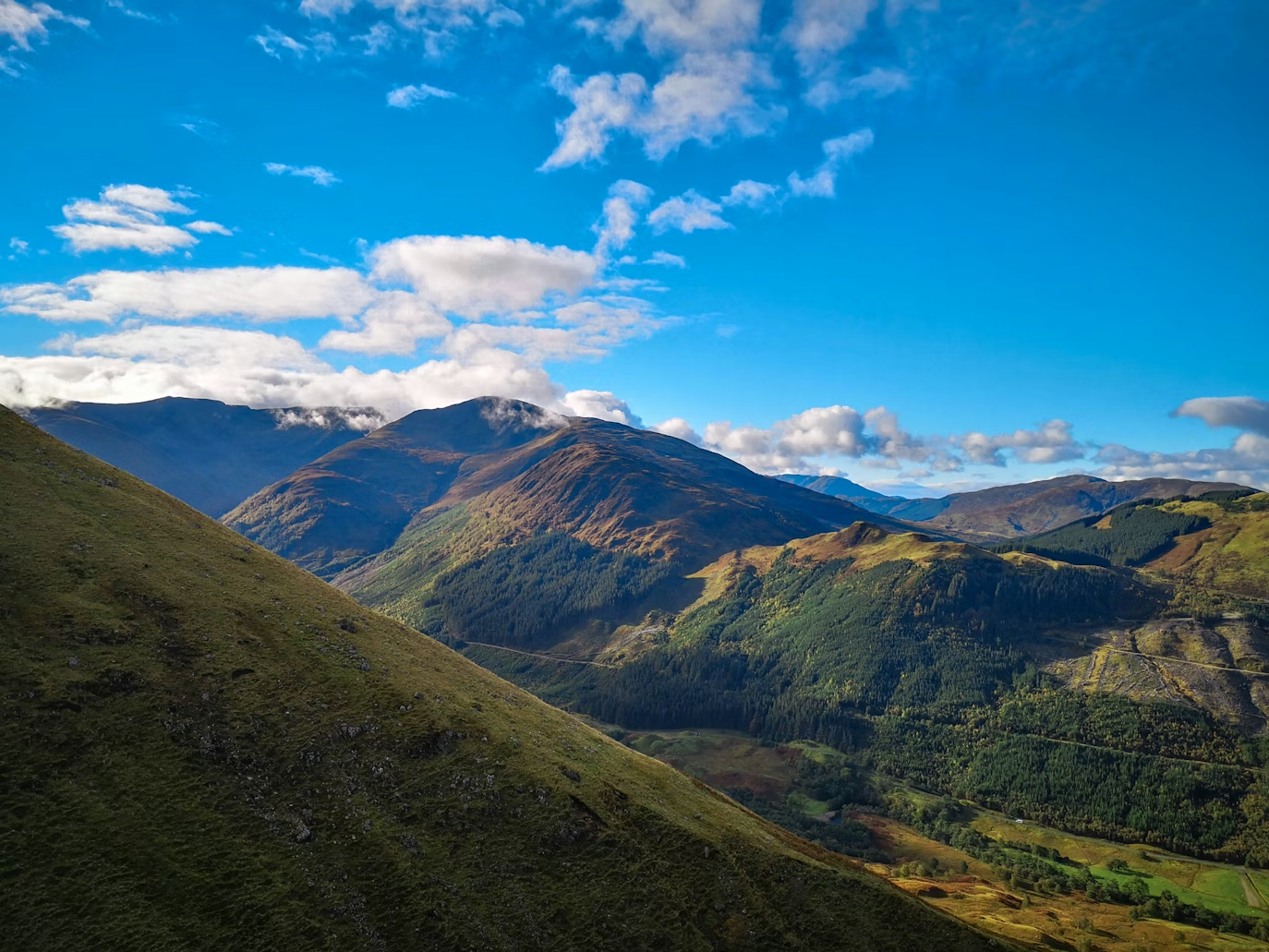
Photo by Benjamin Blyth on Unsplash