
A practical guide to winter-friendly Peak District summits, focusing on sensible terrain, clear routes and confident non-technical winter walking.
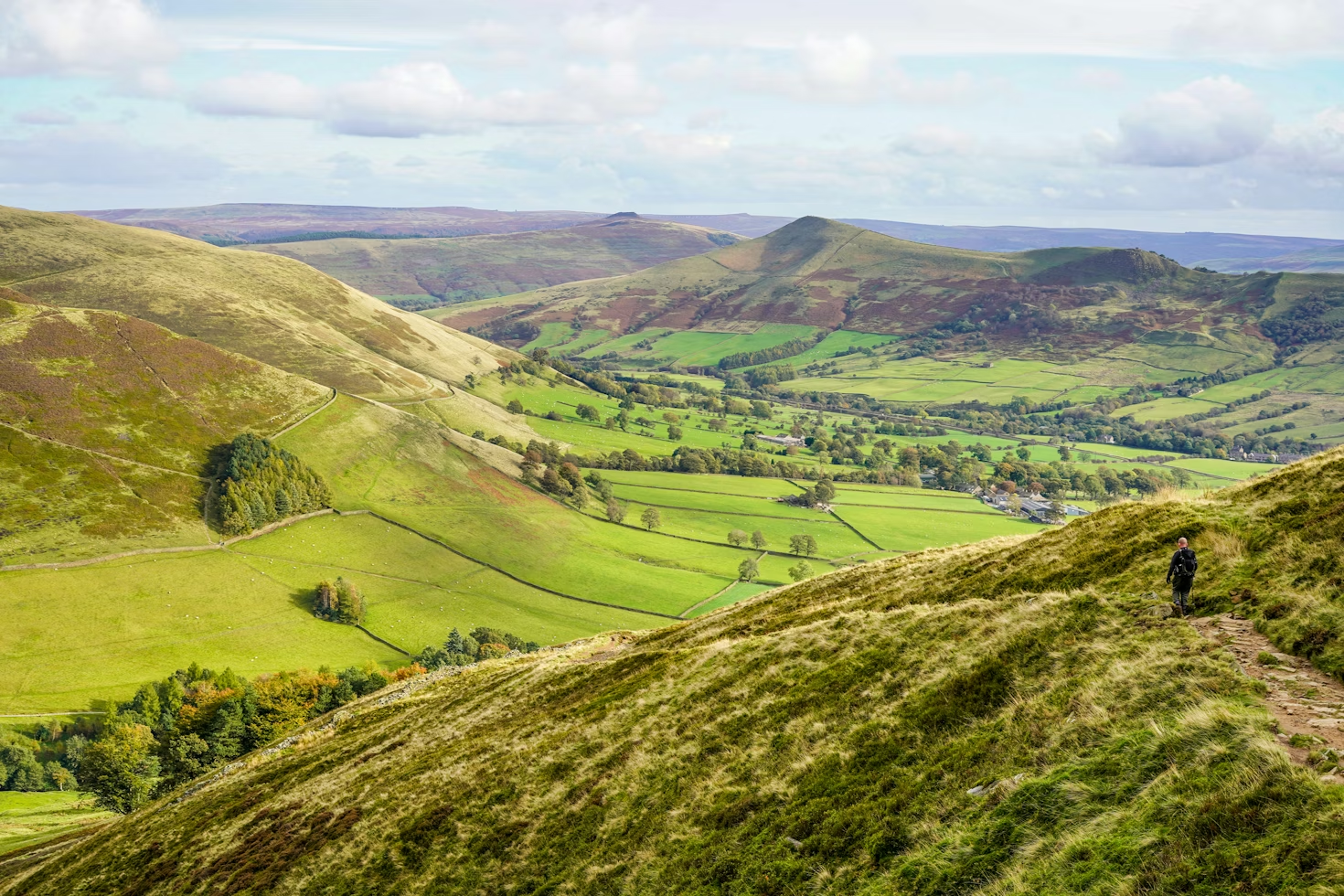
Winter in the Peak District is often misunderstood. It is not about technical mountaineering or extreme conditions. More often, it is about shorter days, stronger winds, colder temperatures and ground conditions that demand better judgement.
With the right summit choices, winter walking here can be calm, rewarding and surprisingly accessible. Clear ridges, well-defined edges and compact hills often work better than broad plateaus or long, committing routes. The aim is not to avoid winter, but to walk with it.
This guide focuses on Peak District summits that tend to work well in winter, particularly on non-technical days when sensible route choice matters more than ambition.
A winter-friendly summit is defined by terrain, not height.
Clear paths help with navigation when visibility drops. Ridges and edges provide constant orientation, reducing the risk of drifting off line. Gradients are manageable, with limited exposure and no reliance on scrambling. Access points are straightforward, allowing flexible start times and easy retreat if conditions worsen.
Winter-friendly does not mean risk-free. Ice, wind and snow can transform familiar ground quickly. These summits simply offer better margins for decision-making.
The summits below are grouped by terrain type rather than difficulty alone. Walking times assume winter pacing, with extra allowance for pauses, conditions and daylight.
These are not recommendations to push on regardless. They are options to consider when conditions align and judgement says yes.
Clear ridges and edges often feel safer in winter than open moorland, provided wind conditions are reasonable.
Mam Tor
Approximate height: 517 metres
Area: Hope Valley
Why it works in winter: A well-defined ridge with clear paths and constant orientation.
Typical time required: 1.5 to 3 hours
Winter difficulty: Low
Route style: Circular
Mam Tor is one of the most reliable winter options in the Peak District. The ridge provides clarity even in low cloud, and the route can be shortened easily if needed.
Curbar Edge
Approximate height: 371 metres
Area: Eastern Edges
Why it works in winter: Broad paths and an edge line that is easy to follow.
Typical time required: 2 to 3 hours
Winter difficulty: Low
Route style: Linear or circular
Curbar Edge works well on crisp winter days when frost highlights the landscape. Wind exposure should be checked before committing.
Bamford Edge
Approximate height: 424 metres
Area: Dark Peak
Why it works in winter: Short approach and a clear edge with strong visual reference points.
Typical time required: 2 to 3 hours
Winter difficulty: Low to moderate
Route style: Out and back or circular
Bamford Edge suits shorter winter days and provides strong views without committing to high ground for long periods.
The White Peak offers compact hills and defined summits, though limestone requires extra care in icy conditions.
Thorpe Cloud
Approximate height: 287 metres
Area: Dovedale
Why it works in winter: A short ascent with a clear summit and easy retreat.
Typical time required: 1 to 2 hours
Winter difficulty: Low to moderate
Route style: Out and back
Thorpe Cloud is best tackled cautiously in frost, as limestone steps can be slippery. In settled conditions it offers a quick and rewarding winter outing.
Shining Tor
Height: 559 metres
Area: South West Peak
Why it works in winter: Clear routes and a gradual ascent reduce complexity.
Typical time required: 2.5 to 3.5 hours
Winter difficulty: Low to moderate
Route style: Circular
Shining Tor often sits above low cloud, delivering bright winter light when valleys remain grey.
Moorland summits require care in winter and are best chosen selectively.
Edge-based moorland routes
Approximate height: 400 to 550 metres
Area: Dark Peak margins
Why they work in winter: Defined edges reduce navigation risk compared to open plateau.
Typical time required: 3 to 5 hours
Winter difficulty: Moderate
Route style: Circular
These routes should only be considered in good visibility with stable conditions. Broad plateaus in poor visibility are best avoided.
Some Peak District summits are highly condition-dependent in winter.
Broad peat plateaus can be disorientating in low cloud. Steep cloughs may ice over or hold deep snow. Scrambly limestone ridges become hazardous when frozen. Long circular routes reduce flexibility if conditions deteriorate.
These summits are not off-limits, but winter is rarely the best time to force them.
Winter days are short, and the margin for error is smaller. Early starts maximise usable daylight and allow time to adapt plans. Conservative turnaround times are essential, especially in poor visibility.
Weather forecasts are less reliable in winter. Wind strength and wind chill often matter more than temperature alone.
Winter walking in the Peak District does not require specialist equipment, but it does demand preparation.
Good footwear with reliable grip is essential. Windproof layers matter more than insulation alone. Navigation basics should be second nature. Most importantly, the willingness to turn back is a strength, not a failure.
The right mindset prioritises return over summit.
Winter-friendly peak bagging suits walkers who want year-round continuity rather than seasonal breaks. It works well for beginners building winter confidence, experienced walkers choosing restraint, and busy walkers making the most of short days.
It is about consistency and learning, not ticking the biggest hills.
Track winter Peak District summits, note conditions and timing, and build confidence through experience with Peaky Baggers.
Winter in the Peak District rewards calm decision-making and realistic choices. Pick the right summits, respect the conditions, and winter becomes a season of clarity, space and quiet satisfaction rather than compromise.
Photo by Tom Wheatley on Unsplash
.png)
