
A practical guide to Peak District peaks with the biggest views, from gritstone edges and ridges to limestone hills and open moorland.
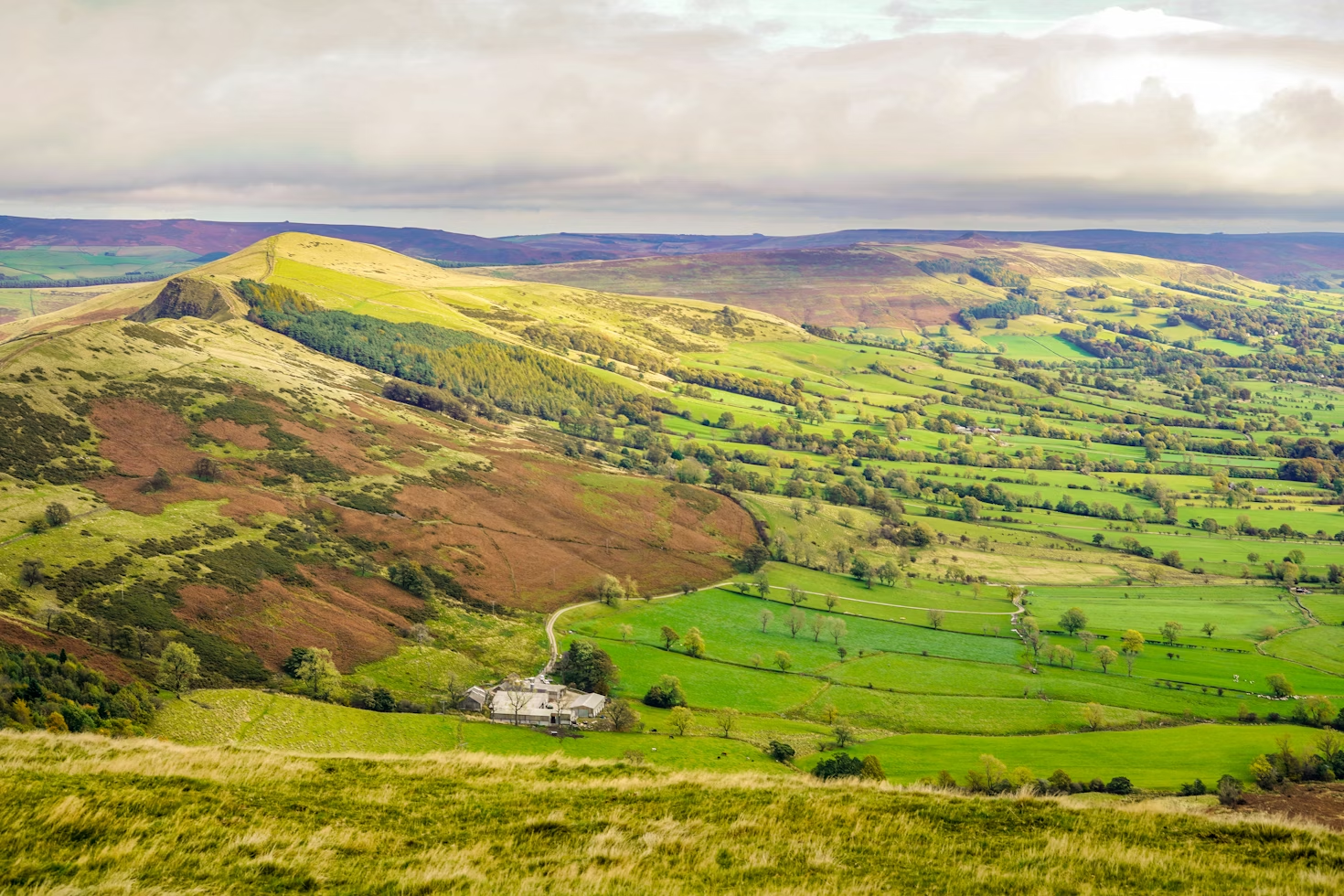
The Peak District is not defined by height, but it delivers views that feel expansive, dramatic and deeply memorable. Big views here come from position rather than altitude. A sudden drop from a gritstone edge, a ridge suspended above a valley, or a broad moorland plateau opening out in clear air can feel just as powerful as a mountain summit.
This guide focuses on Peak District peaks that consistently offer big views. These are places where the landscape opens up, horizons stretch, and the character of the National Park becomes clear in a single glance.
Big views in the Peak District come from a few key landscape features.
Gritstone edges create immediate drama. A gentle approach suddenly gives way to a steep drop and a wide horizon. Ridges offer continuous views that evolve as you move, rather than a single viewpoint. Plateaus provide scale and distance, especially in clear conditions, even if the ground itself feels subtle. Limestone hills rise sharply from valleys, creating strong contrast and clear summit moments.
Height alone is rarely the deciding factor. Many lower peaks outperform higher ground when it comes to views.
The peaks below are grouped by terrain rather than height. Some work well for short outings, others suit longer days. Views change dramatically with light, season and weather, so revisiting the same peak can deliver a completely different experience.
These peaks are not listed as a ranking. Each offers a different kind of big view.
These peaks deliver immediate impact. Views often begin the moment you reach the edge.
Bamford Edge
Approximate height: 424 metres
Area: Dark Peak
Why the views are exceptional: A steep drop above Ladybower Reservoir creates a classic Peak District panorama.
Direction of best views: South and west
Typical time required: 2 to 3 hours
Difficulty: Easy
Route style: Out and back or circular
Bamford Edge offers one of the most striking viewpoints in the Peak District, particularly effective in early morning or evening light.
Stanage Edge
Approximate height: 458 metres
Area: Eastern Edges
Why the views are exceptional: A long, continuous edge with wide views across the Hope Valley and Dark Peak.
Direction of best views: West
Typical time required: 2 to 4 hours
Difficulty: Easy
Route style: Linear or circular
Stanage Edge delivers scale rather than a single viewpoint. Walking its length allows the landscape to unfold gradually.
Curbar Edge
Approximate height: 371 metres
Area: Eastern Edges
Why the views are exceptional: Open, expansive views across the Derwent Valley with a strong sense of space.
Direction of best views: North and west
Typical time required: 2 to 3 hours
Difficulty: Easy
Route style: Linear or circular
Curbar Edge feels calmer than some neighbouring edges, making it ideal for soaking in the view rather than chasing it.
Derwent Edge
Approximate height: 538 metres
Area: Central Dark Peak
Why the views are exceptional: Elevated views over reservoirs combined with distinctive rock formations.
Direction of best views: East and south
Typical time required: 4 to 6 hours
Difficulty: Moderate
Route style: Linear or circular
Derwent Edge offers a more remote feel, with views that reward patience and steady progress.
These peaks provide views throughout the walk rather than at a single point.
Mam Tor
Approximate height: 517 metres
Area: Hope Valley
Why the views are exceptional: A narrow ridge with open views in multiple directions.
Direction of best views: All directions
Typical time required: 1.5 to 3 hours
Difficulty: Easy
Route style: Circular
Mam Tor’s strength lies in how constantly the view changes as you move along the ridge.
Chrome Hill
Approximate height: 425 metres
Area: White Peak
Why the views are exceptional: A sharply defined limestone ridge rising above surrounding valleys.
Direction of best views: South and east
Typical time required: 2.5 to 3.5 hours
Difficulty: Moderate
Route style: Circular
Chrome Hill feels sculpted and elevated, with views that contrast strongly with the surrounding farmland.
Parkhouse Hill
Approximate height: 360 metres
Area: White Peak
Why the views are exceptional: A narrow ridge with steep drops and a strong sense of height.
Direction of best views: South and west
Typical time required: 1.5 to 2.5 hours
Difficulty: Moderate
Route style: Out and back
Parkhouse Hill delivers big views in a compact, intense package.
These peaks rely on conditions. When the air is clear, the sense of scale is unmatched.
Kinder Scout
Approximate height: 636 metres
Area: Dark Peak
Why the views are exceptional: Vast horizons and a sense of being above the landscape.
Direction of best views: Varies with location
Typical time required: 5 to 7 hours
Difficulty: Moderate
Route style: Circular
Kinder Scout’s views are subtle rather than dramatic, but on clear days they feel immense.
Shining Tor
Height: 559 metres
Area: South West Peak
Why the views are exceptional: Open views across Cheshire, Staffordshire and the White Peak.
Direction of best views: West and south
Typical time required: 2.5 to 3.5 hours
Difficulty: Easy to moderate
Route style: Circular
Shining Tor combines a clear summit with broad, far-reaching views.
Big views depend as much on conditions as location. Clear air after a cold front often delivers the sharpest visibility. Early mornings and late evenings provide softer light and stronger contrast. Autumn and winter can offer exceptional clarity, while summer haze can limit distance even on fine days.
Wind exposure is common on edges and ridges, so comfort and safety should always be considered.
Some popular viewpoints are busy for a reason. They deliver reliable views with minimal effort. Peak bagging adds movement, context and progression to the experience. Walking to and along a peak creates a deeper understanding of how the view fits into the wider landscape.
Quieter peaks often offer equally impressive views with more space to enjoy them.
Many of these peaks link naturally. Gritstone edges can be combined using valley paths. Ridge walks can be paired with short edges. Half-day routes often deliver just as much visual reward as longer outings.
Balancing exposure, effort and timing helps keep big-view days enjoyable rather than rushed.
The highest peak does not always have the best view. Long walks are not required for expansive views. Popular peaks are not the only places worth visiting. Views are not limited to summer days.
Understanding these points helps you choose peaks based on experience rather than assumptions.
Track Peak District peaks with big views, revisit them in different conditions, and build a personal map of your favourite outlooks with Peaky Baggers.
The Peak District proves that big views are about position, not altitude. Stand in the right place, at the right time, and the landscape opens up in every direction. These peaks show that you do not need height to gain perspective, only awareness of where the land reveals itself best.
Photo by Tom Wheatley on Unsplash
.avif)

