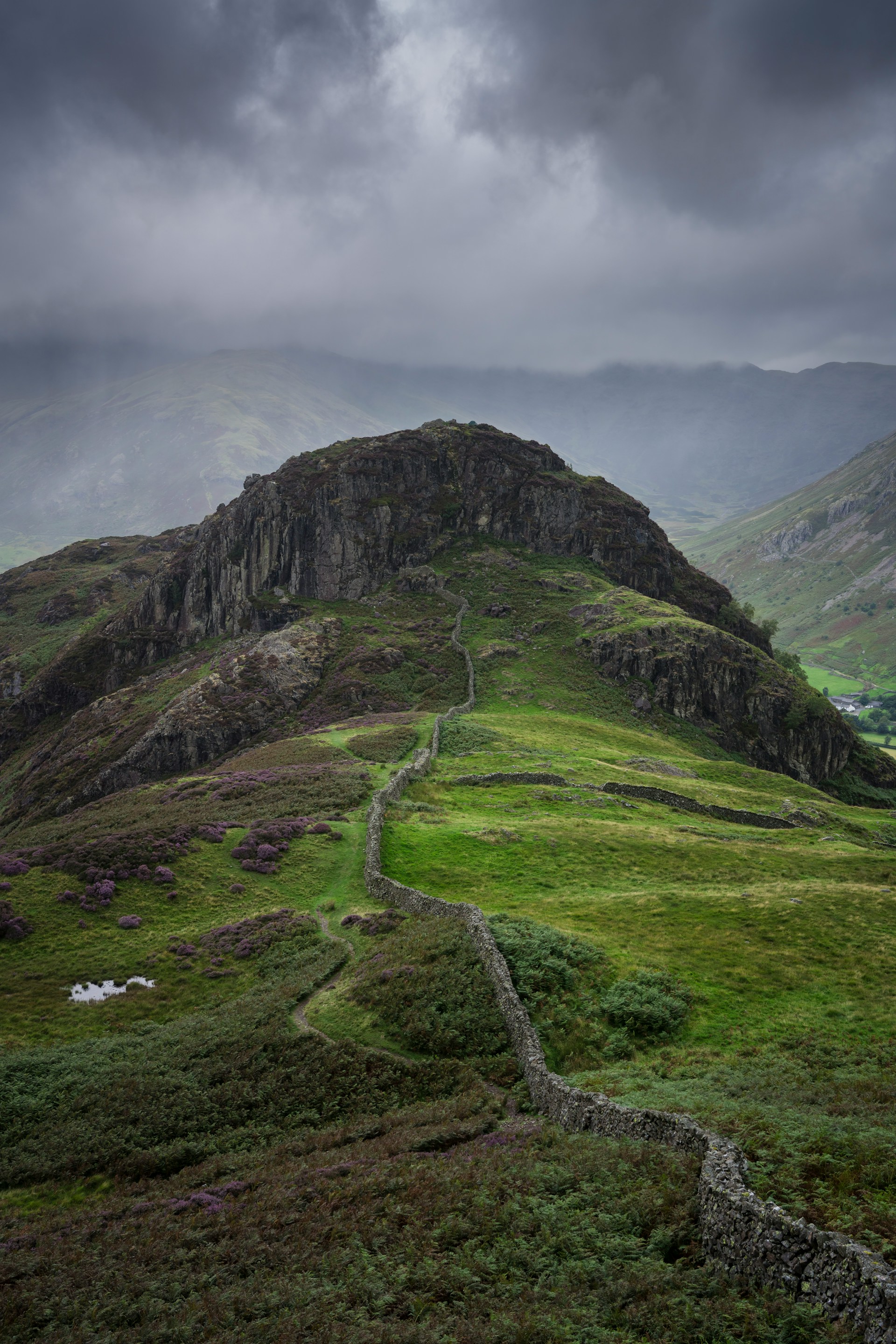
Discover the highest peaks in Northern England. Explore top mountains in the Lake District, Yorkshire Dales and North Pennines.
.avif)
When it comes to elevation, Northern England is dominated by one region: the Lake District.
But that’s only part of the story.
Beyond the Lakes, you’ve got high, exposed ground in the North Pennines, distinctive limestone peaks in the Yorkshire Dales, and remote hills further north.
These are the highest points across the region—but more importantly, they’re some of the best mountain days you can have in England.
For this list, we’re focusing on:
Because height alone doesn’t tell the full story—some peaks feel much bigger than their numbers suggest.
Height: 978m
Time: 4–6 hours
Route Type: Out-and-back or circular
Difficulty: Moderate
The highest mountain in England—and a must-do for most walkers.
A steady climb that becomes rocky and uneven near the summit.
Surrounding peaks, deep valleys, and wide Lake District views on clear days.
Height: 964m
Time: 5–7 hours
Route Type: Circular or extended route
Difficulty: Challenging
Less visited than Scafell Pike, but often considered a more serious climb.
Steeper and more rugged, with routes like Foxes Tarn requiring care.
A quieter, more rugged side of the Lake District.
Height: 950m
Time: 4–6 hours
Route Type: Ridge / circular
Difficulty: Moderate–Challenging
One of the most iconic mountain days in England thanks to its ridge routes.
Routes like Striding Edge involve ridge walking (a narrow path with steep drops either side).
Red Tarn below and wide views across the Lake District.
Height: 931m
Time: 3–5 hours
Route Type: Out-and-back
Difficulty: Moderate
One of the most accessible high peaks in England.
A steady, straightforward climb with well-defined paths.
Huge panoramic views, including Derwentwater and surrounding fells.
Height: 736m
Time: 4–6 hours
Route Type: Circular
Difficulty: Moderate
The highest point in the Yorkshire Dales.
Long, steady ascent with a broad ridge near the top.
Open views across the Dales and the Ribblehead Viaduct below.
Height: 893m
Time: 5–7 hours
Route Type: Out-and-back or circular
Difficulty: Moderate–Challenging
The highest point in the Pennines, with a completely different feel to the Lakes.
Long, exposed walking across open moorland.
Wide, uninterrupted landscapes—less dramatic, more expansive.
Height: 815m
Time: 5–7 hours
Route Type: Circular
Difficulty: Moderate
The highest point in Northumberland, offering a quieter experience.
Rolling terrain with a broad summit plateau (flat high ground).
Expansive views across the Cheviot Hills and into Scotland.
Each region offers a completely different experience—even at similar heights.
Conditions get harsher with height.
Especially in cloud or on plateaus.
Popular peaks fill up quickly.
Plan properly—it’s still a full mountain day.
The highest peaks in Northern England aren’t just about elevation.
They’re about the experience of standing on the highest ground in some of the UK’s most varied landscapes—from rugged mountain ridges to wide, open moorland.
Track your hikes, log your summits, and build your Northern England peak list with Peaky Baggers.
Photo by Calum Flanagan on Unsplash
.png)