Peak Bagging in Scotland
Scotland offers the wildest, biggest and most committing peak bagging in the UK. Longer approaches, higher mountains, unpredictable weather and genuine remoteness set Scottish hills apart from those elsewhere in Britain.
While Munros often dominate the conversation, Scotland’s most rewarding peak bagging experience comes from a mix of Munros, Corbetts and iconic standalone peaks. This list reflects that balance — focusing on mountains that define their regions and represent meaningful milestones for walkers progressing into more serious mountain terrain.
What Makes a Peak “Essential” in Scotland?
Every peak on this list meets several of the following criteria:
- Represents a key Scottish mountain region
- Offers a distinctive shape, ridge, or setting
- Is widely regarded as a classic Scottish mountain day
- Contributes to progression in scale, distance, or exposure
- Balances famous icons with quieter but outstanding peaks
This is not just a Munro checklist. It’s a foundation list for understanding Scottish mountains properly.
How to Use This List
There’s no correct order to complete these peaks. You might choose to:
- Work region by region
- Start with more accessible classics before tackling remote ranges
- Focus on summer ascents before winter objectives
- Mix Munros with Corbetts to build experience gradually
Scottish peak bagging rewards patience, preparation and repeat visits.
Scotland’s Essential Peaks (By Region)
Lochaber & Fort William
Home to the UK’s highest mountains and some of its most dramatic landscapes.
1. Ben Nevis
- Height: 1,345m
- Classification: Munro
- Why it’s essential: The highest peak in the UK and a true rite of passage.
- Typical time to summit: 6–8 hours
- Difficulty: Moderate
2. Aonach Mòr
- Height: 1,221m
- Classification: Munro
- Why it’s essential: A vast plateau summit with alpine-scale views.
- Typical time to summit: 5–7 hours
- Difficulty: Moderate
3. Aonach Beag
- Height: 1,234m
- Classification: Munro
- Why it’s essential: Remote-feeling despite its proximity to Ben Nevis.
- Typical time to summit: 6–8 hours
- Difficulty: Challenging
Glen Coe
One of Scotland’s most iconic mountain landscapes, defined by steep ridges and dramatic profiles.
4. Buachaille Etive Mòr
- Height: 1,022m
- Classification: Munro
- Why it’s essential: One of the most recognisable mountains in Britain.
- Typical time to summit: 6–8 hours
- Difficulty: Challenging
5. Bidean nam Bian
- Height: 1,150m
- Classification: Munro
- Why it’s essential: Glen Coe’s highest and most complex mountain.
- Typical time to summit: 7–9 hours
- Difficulty: Challenging
6. Meall Dearg (Aonach Eagach)
- Height: 953m
- Classification: Munro
- Why it’s essential: Part of Scotland’s most famous and exposed ridge.
- Typical time to summit: 6–8 hours
- Difficulty: Technical
Cairngorms
Vast, high plateaus and some of the most serious navigation terrain in the UK.
7. Ben Macdui
- Height: 1,309m
- Classification: Munro
- Why it’s essential: Remote, expansive and truly alpine in feel.
- Typical time to summit: 7–9 hours
- Difficulty: Challenging
8. Cairn Gorm
- Height: 1,245m
- Classification: Munro
- Why it’s essential: Accessible but still serious in poor conditions.
- Typical time to summit: 4–6 hours
- Difficulty: Moderate
9.
Braeriach
- Height: 1,296m
- Classification: Munro
- Why it’s essential: One of the UK’s most remote-feeling summits.
- Typical time to summit: 8–10 hours
- Difficulty: Challenging
Torridon & North-West Highlands
Rugged sandstone mountains rising dramatically from sea lochs and glens.
10. Liathach
- Height: 1,055m
- Classification: Munro
- Why it’s essential: A narrow ridge and one of Scotland’s finest mountains.
- Typical time to summit: 7–9 hours
- Difficulty: Technical
11.
Beinn Eighe
- Height: 1,010m
- Classification: Munro
- Why it’s essential: Torridon scenery at its most dramatic.
- Typical time to summit: 7–9 hours
- Difficulty: Challenging
12. Beinn Alligin
- Height: 986m
- Classification: Munro
- Why it’s essential: Shorter but packed with ridge interest.
- Typical time to summit: 6–8 hours
- Difficulty: Challenging
Isle of Skye
Technical, exposed and unlike anywhere else in the UK.
13. Sgùrr Alasdair
- Height: 992m
- Classification: Munro
- Why it’s essential: The highest peak on Skye and a serious objective.
- Typical time to summit: 7–9 hours
- Difficulty: Technical
14. Blà Bheinn (Blaven)
- Height: 928m
- Classification: Munro
- Why it’s essential: A standalone classic with extraordinary views.
- Typical time to summit: 6–8 hours
- Difficulty: Challenging
Southern Highlands & Loch Lomond
Accessible classics and excellent first Scottish mountains.
15. Ben Lomond
- Height: 974m
- Classification: Munro
- Why it’s essential: Often the first Munro for many walkers.
- Typical time to summit: 4–6 hours
- Difficulty: Moderate
16.
Schiehallion
- Height: 1,083m
- Classification: Munro
- Why it’s essential: A near-perfect cone with wide-ranging views.
- Typical time to summit: 4–6 hours
- Difficulty: Moderate
17. Ben Lawers
- Height: 1,214m
- Classification: Munro
- Why it’s essential: High alpine flora and a broad summit ridge.
- Typical time to summit: 5–7 hours
- Difficulty: Moderate
Iconic Non-Munro Peaks
Essential Scottish mountains that prove height isn’t everything.
18. The Cobbler (Ben Arthur)
- Height: 884m
- Classification: Corbett
- Why it’s essential: One of Scotland’s most characterful peaks.
- Typical time to summit: 4–6 hours
- Difficulty: Moderate
19. Suilven
- Height: 731m
- Classification: Corbett
- Why it’s essential: Isolated, dramatic and unforgettable.
- Typical time to summit: 7–9 hours
- Difficulty: Challenging
20. Stac Pollaidh
- Height: 612m
- Classification: Graham
- Why it’s essential: Small in height but huge in character.
- Typical time to summit: 3–5 hours
- Difficulty: Moderate
Difficulty, Scale & Progression Notes
Scottish mountains involve longer days, greater remoteness, and more complex navigation than much of the rest of the UK. Weather can change rapidly, and winter conditions add a completely different level of seriousness.
Build experience gradually and choose objectives that match your skills and conditions.
Track Your Progress with Peaky Baggers
Log Scotland’s essential peaks, track what you’ve bagged, and plan your next Highland adventure with Peaky Baggers.
Final Thought
Scotland’s mountains demand more commitment than anywhere else in the UK — but they reward that effort with scale, solitude and unforgettable days in the hills. These peaks are the foundations of a lifetime of Scottish peak bagging.
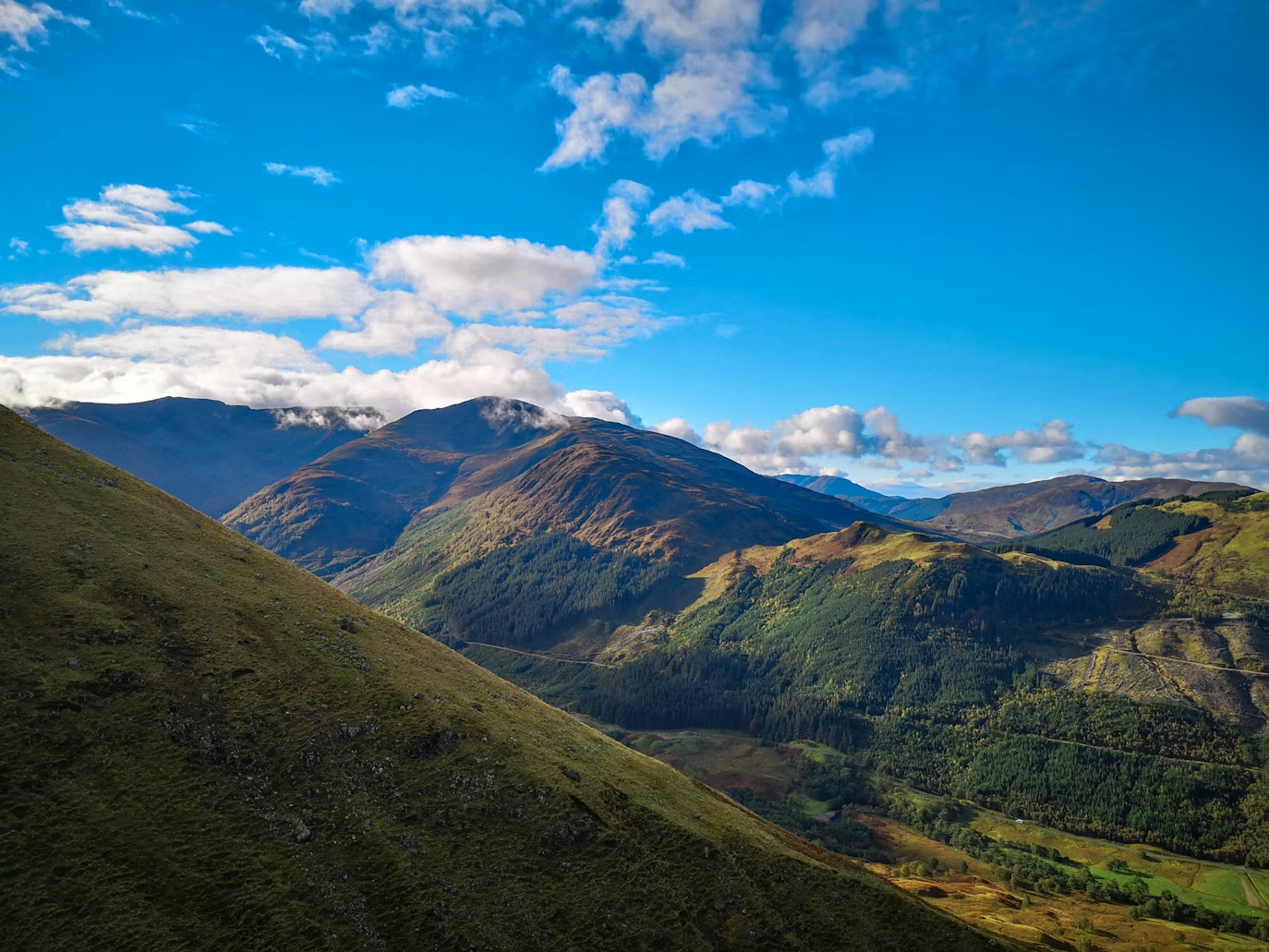
Photo by Migle Siauciulyte on Unsplash

.avif)
.jpg)
