Discover the best non-Munro peaks in Scotland including Suilven, Stac Pollaidh, Schiehallion and other iconic mountains every peak bagger should climb.

Munros dominate the world of Scottish peak bagging. The list of 282 mountains over 3000 feet has inspired generations of walkers to explore the Highlands.
However, some of Scotland’s most memorable mountains fall below the Munro height threshold. These peaks may be lower, but they often stand alone in the landscape, creating dramatic silhouettes and unforgettable summit views.
In many cases these mountains are just as rewarding as the higher peaks. Their distinctive shapes, dramatic ridges and spectacular settings have made them some of the most iconic mountains in Scotland.
For peak baggers, exploring non-Munro peaks adds variety and depth to the experience of Scottish hill walking.
A Munro is defined as a Scottish mountain with a height greater than 3000 feet, or 914 metres. While this classification has become central to Scottish peak bagging culture, it excludes many mountains that are visually striking or historically significant.
Several other mountain classifications exist in Scotland. Corbetts are peaks between 2500 and 3000 feet with a prominence of at least 500 feet. Grahams are mountains between 2000 and 2500 feet with a similar prominence requirement.
Some famous mountains fall into these categories rather than the Munro list. Others are recognised simply because of their prominence or unique landscape setting.
These peaks demonstrate that height alone does not define a great mountain.
The Northwest Highlands contain some of the most dramatic mountains in Scotland. Many of these peaks rise abruptly from low surrounding terrain, making them visually striking despite their relatively modest height.
Height: 731 metres
Peak classification: Corbett
Region: Assynt
Why it matters to peak baggers: One of Scotland’s most recognisable mountains
Typical walking time: 6 to 8 hours
Difficulty: Moderate
Route style: Out and back
Suilven’s long ridge rises dramatically above the surrounding moorland. Its isolated position makes it one of the most distinctive mountains in Scotland.
Height: 612 metres
Peak classification: Graham
Region: Assynt
Why it matters to peak baggers: A dramatic rocky ridge offering unforgettable views
Typical walking time: 3 to 4 hours
Difficulty: Moderate
Route style: Circular
Stac Pollaidh is famous for its jagged summit ridge and panoramic views across the Northwest Highlands.
Height: 808 metres
Peak classification: Corbett
Region: Assynt
Why it matters to peak baggers: A complex mountain with multiple summits
Typical walking time: 6 to 7 hours
Difficulty: Moderate
Route style: Circular
Quinag rises above Loch Assynt and offers sweeping views across the surrounding landscape.
Height: 849 metres
Peak classification: Corbett
Region: Inverpolly
Why it matters to peak baggers: A towering isolated mountain above the surrounding moorland
Typical walking time: 5 to 6 hours
Difficulty: Moderate
Route style: Circular
Cul Mor dominates the Inverpolly landscape and provides spectacular summit views.
The Isle of Skye contains several mountains that have become internationally recognised.
Height: 719 metres
Peak classification: Marilyn
Region: Isle of Skye
Why it matters to peak baggers: One of Scotland’s most photographed landscapes
Typical walking time: 2 to 3 hours
Difficulty: Easy to moderate
Route style: Out and back
The Old Man of Storr stands above the Trotternish peninsula and offers dramatic views across the island.
Height: 543 metres
Peak classification: Marilyn
Region: Isle of Skye
Why it matters to peak baggers: A spectacular landslip landscape with unique rock formations
Typical walking time: 3 to 4 hours
Difficulty: Moderate
Route style: Circular
The Quiraing is one of the most visually striking walking areas in Scotland.
Height: 1083 metres
Peak classification: Munro Top (historically debated but often discussed among iconic peaks)
Region: Perthshire
Why it matters to peak baggers: One of the most recognisable mountains in Scotland
Typical walking time: 4 to 5 hours
Difficulty: Moderate
Route style: Out and back
Schiehallion’s distinctive symmetrical shape makes it one of the most famous mountains in the Highlands.
Height: 454 metres
Peak classification: Corbett Top
Region: Trossachs
Why it matters to peak baggers: A small mountain with one of the best viewpoints in Scotland
Typical walking time: 2 to 3 hours
Difficulty: Easy to moderate
Route style: Out and back
Despite its modest height, Ben A’an offers spectacular views across Loch Katrine.
Height: 361 metres
Peak classification: Marilyn
Region: Loch Lomond
Why it matters to peak baggers: A scenic hill overlooking Loch Lomond
Typical walking time: 2 to 3 hours
Difficulty: Easy
Route style: Circular
Conic Hill provides sweeping views across the islands of Loch Lomond.
Some non-Munro peaks are particularly memorable because of their ridges.
Stac Pollaidh is a good example, with its jagged ridge providing one of the most dramatic short mountain routes in Scotland.
Other ridges in the Highlands and islands offer similar experiences, combining scrambling sections with spectacular viewpoints.
These routes often become favourites for peak baggers seeking memorable mountain days.
Many peak baggers begin their journeys with the Munro list, but exploring beyond that list opens the door to a wider range of landscapes.
Some of the mountains that leave the strongest impressions are not Munros at all. Their distinctive shapes and dramatic settings often make them more memorable than higher peaks.
By exploring non-Munro peaks, walkers gain a deeper appreciation of the diversity of Scotland’s mountains.
Many of these peaks are located in remote parts of the Highlands or on islands such as Skye. Planning travel and accommodation in advance can help maximise time in the hills.
Weather conditions can change rapidly in these areas, so preparation and navigation equipment are essential.
Some peaks can also be combined into longer trips exploring several iconic mountains within the same region.
This guide is ideal for peak baggers expanding beyond the Munro list. It also suits walkers visiting Scotland who want to explore some of the most iconic mountains in the country.
Photographers and landscape enthusiasts are often drawn to these peaks because of their distinctive shapes and dramatic settings.
Track Scotland’s non-Munro peaks, record your summit climbs and build your personal peak bagging list with Peaky Baggers.
Munros may define Scottish peak bagging culture, but some of the most unforgettable mountains fall outside the list. Scotland’s non-Munro peaks reveal dramatic landscapes, distinctive shapes and memorable summit experiences that every peak bagger should experience.
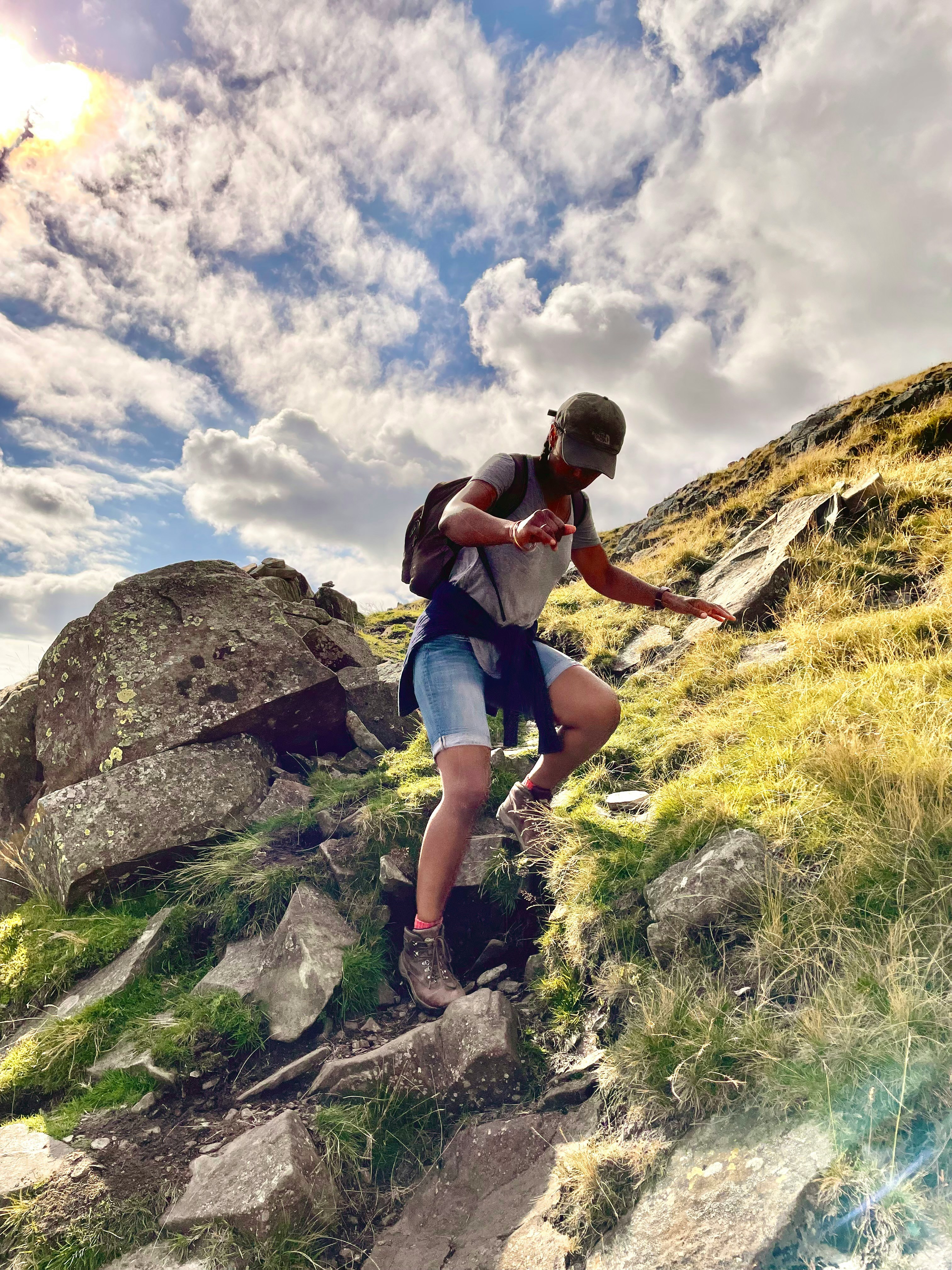
Photo by Janita Top on Unsplash