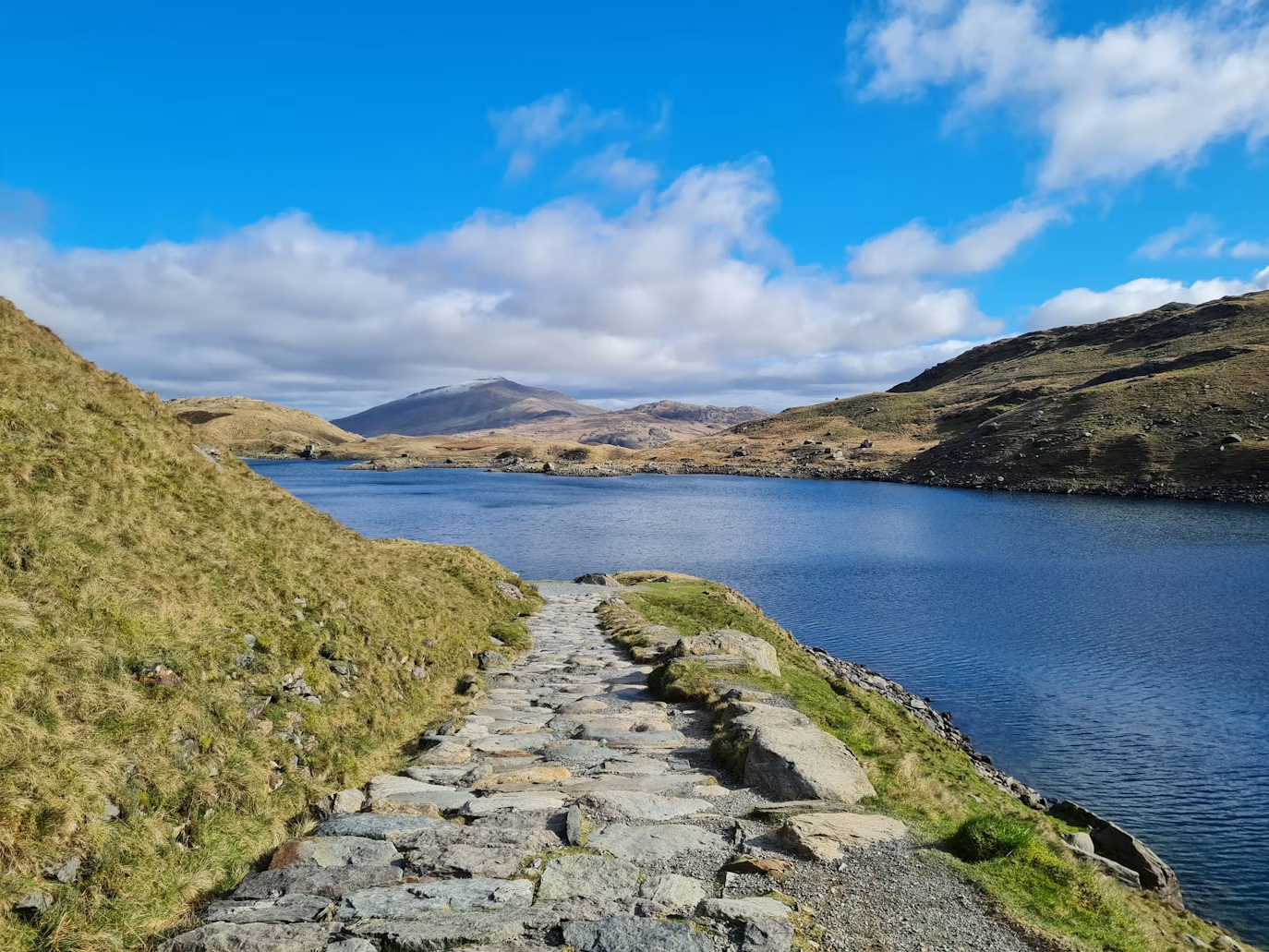
Some hills are local leg-stretchers.
Lovely. Sensible. Home in time for tea.
Others require a long drive, a very early alarm and at least one moment where you question whether your snack strategy can legally be called a strategy.
Scotland is full of both.
There are brilliant hills close to towns, cities and easy roads. Peaks you can fit into a morning. Summits you can revisit again and again. Hills that make perfect sense.
Then there are the destination peaks.
The ones people plan weekends around. The ones that need ferries, overnight stays, weather windows, route research, long approaches and a car full of suspiciously organised kit. The ones that make you stare at the map and think, “That is quite far away,” before immediately checking accommodation.
A Scottish peak worth travelling for is not always the highest one.
Sometimes it is a Munro with a famous ridge. Sometimes it is a small island hill with a huge view. Sometimes it is a remote summit where the walk-in is part of the whole experience. Sometimes it is a mountain so iconic that seeing it from the road feels like part of the reward.
These are the peaks that make the journey part of the story.
The hills that justify the early start.
The summits that make a long drive feel like a reasonable life choice.
Mostly.
A peak is worth travelling for when the whole experience feels memorable.
That might be because of the summit view. It might be because of the route. It might be because of the mountain’s shape, skyline, location, history, remoteness or atmosphere.
Some peaks are worth travelling for because they are famous. Ben Nevis, Buachaille Etive Mòr, Liathach and Suilven all have that magnetic quality where walkers, photographers and road-trippers are drawn to them from miles away.
Others are worth travelling for because they feel different from anything closer to home.
Island mountains. Coastal summits. Far north hills. Remote wilderness Munros. Strange rock formations. Ridge routes that feel like proper journeys rather than simple ascents.
A destination peak usually offers at least one of these:
Height helps, but it is not everything.
Sgùrr na Stri is not a giant mountain, yet its view is legendary. Stac Pollaidh is not a Munro, but it delivers more character than many much bigger hills. The Cobbler proves that a mountain can have huge appeal without reaching Munro status.
A good destination peak is not just a tick.
It is a reason to go somewhere.
The mountain may be the reason for the trip, but the weather, road, ferry, daylight and your legs all get a vote.
That is the slightly inconvenient truth of travelling for hills.
The further you travel, the more tempting it becomes to force the plan. You booked accommodation. You drove for hours. You have told people what you are doing. The peak has become the point of the trip.
But Scottish weather does not respect your booking confirmation.
The best peak-bagging trips are flexible. Choose a base with several options. Have a main objective, a shorter backup route and a low-level bad-weather plan. Leave room for conditions to change.
If you are travelling a long way, consider staying locally rather than driving late, sleeping badly and trying to climb something serious the next morning. A tired walker on a big route is not an inspiring combination.
When planning a trip, think about:
Make the journey part of the trip, not just admin.
Some of the best Scottish mountain days begin before the walk does: the road into Torridon, the ferry to Arran, the drive through Glencoe, the slow approach into Assynt, the first glimpse of Skye’s ridges across the water.
The summit matters.
But the story starts earlier.
Usually somewhere around the first service station coffee.
The most dangerous phrase in peak bagging is not always “it looks fine from here”.
Sometimes it is “but we drove five hours for this”.
Travelling a long way for a mountain can create pressure to go ahead even when conditions are poor. That pressure is understandable. Nobody wants to abandon the main objective after planning a trip around it.
But destination peaks are often serious for the exact reasons they are memorable.
They may be remote, exposed, high, rocky, tidal, ferry-dependent, weather-sensitive or hard to escape from once committed. Famous routes can still be dangerous. Popular mountains still have bad weather. Iconic ridges do not become easier because they are on everyone’s bucket list.
Choose safety over the tick.
Every time.
Have lower-level alternatives. Carry proper kit. Tell someone your route. Check the weather carefully. Be prepared to turn back.
A failed summit can still be a brilliant trip.
A forced summit in poor conditions can become the kind of story nobody wanted.
The hill will still be there.
Probably looking dramatic and smug.
Best for: iconic remote mountain drama
Location: Assynt
Hill type: Graham
Difficulty: Hard
Suilven is one of Scotland’s most recognisable mountains.
Its long, isolated shape rises out of the Assynt landscape like something designed specifically to make people stop the car and say, “What is that?”
It is not a Munro, but it absolutely feels like a destination peak.
The approach is long, the setting is wild and the views are huge. Lochs, moorland, coastline and scattered Assynt summits fill the landscape. Suilven feels separate from everything around it, which is a big part of the appeal.
This is not a casual short walk.
The distance makes it a serious day, and conditions need to be right. But for experienced walkers, Suilven is one of Scotland’s most memorable mountain objectives.
It is also worth travelling for even if you only see it from below.
Some mountains are like that.
They do not need you on the summit to make the journey worthwhile.
Suilven combines iconic shape, wild setting and one of Scotland’s great summit experiences.
Plan it as part of a wider Assynt trip. Stac Pollaidh, Quinag, Canisp and Cul Mòr all make excellent nearby options.
Best for: huge reward from a shorter climb
Location: Assynt / Inverpolly
Hill type: Graham
Difficulty: Moderate to hard
Stac Pollaidh is proof that a mountain does not need to be huge to be unforgettable.
The hill is famous for its jagged ridge, dramatic profile and outstanding views over the Assynt landscape. Lochs, sea, moorland and neighbouring peaks all spread out around you, making the route feel far bigger than its height suggests.
The main walking route gives a huge amount of reward for a relatively short climb.
The true summit is a different matter, involving scrambling and exposure. You do not need to attempt it to enjoy the mountain.
Stac Pollaidh is one of the best destination peaks in Scotland for walkers who want character, views and drama without committing to a full Munro day.
It is ideal for a long weekend in the north-west Highlands.
Few hills offer this much mountain drama, photographic reward and wild scenery from such a manageable route.
Go early or late for better light. The views are excellent all day, but golden hour makes Assynt behave very unfairly.
Best for: wild west coast mountain grandeur
Location: Dundonnell / Wester Ross
Hill type: Munro massif
Difficulty: Very hard
An Teallach is one of Scotland’s great mountain groups.
It has ridges, pinnacles, steep corries, wild views and a reputation that makes experienced walkers pay attention. The mountain feels remote, dramatic and serious from almost every angle.
For those with the right skills and conditions, An Teallach is one of the finest routes in the Highlands.
It is also a mountain worth travelling to admire from lower viewpoints. You do not always need to be on the ridge to appreciate its scale and character.
The full traverse is a serious undertaking, with exposed ground and route choices that require experience. Weather matters. So does judgement.
In settled conditions, An Teallach can be magnificent.
In poor conditions, it is not a place for hopeful improvisation.
An Teallach offers some of the most dramatic ridge scenery and wild west coast mountain atmosphere in Scotland.
Give yourself weather flexibility. This is a mountain worth waiting for, not forcing into a poor forecast.
Best for: Torridon ridge drama
Location: Torridon
Hill type: Munro ridge
Difficulty: Very hard
Liathach is one of the classic mountains of the Scottish Highlands.
Its huge sandstone ridge rises above Glen Torridon in a way that feels almost unreasonable. From the road, it looks dramatic. From the ridge, it is even more serious.
The traverse is one of Scotland’s finest mountain days for experienced walkers, with exposure, pinnacles, route choices and huge views over Beinn Eighe, Beinn Alligin, Loch Torridon and the west coast.
Liathach is absolutely worth travelling for.
But not necessarily worth climbing in the wrong conditions.
It is a serious ridge and should be saved for dry, calm, clear weather and walkers who are comfortable with exposure. The mountain is also spectacular from below, especially in evening light.
Sometimes the best decision is to admire it from Glen Torridon and come back another day.
That still counts as good mountain judgement.
Liathach is one of Scotland’s most dramatic ridges and one of Torridon’s defining mountains.
Base yourself in Torridon for more than one day if possible. The weather window is often the real route.
Best for: classic Torridon experience
Location: Torridon
Hill type: Munro pair
Difficulty: Hard / very hard
Beinn Alligin offers a slightly more approachable Torridon experience than Liathach, but it is still a serious mountain day.
The route can include two Munros, Tom na Gruagaich and Sgùrr Mhòr, with the Horns of Alligin adding scrambling interest depending on your route choice.
The views are exceptional.
Loch Torridon, Liathach, Beinn Eighe and the surrounding west coast landscape all make the mountain feel like a proper destination. It has ridge character, coastal views and that unmistakable Torridon atmosphere.
For experienced walkers, Beinn Alligin is a brilliant reason to travel north-west.
It gives a full mountain journey without quite the same sustained intensity as Liathach, though conditions and exposure still matter.
Beinn Alligin gives classic Torridon ridge walking, coastal views and a major mountain experience.
Choose this before Liathach if you are building confidence in Torridon terrain.
Best for: Britain’s highest mountain done properly dramatically
Location: Lochaber / Fort William
Hill type: Munro / ridge route
Difficulty: Very hard
Ben Nevis is the obvious destination mountain.
It is Britain’s highest peak, and that alone makes people travel for it. But the CMD Arête turns the route into something far more memorable than a simple summit tick.
This route links Càrn Mòr Dearg with Ben Nevis by way of a dramatic arête, giving outstanding views of the North Face. It feels like a proper mountain journey rather than just a climb to the highest point.
It is much more demanding than the Mountain Track.
The day is long, high and exposed, and conditions matter. It is best suited to fit, confident hillwalkers with experience on serious terrain.
For those ready for it, the CMD Arête is one of Scotland’s finest destination routes.
It gives Ben Nevis a dramatic ridge approach and some of the best views of the mountain’s North Face.
Use Fort William as a base and keep a weather backup. This route deserves clear, calm conditions.
Best for: iconic Glencoe skyline
Location: Glencoe / Glen Etive
Hill type: Munro massif
Difficulty: Hard / very hard
Buachaille Etive Mòr is one of the most photographed mountains in Scotland.
It stands at the entrance to Glencoe with the kind of profile that makes people slow down even if they are not hillwalkers. As a mountain subject, it is worth travelling for before you even put boots on.
As a route, it is also a classic.
The ridge links Stob Dearg and Stob na Bròige, with excellent views over Rannoch Moor, Glen Etive and Glencoe. The ground is steep and rocky, and poor weather can make the day serious.
For experienced walkers, Buachaille Etive Mòr is a brilliant destination peak.
For photographers, it is equally rewarding from below.
Either way, it is one of Scotland’s great mountain experiences.
It combines iconic shape, classic Glencoe scenery and a proper ridge route across a famous skyline.
If the summit weather is poor, explore lower viewpoints around Rannoch Moor and Glen Etive. The mountain still delivers.
Best for: serious exposed ridge adventure
Location: Glencoe
Hill type: Munro ridge / scramble
Difficulty: Very hard / technical
Aonach Eagach is one of Scotland’s most famous ridge traverses.
It is narrow, exposed, committing and unforgettable for those with the right experience. The route includes Meall Dearg and Sgorr nam Fiannaidh, but the ridge itself is the main event.
This is absolutely not a beginner route.
Aonach Eagach requires scrambling confidence, a strong head for heights, dry conditions and calm weather. Once committed, escape options are limited, so route judgement matters.
For experienced scramblers, it is worth travelling for.
For everyone else, it is worth waiting for.
There is a difference.
Aonach Eagach offers one of the most sustained and famous scrambling ridge experiences in Scotland.
Do not let a Glencoe trip pressure you into attempting it. The ridge should fit the conditions, not the itinerary.
Best for: big character without Munro height
Location: Arrochar Alps
Hill type: Corbett
Difficulty: Moderate to hard
The Cobbler, or Ben Arthur, is one of Scotland’s most distinctive smaller mountains.
It has character, shape and summit drama far beyond its height. The rocky summit features are instantly recognisable, and the whole hill feels playful, dramatic and slightly theatrical.
It is easier to reach than many remote destination peaks, making it a brilliant choice for walkers who want a memorable mountain without heading to the far north or west.
The true summit involves scrambling and exposure, but there is plenty to enjoy without pushing beyond your comfort zone.
The Cobbler is a perfect reminder that Munro status is not the only thing that makes a hill worth travelling for.
It has one of Scotland’s most distinctive mountain profiles and offers huge character close to the Central Belt.
Go for the hill, not just the tick. The Cobbler is about shape, atmosphere and views as much as summit height.
Best for: classic accessible Munro
Location: Loch Lomond
Hill type: Munro
Difficulty: Hard
Ben Lomond is popular for good reason.
It is accessible, recognisable and gives excellent views over Loch Lomond and the southern Highlands. For many walkers, it is the first Munro they travel for, and it makes a strong introduction to Scottish mountain walking.
The standard route is clear in good conditions, but Ben Lomond is still a serious hill.
Weather, wind, winter conditions and fatigue all matter. Popularity does not make a mountain easy, but it does mean you may have company on the route.
Ben Lomond is worth travelling for if you want a classic Scottish Munro experience without the logistics of more remote mountains.
It offers a classic, accessible Munro day with huge Loch Lomond views.
Start early if you want a quieter experience. The summit sandwich audience can assemble quickly on good days.
Best for: iconic shape and straightforward Munro appeal
Location: Perthshire
Hill type: Munro
Difficulty: Hard
Schiehallion is one of Scotland’s most recognisable Munros.
Its long, graceful shape makes it instantly appealing, and the route is a popular choice for confident walkers looking for a classic Munro day.
In clear weather, the views are excellent, with a strong sense of being high above Perthshire. The main route is relatively straightforward by Munro standards, though the summit boulderfield adds effort and can slow progress.
Schiehallion is worth travelling for because it has the full classic Munro feel: shape, views, history, popularity and a satisfying summit.
It is not the wildest mountain in Scotland.
But it knows exactly what it is doing.
Schiehallion combines iconic shape, accessible Munro appeal and excellent central Highland views.
Allow time for the summit boulderfield. The last section is where your pace may quietly leave the chat.
Best for: high-level Munro bagging
Location: Loch Tay / Lawers range
Hill type: Munro
Difficulty: Hard / very hard depending on conditions
Ben Lawers is one of Scotland’s highest Munros and a strong destination for walkers building their Munro experience.
The high start point helps access, and the route often includes Beinn Ghlas, giving a satisfying multi-summit feel. Views over Loch Tay and the surrounding Highlands can be excellent.
The height means weather matters.
Wind, cold, low cloud and winter conditions can make Ben Lawers much more serious than the access might suggest. It should not be underestimated simply because the car park starts high.
For Munro baggers, the Lawers range is worth travelling for because it offers several quality mountain routes in one area.
Ben Lawers gives high-level Munro walking, big views and access to one of Scotland’s best mountain ranges.
Base yourself near Loch Tay if you want to explore more of the range rather than rushing one summit.
Best for: dramatic ridge circuit above Loch Awe
Location: Argyll
Hill type: Munro
Difficulty: Very hard
Ben Cruachan is one of the great west Highland Munros.
The classic horseshoe route gives ridge walking, steep ground, summit drama and superb views over Loch Awe and Argyll. It feels like a complete mountain day, with a strong sense of journey and plenty of character.
This is not an easy route.
The terrain can be steep and rocky, and poor weather makes the day much more serious. But in good conditions, Ben Cruachan is a brilliant destination for experienced walkers.
It is especially good as part of a west coast weekend.
Loch views, ridge walking and a proper Munro challenge.
A strong combination.
Ben Cruachan offers a classic horseshoe route, dramatic ridge walking and huge views over Loch Awe.
Save it for a clear day if possible. The views over Argyll are a big part of the reward.
Best for: remote Knoydart wilderness
Location: Knoydart
Hill type: Munro
Difficulty: Very hard
Ladhar Bheinn is one of Scotland’s great remote Munros.
Set in Knoydart, it offers huge views over Loch Hourn, Loch Nevis, sea lochs, islands and wild west coast mountains. The setting is exceptional, and the journey to reach it is part of the adventure.
This is not a casual weekend tick.
Access may involve ferry logistics, long walking approaches, overnight stays or careful multi-day planning. The mountain itself is serious, with big terrain and weather exposure.
For experienced walkers seeking wilderness, Ladhar Bheinn is absolutely worth travelling for.
It is a mountain that feels far from ordinary life.
Which is great, provided your planning has remembered how to get back to ordinary life afterwards.
Ladhar Bheinn offers remote Knoydart wilderness, sea-loch views and one of Scotland’s finest mountain settings.
Plan access, accommodation and weather windows carefully. The logistics are part of the route.
Best for: ultimate remote Munro atmosphere
Location: Fisherfield / Wester Ross
Hill type: Munro
Difficulty: Very hard
A’ Mhaighdean is often described as one of Scotland’s remotest Munros.
That alone makes it a destination peak for experienced walkers and backpackers. It sits deep in Fisherfield, far from easy access, and reaching it usually involves a long approach, a huge day or a multi-day plan.
The summit views are extraordinary.
Wild lochs, remote mountains and west coast scenery stretch around you in every direction. The feeling of isolation is part of what makes the mountain special.
A’ Mhaighdean is not about convenience.
It is about commitment, planning and the reward of reaching somewhere that feels properly wild.
A’ Mhaighdean offers one of Scotland’s greatest remote summit experiences and a true wilderness atmosphere.
Treat it as a trip, not a tick. This is the kind of mountain that deserves time.
Best for: iconic Skye scenery
Location: Isle of Skye / Trotternish
Hill type: hill / viewpoint area
Difficulty: Moderate
The Storr is one of Scotland’s most recognisable landscapes.
The Old Man of Storr, the cliffs, the sea views and the Trotternish scenery create a scene that people travel from across the world to see. It is more of a viewpoint route than a traditional summit-bagging objective, but it belongs firmly on any list of Scottish peaks worth travelling for.
The route can be busy, muddy and weather-sensitive.
But it is still special.
Go early, go late or go in moody light, and the whole place can feel atmospheric in a way few landscapes manage.
The Storr proves that a destination peak does not always need a huge route.
Sometimes the landscape does the heavy lifting.
The Storr offers one of Scotland’s most iconic combinations of rock formations, sea views and island atmosphere.
Sunrise is famous here for good reason, but evening light can also be excellent and slightly less hectic.
Best for: surreal island landscape
Location: Isle of Skye / Trotternish
Hill type: landslip / hill route
Difficulty: Moderate
The Quiraing is one of Skye’s strangest and most memorable landscapes.
Cliffs, pinnacles, slopes, sea views and strange landforms all combine into a walking experience that feels completely different from a normal hill route. It is more about immersion in the landscape than summit ticking.
That is exactly why it is worth travelling for.
The Quiraing can be muddy, slippery and exposed, especially in poor weather. Visibility and wind matter, and the route deserves more care than some visitors expect.
In good conditions, though, it is unforgettable.
Skye is not known for subtlety.
The Quiraing is one of its least subtle moments.
It offers one of Scotland’s most unusual hill landscapes, with dramatic landforms and sweeping coastal views.
Pair it with The Storr, but do not rush both into poor weather. Each deserves time.
Best for: Skye Munro views without the full Cuillin commitment
Location: Isle of Skye
Hill type: Munro
Difficulty: Hard
Bla Bheinn is one of Skye’s best mountain viewpoints.
It gives superb views towards the Black Cuillin, with sea, lochs, islands and mainland hills adding even more drama. For experienced walkers, it offers a proper Skye Munro day without taking on the most technical Cuillin ridge routes.
That does not mean easy.
Bla Bheinn is steep, rocky and serious, with route-finding and conditions both important. It is best saved for clear weather, because the views are the whole point.
For walkers visiting Skye, Bla Bheinn is absolutely worth building a day around.
It delivers the kind of summit panorama that makes the island feel almost unfair.
Bla Bheinn offers one of the finest summit views on Skye, with Cuillin drama and coastal scenery in every direction.
Keep it for the clearest day of your Skye trip. This is not a mountain to waste in cloud if you have options.
Best for: one of Scotland’s greatest viewpoints
Location: Isle of Skye / near Loch Coruisk
Hill type: small hill / remote viewpoint
Difficulty: Hard due to remoteness
Sgùrr na Stri is a small hill with an enormous reputation.
Its view over Loch Coruisk, the Cuillin and the surrounding sea-and-mountain landscape is often regarded as one of Scotland’s finest. The height is modest, but the reward is anything but.
The challenge is access.
Reaching Sgùrr na Stri usually involves a long walk or boat logistics, making it more serious than the map height might suggest. This is not a casual roadside viewpoint.
For adventurous walkers and photographers, it is worth every bit of planning.
Sgùrr na Stri is the perfect reminder that the best views are not always found on the highest mountains.
Sometimes they are found on the hill that quietly understands composition better than everyone else.
It offers a legendary view over Loch Coruisk and the Cuillin from a modest but remote hill.
Sort the access plan first. The walk or boat logistics are what make the day work.
Best for: classic island summit day
Location: Isle of Arran
Hill type: Corbett
Difficulty: Hard
Goatfell is Arran’s most famous peak and one of Scotland’s best island mountain days.
The journey begins with the ferry, which already makes the walk feel like more of an adventure. From the summit, you get views over Arran, Holy Isle, Kintyre, the Firth of Clyde and mainland Scotland.
It is accessible compared with many remote destination peaks, but it is still a proper hill.
The route from Brodick is popular in good conditions, and the mountain can be busy. But the mix of island atmosphere, sea views and summit reward makes Goatfell well worth travelling for.
It is an ideal destination peak for a weekend trip.
Goatfell combines ferry travel, island scenery and a classic summit view into one memorable mountain day.
Stay overnight on Arran if you can. It takes the pressure off ferry timing and gives you more room for weather.
Best for: island Munro adventure
Location: Isle of Mull
Hill type: Munro
Difficulty: Hard
Ben More is Mull’s only Munro, which gives it instant destination appeal for peak baggers.
The mountain offers huge views over the Inner Hebrides and the west coast in clear conditions. Sea, islands and mountain ridges all combine to create a proper island summit experience.
It is a serious hill, though.
The summit is exposed, the weather can change quickly and the route needs planning. This is not just a scenic add-on to a Mull holiday. It is a proper mountain day.
For walkers visiting the island, Ben More is a brilliant objective when conditions are right.
Ben More gives a rare island Munro experience with wide views over Mull, the Inner Hebrides and the west coast.
Keep the route flexible around weather. Island summits are excellent when clear and deeply evasive when covered in cloud.
Best for: Outer Hebrides mountain experience
Location: Harris / Lewis and Harris
Hill type: Corbett
Difficulty: Hard
An Cliseam is the highest mountain in the Outer Hebrides and a true destination peak for island walkers.
The views can be enormous: Harris hills, sea lochs, beaches, Atlantic coastline and wide island skies. It feels very different from mainland mountain walking, which is exactly why it is worth travelling for.
The route is serious in poor weather.
The hill is exposed, conditions can change quickly and visibility matters. But in clear weather, An Cliseam gives one of the finest island mountain experiences in Scotland.
For anyone planning a Hebridean trip, it is a natural peak-bagging target.
An Cliseam offers the highest summit in the Outer Hebrides and a huge coastal mountain panorama.
Build it into a flexible Harris trip. Beaches, smaller hills and low-level walks make excellent weather backups.
Best for: Hebridean coastal panorama
Location: South Uist
Hill type: Corbett
Difficulty: Hard
Beinn Mhòr is the highest point on South Uist and a superb destination for walkers exploring the Outer Hebrides.
The summit views can be vast, with Atlantic beaches, machair, sea lochs and island landscapes stretching around you. It offers a very different mountain experience from the mainland Highlands.
This is a hill where the setting is the main event.
Wind and weather can be major factors, and the route deserves proper planning. But in clear conditions, the sense of space is outstanding.
Beinn Mhòr is worth travelling for because it feels unmistakably Hebridean.
Big skies. Sea light. Wide horizons.
And probably more wind than your hairstyle requested.
Beinn Mhòr gives a huge island panorama over South Uist’s beaches, machair and Atlantic coastline.
Check the wind forecast carefully. Hebridean hills can be very exposed, even when they look friendly.
Best for: Scotland’s most northerly Munro
Location: Sutherland
Hill type: Munro
Difficulty: Hard
Ben Hope is Scotland’s most northerly Munro, and that alone makes it worth travelling for.
It has a strong edge-of-the-map feeling. The views over Sutherland and towards the coast can be excellent, and the surrounding landscape feels spacious, remote and distinctly northern.
The route is more straightforward than many wilderness Munros, but the mountain is still serious.
Weather can be severe, wind can be strong and the far north location means planning matters.
For Munro baggers, Ben Hope is a landmark summit. For anyone who enjoys travelling for a sense of place, it is a brilliant target.
Ben Hope offers the landmark appeal of Scotland’s most northerly Munro and huge far north views.
Pair it with Ben Loyal, Ben Klibreck or north coast exploring for a proper Sutherland trip.
Best for: far north skyline drama
Location: Sutherland
Hill type: Corbett
Difficulty: Hard
Ben Loyal is one of the most distinctive mountains in the far north.
Its multi-topped skyline looks superb from the surrounding roads and lochs, and the summit views offer big northern skies, open country and distant coastal horizons.
It is quieter than many famous peaks but just as memorable in its own way.
Ben Loyal is worth travelling for because it has shape, atmosphere and a strong sense of place. It feels like a mountain that belongs exactly where it is, far from the busier Highland routes.
For photographers, it is excellent from below.
For walkers, it is a rewarding and peaceful summit.
Ben Loyal combines distinctive skyline drama, quiet northern atmosphere and big Sutherland views.
Do not treat it as a quick add-on. The far north deserves time, and Ben Loyal is best enjoyed without rushing.
Different peaks are worth travelling for in different ways.
Some are iconic shapes. Some are serious ridge days. Some are island adventures. Some are remote wilderness objectives. The best one depends on what kind of trip you want.
For instantly recognisable silhouettes, look at:
These are the peaks that look good from the road, the path, the summit and probably your camera roll for the next five years.
For experienced walkers looking for ridge drama, consider:
These routes are not casual days out. They need skills, weather and judgement.
But when everything lines up, they are unforgettable.
For island mountain trips, look at:
These peaks are worth travelling for because the journey itself adds to the experience.
Ferries make mountains feel more adventurous.
This is scientific enough for our purposes.
Good destination peaks for newer Scottish hillwalkers include:
These give memorable experiences without immediately throwing you into the most remote or technical terrain.
For proper wild-country experiences, look at:
These peaks suit walkers who enjoy the journey, not just the summit.
For photography-focused trips, consider:
Some of these are better photographed from below than from the summit.
Which is very convenient when the weather says no to climbing.
A peak can be worth travelling for without being suitable right now.
The best destination mountains are better when you reach them with the skills, weather and confidence to enjoy them properly.
Save these until you are ready:
Waiting is not failure.
It is just planning with better survival instincts.
There are plenty of destination peaks that build the skills you need before the serious classics. Use them. Enjoy them. Let the bigger ones stay on the list until conditions and confidence are right.
A mountain that is worth travelling for is also worth travelling for properly.
If you want iconic shape, choose Suilven or Buachaille Etive Mòr.
If you want a short but memorable summit, try Stac Pollaidh or The Cobbler.
If you want a classic first Munro trip, choose Ben Lomond or Schiehallion.
If you want serious ridge drama, build towards Liathach, An Teallach or Aonach Eagach once experienced.
If you want Skye scenery, look at The Storr, The Quiraing, Bla Bheinn or Sgùrr na Stri.
If you want island adventure, choose Goatfell, Ben More on Mull or An Cliseam.
If you want far north atmosphere, head for Ben Hope or Ben Loyal.
If you want proper wilderness, save A’ Mhaighdean or Ladhar Bheinn for when your planning, fitness and experience are ready.
The best destination peak is the one that matches the trip you actually want.
Not the one that sounds most impressive when you tell someone about it afterwards.
Although that is obviously a small bonus.
Expect early starts.
Expect long drives.
Expect weather uncertainty.
Expect backup plans.
Expect accommodation logistics.
Expect ferry timetables if islands are involved.
Expect more pressure to “make it happen” because you have travelled.
Expect a bigger emotional payoff when the weather clears, the route works and the summit appears exactly when you hoped it would.
Expect more time spent staring at maps, forecasts and car snacks.
Expect the possibility that the best view happens from the road, not the summit.
That last one is important.
Sometimes the mountain you travelled for is covered in cloud, but the drive, the glen, the coast, the smaller nearby hill or the evening light from the roadside still makes the trip worthwhile.
Peak bagging trips are rarely just about one summit.
They are about the whole experience.
Even the bits where you realise the waterproof you wanted is still at home.
For a destination peak trip, you need your normal hillwalking kit plus a few travel-specific extras.
Pack:
For remote or technical routes, add any specialist kit, skills or guide support needed.
For island trips, keep ferry information available offline.
For long drives, pack enough food that your entire plan is not dependent on a shop being open in a village you have never visited.
That way lies sadness.
And possibly crisps for breakfast.
Pick a base with multiple hill options.
Choose a primary peak and two backup routes.
Do not make the hardest hill the first day after travelling.
Build in rest or low-level days.
Check forecasts right up to the day.
Be flexible with summit order.
Consider travelling outside peak season where sensible.
Avoid relying on one perfect weather window.
Book ferries and accommodation carefully.
Research parking and access.
Leave ambitious ridges for perfect conditions.
Accept that a failed summit can still be a brilliant trip.
Use the journey to explore smaller hills nearby.
And do not underestimate fatigue.
A five-hour drive followed by a poor night’s sleep followed by a serious ridge route is not the heroic plan your optimistic calendar thinks it is.
Plan like someone who wants to enjoy the mountain.
Not just survive the itinerary.
Possible peaks:
Best for:
Assynt is one of the best places in Scotland for destination peak bagging because the whole area feels extraordinary. Even the lower hills have huge character, and the views from roadsides, lochs and short walks can be superb.
This is a brilliant area for walkers who want mountains that look completely different from the usual rounded Highland skyline.
Possible peaks:
Best for:
Torridon is a place to treat with respect.
The mountains are big, dramatic and serious, but the reward is some of the finest hillwalking scenery in Scotland. It is worth travelling for even if the weather only allows lower viewpoints.
If conditions do line up, the mountain days can be unforgettable.
Possible peaks:
Best for:
Glencoe and Lochaber are packed with destination peaks.
They are also packed with serious terrain, so choose routes carefully. This is an area where lower-level walks, viewpoints and gentler hills can still be brilliant when the main ridges are not suitable.
A failed Aonach Eagach day can still be a great Glencoe trip if you have backup options.
Possible peaks:
Best for:
Skye is a destination in itself, and its peaks are some of the most distinctive in Scotland.
The Cuillin are serious, but there are also excellent viewpoint hills and routes that give huge rewards without requiring technical mountaineering. Weather and crowds can both be challenging, so flexibility helps.
Skye rarely does subtle.
That is part of the appeal.
Possible peaks:
Best for:
Arran is ideal if you want a destination mountain trip without the logistics of the far north or Outer Hebrides.
The ferry adds adventure, Goatfell gives a strong summit objective and the island has plenty of lower-level options if conditions are not right for bigger routes.
It is a brilliant starter island peak-bagging trip.
Possible peaks:
Best for:
The Outer Hebrides give a completely different mountain experience.
The hills are shaped by sea, wind, light and distance. You are not just travelling for summits. You are travelling for the whole island landscape.
Plan for weather, ferry logistics and slower travel.
Then enjoy the space.
Possible peaks:
Best for:
The far north is perfect for walkers who want space, quiet and a feeling of being somewhere properly different.
Ben Hope and Ben Loyal make an excellent pairing, while the wider area offers huge landscapes and plenty of atmosphere.
This is not a trip to rush.
The roads are part of it. The views are part of it. The silence is part of it.
So is wondering whether the next café is open.
Plan accordingly.
If you are building up your Scottish destination peak list, start with easier-to-plan trips before moving towards remote, exposed, technical or logistically complex objectives.
A sensible progression might look like this:
This is not a strict order.
Weather, location, route choice, fitness, confidence and experience all matter. Some people may be ready for long remote approaches before exposed ridges. Others may handle rocky terrain well but need to build endurance for wilderness routes.
The point is to build steadily.
Start with destination peaks that are easier to access and plan.
Then move towards the ones where the mountain, route and logistics all demand more from you.
That way, when you finally travel for the big serious objectives, you are ready to enjoy them properly.
Rather than quietly negotiating with your own life choices halfway along a ridge.
The best Scottish peaks worth travelling for are not just about summit height.
They are about shape, setting, journey and memory.
Some involve ferries. Some involve long walk-ins. Some involve ridges that demand real experience. Some are small enough to look modest on paper but big enough to stay in your head for years.
A destination peak should feel like more than a hill.
It should feel like a reason to go somewhere.
Choose the right one for your skills and conditions, keep your plans flexible and remember that the journey is part of the reward.
Especially when the summit view actually appears.
At which point all the driving, planning, weather-checking and snack logistics suddenly feel very reasonable.
Mostly.
Travelled for a Scottish peak worth the journey?
Use Peaky Baggers to log your walks, track your summits and keep building your Scottish summit list one road-trip-worthy hill at a time.