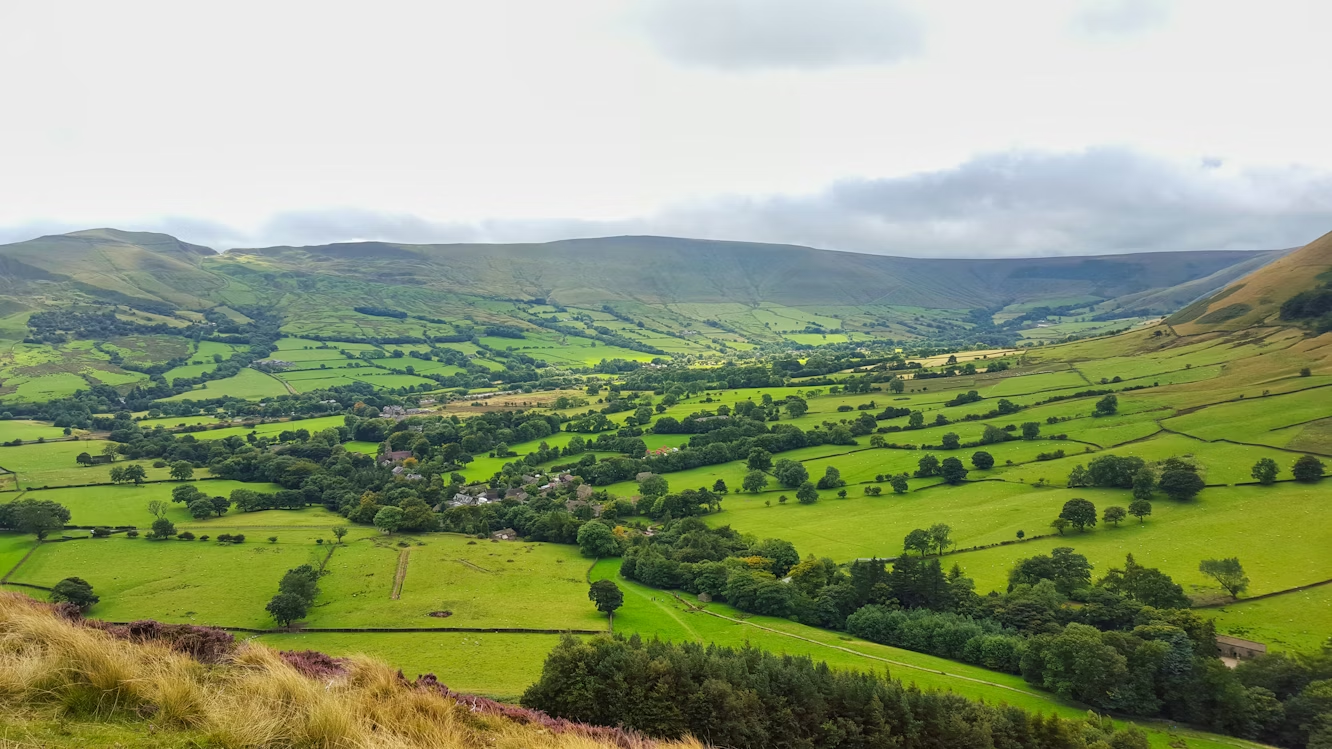
Winter hills look magical until you realise the path has vanished, your water bottle has become a small ice project and the mountain has quietly upgraded the terms and conditions.
Still, winter can be one of the best times to go peak bagging in Scotland.
Frost changes familiar paths. Snow sharpens ridges. Low sun makes ordinary hills look dramatic. Clear winter air can turn a modest summit into a huge viewpoint. Even smaller peaks can feel like proper adventures when the ground is frozen, the light is golden and your hands are trying to become decorative ice paddles.
But winter peak bagging is not just summer hillwalking with an extra fleece.
The days are shorter. The weather is harsher. Conditions can change quickly. Navigation is harder when paths are hidden by snow. Wind chill matters. Ice matters. Turning back matters.
The best winter peak is not always the biggest one.
In fact, for many walkers, the best winter bagging days begin on lower hills, local summits, short viewpoints and accessible Corbetts. Munros can be brilliant in winter, but only when the conditions, experience and kit all line up.
Choosing the right hill for the conditions is the whole game.
That, and remembering that snacks go weirdly solid when it is cold.
A good winter bagging peak is not simply a hill with snow on it.
It is a hill that suits the day, the weather, your experience and the amount of daylight available.
In winter, sensible route choice becomes much more important. A hill that is straightforward in summer can become serious in snow, ice, wind or low cloud. A path that is clear in July may disappear completely in January. A gentle summit can feel much more exposed when the temperature drops and the wind starts behaving like it has something to prove.
Good winter bagging peaks often have:
For beginners, the best winter peaks are often smaller hills rather than Munros.
That is not a downgrade.
A short winter hill can still feel like a proper expedition if the wind is sharp, the ground is icy and the sky is doing something dramatic.
Winter is not about proving how big a mountain you can climb.
It is about choosing the right hill and getting back safely with enough warmth, daylight and dignity to enjoy it.
Winter does not care whether a hill is normally considered easy.
If the path is icy, the cloud is down and the wind is trying to remove your face, it has promoted itself.
Scottish winter mountains need specific skills and equipment. Snow and ice can require an ice axe and crampons, but owning them is not enough. You need to know how to use them properly before relying on them.
If you are moving onto steeper snowy or icy ground, a winter skills course is a very good idea.
Before heading out, check mountain weather, not just the forecast for the nearest village. Look carefully at wind speed, gusts, temperature, visibility, cloud level and precipitation. For higher mountains and snowy terrain, check avalanche information where relevant.
In winter, you should carry:
Start early, because daylight is short.
Tell someone your route.
Turn back early if the conditions are not right.
Lower hills can still be dangerous in winter, especially when ice, wind or poor visibility are involved.
Winter hillwalking rewards patience.
And occasionally punishes optimism with frozen socks.
Best for: beginner-friendly winter hill views
Location: Edinburgh
Hill type: urban hill / extinct volcano
Difficulty: Easy to moderate
Arthur’s Seat is one of Scotland’s best winter hills for beginners.
It gives proper summit views without requiring a Highland trip, and in winter light it can be excellent. From the top, you get views over Edinburgh, the Firth of Forth, the Pentlands and the surrounding landscape.
It is especially good for winter sunrise or sunset, when the light is low and the city starts to glow around you.
Because it is in Edinburgh, it can feel less serious than a remote hill. But that does not mean it is risk-free. Paths can be icy, muddy or slippery, and the summit can be windy.
Arthur’s Seat is a great winter confidence-builder, especially for walkers who want to practise layering, pacing and route awareness without committing to a big mountain day.
It is accessible, scenic and manageable, with excellent winter views close to the city.
Take a head torch for winter sunrise or sunset. City lights are useful, but they are not a navigation plan.
Best for: short coastal winter views
Location: East Lothian
Hill type: small hill / volcanic plug
Difficulty: Easy to moderate
North Berwick Law is a short climb with a big coastal reward.
It is ideal for winter daylight windows because the route is relatively quick, but the summit views feel much larger than the effort suggests. From the top, you can see the Firth of Forth, Bass Rock, East Lothian and the surrounding coast.
In winter, the light over the sea can be superb.
The main challenge is wind. Coastal hills can be surprisingly fierce, and North Berwick Law is very capable of reminding you that “small hill” does not mean “calm hill”.
It is a great option for a quick winter summit, especially if you want views without heading inland to bigger, colder hills.
It is short, accessible and gives big coastal views within a manageable winter outing.
Check the wind forecast. A small coastal summit can still feel like a full weather demonstration.
Best for: accessible Central Scotland winter summit
Location: Ochil Hills / near Stirling
Hill type: small hill
Difficulty: Easy to moderate
Dumyat is a brilliant winter hill for Central Scotland walkers.
It offers wide views over Stirling, the Forth Valley, the Ochils and surrounding hills, with a route that works well for shorter winter days. It is a good step up from urban hills without committing to a major mountain.
In clear winter weather, the summit views can be excellent.
The ground can be muddy, icy or boggy depending on conditions, and the summit can be windy. But with proper footwear, layers and a head torch if needed, Dumyat is a strong confidence-building winter peak.
It is also a useful hill for keeping momentum between bigger trips.
Because sometimes peak bagging is not about drama.
Sometimes it is about getting out, getting a view and getting home before your hands become a situation.
Dumyat gives big Central Scotland views from a manageable route that suits shorter winter days.
Good for practising winter basics: layers, footwear, pacing and not underestimating wind just because the hill looks friendly.
Best for: winter views over Loch Lomond
Location: Loch Lomond
Hill type: small hill / viewpoint
Difficulty: Easy to moderate
Conic Hill is one of the best short winter viewpoints in Scotland.
The view over Loch Lomond and its islands is superb, especially in clear winter light. It is a relatively short walk, making it ideal when daylight is limited or when you want a winter summit without a full mountain day.
It is also a strong beginner-friendly option in settled conditions.
The route can be muddy, icy and exposed, so good footwear is important. It can also be busy, though winter mornings or quieter weather windows usually feel calmer than peak summer days.
Conic Hill is especially good for winter sunrise or sunset, provided you plan properly and bring a head torch.
It gives huge loch views from a short, manageable route that suits winter daylight.
Do not rush the descent if the path is icy. Loch views are lovely. Falling over dramatically is less lovely.
Best for: big winter views from a short climb
Location: Trossachs
Hill type: small hill / viewpoint
Difficulty: Easy to moderate
Ben A’an has one of the best effort-to-view ratios in Scotland.
In winter, it can be even better. The views over Loch Katrine and the surrounding Trossachs hills are excellent, especially when frost, snow or low sun add extra drama.
The route is short enough to work well in winter, but it is steep enough to feel like a proper climb.
That steepness matters. In icy or wet conditions, the path can become slippery, and the descent needs care. The summit can also be very cold if you stop for photos, which you probably will, because the view is rude enough to demand it.
Ben A’an is a good winter choice for confident beginners in suitable conditions.
It offers a huge winter view from a short route, making it a realistic cold-weather objective.
Pack an extra warm layer for the summit. Short climbs still come with cold waiting-around moments.
Best for: winter leg-stretcher near the Central Belt
Location: Campsie Fells
Hill type: Marilyn / lower hill
Difficulty: Easy to moderate
Meikle Bin is a useful winter peak for walkers based near Glasgow, Stirling or the Central Belt.
It is not trying to compete with big Highland mountains, and that is exactly why it works. It gives a proper summit, good views in clear conditions and a manageable route for shorter winter outings.
The ground can be wet, muddy or icy, so winter conditions still matter.
But as a fitness builder, confidence booster or simple summit day between larger objectives, Meikle Bin is excellent.
Winter bagging is not always about pushing into the biggest hills.
Sometimes it is about choosing a sensible summit and keeping the habit going.
It is accessible, manageable and useful for maintaining hill fitness through winter.
Great for days when the Highlands look grim but you still want a summit.
Best for: simple southern Scotland winter summit
Location: South Lanarkshire
Hill type: Marilyn / Donald-style hill
Difficulty: Easy to moderate
Tinto is a classic beginner-friendly hill and a strong winter option in good conditions.
The route is straightforward by hillwalking standards, and the summit gives wide views across southern Scotland. Because it is not a long outing, it works well with shorter daylight and colder weather.
That said, Tinto can be icy, windy and exposed.
Its simplicity should not make you careless. Winter still changes the hill, especially if snow, ice or strong wind is involved.
For beginner winter walkers, Tinto is a good confidence-building summit and a reminder that southern Scotland has plenty to offer peak baggers.
It is straightforward in suitable conditions, with wide views and a manageable route length.
Choose clear, calm conditions for your first winter attempt. Simple hills are much nicer when the wind is not auditioning for a disaster film.
Best for: classic Perthshire winter hill day
Location: Pitlochry
Hill type: Corbett
Difficulty: Moderate to hard
Ben Vrackie is a popular Corbett near Pitlochry and a very rewarding winter hill in suitable conditions.
It gives excellent views over Perthshire and has a clear route in good weather. For fit walkers moving beyond smaller winter hills, it can be a good step up.
The upper sections can become more serious in snow or ice, and the summit can be very cold and exposed. This is where winter judgement starts to matter more.
Ben Vrackie is not as committing as remote Munros, but it still feels like a proper hill day.
For those building winter confidence, it is a strong progression peak.
It offers a proper Corbett outing with strong views, while remaining more accessible than remote Highland routes.
Check snow and ice conditions before going. The upper route can feel very different from the lower path.
Best for: Trossachs winter scenery
Location: Trossachs
Hill type: Graham
Difficulty: Moderate to hard
Ben Venue is a bigger winter objective than Ben A’an and gives a more substantial Trossachs hill day.
The views over Loch Katrine, Loch Achray and the surrounding hills can be excellent in winter light. It is a great choice for confident walkers who want more than a short viewpoint without stepping straight into high Munro terrain.
The route can be muddy, icy and rough, so it needs proper footwear and planning.
In winter, the shorter daylight also matters, especially if conditions slow you down.
Ben Venue is a good bridge between small hills and more demanding winter Corbetts or Munros.
It gives excellent winter scenery and a substantial hill day without the same commitment as high mountain routes.
Do not treat it as “just a bigger Ben A’an”. It is a proper hill and needs a proper plan.
Best for: Cairngorm winter views without the high plateau
Location: Glenmore / Aviemore
Hill type: Corbett
Difficulty: Moderate to hard
Meall a’ Bhuachaille is one of the best winter viewpoints in the Cairngorms area.
From the summit, you get superb views over Loch Morlich, Glenmore and the Cairngorm plateau. In snow or clear winter light, it can be absolutely brilliant.
It is more manageable than committing to the high Cairngorm plateau, which makes it a useful choice when bigger routes are not suitable.
That does not make it easy.
The summit can be very windy and cold, and snow or ice can change the route significantly. Depending on conditions, winter kit and judgement may still be needed.
For experienced walkers looking for Cairngorm atmosphere without the full plateau commitment, it is excellent.
It gives big Cairngorm winter views from a more manageable Corbett route.
Use it as a smarter winter choice when Cairngorm Munros are too windy, snowy or visibility-heavy.
Best for: Braemar winter views
Location: Braemar / Deeside
Hill type: Corbett
Difficulty: Moderate
Morrone sits above Braemar and is a useful winter hill for walkers in Deeside.
It offers good views over the surrounding mountains and can be a realistic option when bigger Cairngorm routes are too much for the conditions. The route is more manageable than many high mountain objectives, but it still gives a proper summit experience.
Because Morrone is broad, navigation can matter in snow or mist.
It is a good confidence-building Corbett for winter walkers who are ready to move beyond small hills but not ready for exposed Munros or plateau routes.
Morrone gives accessible winter views near Braemar and can be a sensible alternative to bigger Cairngorm days.
Broad hills can be confusing in poor visibility. Clear weather is your friend while building confidence.
Best for: Speyside winter views
Location: Speyside / near Dufftown
Hill type: Corbett
Difficulty: Moderate
Ben Rinnes is a good winter Corbett for walkers in the north-east and Speyside.
It gives wide views in clear conditions and is less committing than many Highland mountain days. The route is manageable for fit walkers, making it a useful step up from smaller winter peaks.
It can still be icy, windy and exposed, so winter kit and judgement may be needed depending on conditions.
Ben Rinnes is not about technical drama.
It is about space, views and building confidence on a hill that feels properly wintry without requiring a major expedition.
It offers a manageable Corbett day with wide views and a strong winter feel in settled conditions.
Watch the wind. Broad, open summits can feel much colder than the car park suggests.
Best for: classic winter Munro shape
Location: Perthshire
Hill type: Munro
Difficulty: Hard
Schiehallion is one of Scotland’s most recognisable Munros and can be beautiful in winter.
Its clean shape, open position and big sky views make it a strong winter objective for prepared walkers. In clear conditions, snow or frost can make the mountain look superb.
But Schiehallion is still a Munro.
The summit boulderfield can become awkward or icy, progress may be slower than expected and the upper mountain can be exposed to wind and cold. Navigation matters if visibility drops.
Schiehallion can be a good early winter Munro only when conditions are suitable and you have the right kit and experience.
It offers a classic Munro outing with clear rewards in good winter conditions.
Allow extra time for the summit boulderfield. Icy rocks are not known for being helpful.
Best for: gentler winter Munro introduction
Location: Perthshire
Hill type: Munro
Difficulty: Hard in winter
Ben Chonzie is often considered one of the more straightforward Munros.
In winter, that needs a large footnote.
The terrain is generally less technical than many Munros, but broad hills can become confusing in snow or mist. The upper slopes are exposed, and low visibility can make navigation much harder.
In good winter conditions, with the right kit and navigation confidence, Ben Chonzie can be a useful introduction to winter Munro bagging.
It is not the most dramatic summit in Scotland, but it is a practical one.
Sometimes practical is exactly what you want in winter.
It offers relatively non-technical Munro terrain in good conditions, making it useful for building experience.
Do not underestimate navigation. Broad white hills can look very similar in all directions.
Best for: broad winter Munro walking
Location: Angus / Deeside
Hill type: Munro
Difficulty: Hard
Mount Keen is a broad, non-technical Munro in good conditions, but winter can make it much more serious.
The approaches can be long depending on route choice, and the hill can feel very exposed. In clear, calm conditions, it is a good winter objective for experienced walkers who want to build stamina and confidence.
The challenge is often distance, weather and timing rather than technical ground.
Short daylight means you need to plan carefully. Snow, ice or wind can slow you down, and the broad terrain requires proper navigation if visibility drops.
Mount Keen offers a broad, non-technical Munro experience for walkers with winter planning and navigation skills.
Treat the approach distance seriously. Winter pace is often slower than summer pace.
Best for: winter Corrie Fee scenery
Location: Glen Doll / Angus Glens
Hill type: Munro
Difficulty: Hard
Mayar is a beautiful winter objective when conditions are right.
The approach through Corrie Fee is one of its great strengths. In winter, the corrie can look spectacular, with cliffs, snow, frost and a real sense of mountain atmosphere.
Mayar is often paired with Driesh, but winter is not the time to add summits automatically.
Snow and ice can change the difficulty of the route, and the upper ground requires care. This is best for experienced walkers who have the kit and judgement for winter Munro conditions.
As a single summit, Mayar can be a rewarding winter day.
The Corrie Fee approach gives excellent winter scenery and a strong sense of progression.
Keep the plan flexible. If Mayar is enough for the day, Driesh can wait.
Best for: pairing with Mayar in good winter conditions
Location: Glen Doll / Angus Glens
Hill type: Munro
Difficulty: Hard
Driesh is commonly paired with Mayar, making the two a popular Munro combination.
In winter, though, the decision to add Driesh should be made carefully. The summit area is broad, and navigation can become harder in snow, mist or flat light.
In settled conditions, fit and experienced walkers may enjoy the pair as a strong winter outing. But beginners should avoid automatic multi-Munro plans in winter.
Driesh can also be approached as a separate objective if you want to keep the day simpler.
It can make a good second Munro with Mayar in clear, settled winter conditions for prepared walkers.
Do not let a summer route plan bully you into a winter mistake. Conditions decide the day.
Best for: classic winter Munro views
Location: Loch Lomond
Hill type: Munro
Difficulty: Hard / very hard in winter conditions
Ben Lomond is one of Scotland’s most popular Munros, and it can be superb in winter.
The views over Loch Lomond and the southern Highlands are excellent, especially when snow or frost adds definition to the hills. The standard route is clear in good conditions, and its accessibility makes it appealing.
But winter changes the equation.
Snow, ice, wind, cold and short daylight make Ben Lomond much more serious than a summer walk. It is not ideal as a first winter Munro unless you have suitable skills, kit and a settled forecast.
Popularity does not reduce risk.
It just means more people have also looked at the weather and thought, “maybe”.
It gives classic Munro views and is accessible, but only suits prepared walkers in suitable winter conditions.
Do not choose it purely because it is popular. Choose it because the conditions and your experience are right.
Best for: high-start winter Munro option
Location: Loch Tay / Lawers range
Hill type: Munro
Difficulty: Hard / very hard in winter
Beinn Ghlas is often climbed on the way to Ben Lawers, but in winter it can be a sensible objective in its own right.
The high start point helps reduce the amount of ascent, but it does not reduce the seriousness of the conditions. The route is exposed to wind, cold, snow and ice.
In good winter conditions, Beinn Ghlas can be a useful high-level objective for experienced walkers. It also gives a natural decision point before continuing towards Ben Lawers.
If the weather is not ideal, stopping at Beinn Ghlas may be the right call.
It offers a high-start winter Munro with the option to reassess before committing further into the Lawers range.
Treat Beinn Ghlas as a proper summit, not just a stepping stone.
Best for: high winter Munro experience
Location: Loch Tay / Lawers range
Hill type: Munro
Difficulty: Very hard in winter
Ben Lawers is one of Scotland’s highest Munros, and in winter it can be a serious, impressive objective.
The high start point may make it feel more accessible, but the summit height means weather can be severe. Wind, cold, ice and poor visibility all need to be taken seriously.
In clear, calm winter conditions, the views can be outstanding.
But this is best saved for experienced winter walkers with suitable kit, navigation skills and judgement.
Ben Lawers is not a shortcut into high winter mountains.
It is a high winter mountain.
It offers a major high-level winter Munro experience for those with the right skills and conditions.
Do not underestimate it because of the starting height. The summit is still very high, very exposed and very capable of saying no.
Best for: accessible high winter mountain environment
Location: Cairngorms / near Aviemore
Hill type: Munro
Difficulty: Very hard in winter
Cairn Gorm is one of the most accessible high winter mountains in Scotland.
That accessibility can be misleading.
The nearby infrastructure may make the area feel safer or more convenient, but the mountain sits on the edge of a serious high plateau environment. In winter, conditions can change fast, navigation can be extremely difficult and wind, snow or cloud can create major hazards.
For experienced winter walkers, Cairn Gorm can be a powerful and rewarding objective.
For beginners, it is not a casual step up from lower hills.
The Cairngorm plateau deserves proper respect.
It gives access to a serious high winter environment, but only for those with suitable skills and conditions.
Infrastructure nearby does not make the mountain safe. Whiteout navigation is not a place for vibes.
Best for: northern winter Munro views
Location: Near Inverness / Easter Ross
Hill type: Munro
Difficulty: Hard / very hard in winter
Ben Wyvis is a broad northern Munro with excellent winter views in clear conditions.
The route involves a long, steady ascent and a wide summit plateau. That broadness is part of the character of the mountain, but it also creates winter navigation challenges if visibility drops.
The summit can be exposed, cold and windy.
For prepared walkers with winter navigation confidence, Ben Wyvis can be a strong northern winter objective.
It is less technical than some steep or ridged Munros in good conditions, but winter still makes it serious.
It offers a broad northern Munro experience with big views and a strong winter atmosphere.
Keep a close eye on visibility. Broad plateaus can become confusing very quickly in cloud or snow.
Scottish winter bagging works best when you choose the hill to match your experience, conditions and daylight.
Good shorter winter options include:
These are ideal for shorter days, beginner confidence and winter views without major mountain commitment.
Good beginner-friendly winter hills include:
These still need sensible footwear, warm layers and care in icy or windy conditions.
For a step up, consider:
These offer more substantial hill days without immediately jumping into the most serious winter Munros.
For experienced walkers in suitable conditions, look at:
These are not beginner winter walks, but they can be good Munro objectives when skills, kit and weather align.
Save these until you have the right experience:
High winter mountains are a different level. Build up gradually.
For strong views without a huge route, try:
Sometimes the best winter day is the short one that gives you a view, a bit of frost and no major drama.
Winter is not the time to find out whether you are comfortable on exposed ground, steep snow or whiteout navigation.
Save these until your skills and confidence are ready:
There is no shame in choosing a smaller hill.
In winter, the clever route is often the one that fits the day rather than the one that sounds most impressive afterwards.
If you want a city option, choose Arthur’s Seat.
If you want coastal views, try North Berwick Law.
If you want Central Scotland views, choose Dumyat.
If you want Loch Lomond scenery, try Conic Hill.
If you want Trossachs drama, choose Ben A’an.
If you want a step up from small hills, look at Ben Vrackie or Ben Venue.
If you want Cairngorm winter scenery without the plateau, try Meall a’ Bhuachaille.
If you want a first winter Munro, consider Schiehallion or Ben Chonzie, but only with proper winter kit, skills and suitable conditions.
If you want a serious high winter mountain, build up first.
The best first winter peak is not the most dramatic one.
It is the one where the route, weather and your experience all line up.
Which is less exciting on paper, but much better for your toes.
Expect shorter days.
Expect colder summit temperatures.
Expect paths to be hidden by snow.
Expect icy sections.
Expect slower progress.
Expect harder navigation.
Expect wind chill.
Expect more kit weight.
Expect water and snacks to be less cooperative.
Expect views that can be unbelievable.
Expect turning back to be more common and more sensible.
Winter makes everything sharper. The light, the air, the views, the decisions.
A small hill can feel like a proper expedition. A familiar path can feel unfamiliar. A route that normally takes two hours may take longer if the ground is icy, snowy or muddy.
The emotional journey may include excitement, cold fingers, snack difficulty, second gloves, “are we nearly there?”, sudden beauty and a deep appreciation for the car heater.
This is all part of the winter experience.
Mostly.
Winter peak bagging needs proper kit.
Pack:
Midge protection is usually not needed.
A small mercy.
Pack for the summit, the descent and the possibility that you may need to stop for longer than planned.
Winter is not kind to minimalist packing.
Check mountain weather, not just town weather.
Check avalanche forecasts where relevant.
Check wind speed and gusts.
Start early.
Choose shorter routes than you would in summer.
Avoid unfamiliar technical terrain.
Know when to turn back.
Build up gradually.
Practise navigation before you need it.
Do a winter skills course if moving onto snow and ice.
Keep the group together.
Do not rely on footprints.
Watch for ice on paths, rock and compacted snow.
Have a lower hill backup.
Accept that winter conditions can cancel the plan.
This is not failure.
This is winter hillwalking doing winter hillwalking things.
The hills will still be there when conditions improve.
Probably looking smug.
If you want to build your winter peak bagging safely, start with lower, shorter hills before moving towards Corbetts, Grahams and simpler Munros. Save high, remote and technical winter objectives until you have the right skills and experience.
A sensible progression might look like this:
This is not a strict order.
Weather, location, experience, route choice and conditions all matter. Some winters have snow and ice low down. Others are mainly wet, windy and unpleasant in a different way. Some days a small hill is the right call. Some days the right call is tea and staying indoors.
Progression in winter is not about rushing.
It is about learning what conditions mean, how your kit works, how fast you move and when to change the plan.
Especially when the mountain has changed it first.
Scottish winter peak bagging can be magical.
Snow, frost, low sun and clear air can turn familiar hills into completely different experiences. A short summit can feel huge. A Corbett can feel like a proper expedition. A Munro can become one of the most memorable days of your walking life.
But winter rewards patience and judgement.
Start small.
Choose conditions carefully.
Build your skills.
Pack properly.
Turn back when needed.
And remember that the best winter summit is the one you reach safely, enjoy properly and descend from before your hands become decorative ice paddles.
The big winter mountains can wait until you are ready.
The smaller ones are already excellent.
Bagged a Scottish peak in winter conditions?
Use Peaky Baggers to log your walks, track your summits and keep building your Scottish summit list one frosty, well-planned hill at a time.
Photo by Daniël Hartog on Unsplash