Some mountains are scenic.
Some mountains are photogenic.
And some look like they have been standing there for thousands of years waiting for someone to invent Instagram.
Scotland has more than its fair share of those.
From the sharp ridges of Skye and Torridon to the isolated shapes of Assynt, the lochside views of the Trossachs and the huge north face of Ben Nevis, Scotland is packed with mountains that know their angles.
But photogenic does not always mean highest.
A mountain can be memorable because of its shape, setting, light, isolation, ridges, lochs, coastline or the way the weather moves around it. Some of the best mountain photos in Scotland are taken from nearby hills, roadside viewpoints or loch edges rather than the summit itself.
For peak baggers, that makes things interesting.
Sometimes the mountain you climb is the subject.
Sometimes the mountain you climb is the viewpoint.
And sometimes the best plan is to stand somewhere lower, eat a snack, and take a photo of a hill that looks much harder than your current life choices.
A photogenic mountain is not just a tall one.
It needs character.
That might come from a distinctive shape, a dramatic ridge, a clean silhouette, a lochside setting, sea views, unusual rock, winter snow, sunrise light or moody cloud rolling across the summit.
Some mountains are instantly recognisable from a distance. Buachaille Etive Mòr, Suilven, Stac Pollaidh and Schiehallion all have shapes that make them stand out.
Others are photogenic because of their setting. Slioch above Loch Maree. Ben Lomond above Loch Lomond. Goatfell rising above Arran. The Storr looking like Skye has started sculpting its own skyline.
Then there are the serious ridge mountains like Liathach, An Teallach and the Cuillin, where the drama comes from exposure, rock, scale and the sense that the mountain is very much not messing about.
The most photogenic mountains often combine a few things:
A mountain does not need to be difficult to photograph well.
It just needs to have presence.
Scotland is annoyingly good at this.
Photogenic peaks make walking more memorable.
They give you more than a tick on a list. They give you a visual record of the day: the light, the weather, the ridge, the summit view, the tiny human figures on the path, the loch shining below, the cloud doing something dramatic for once instead of just blocking everything.
For peak baggers, photogenic mountains are brilliant because they encourage you to think beyond height.
They make you explore viewpoints as well as summits. They help you plan around sunrise, sunset, seasons and visibility. They give you a reason to revisit the same area in different conditions.
They also remind you that smaller hills can sometimes offer the best view of bigger ones.
A short viewpoint walk can give you a better photo of a famous mountain than standing on top of it in cloud wondering where the entire landscape went.
Photogenic peaks are also good for building a varied summit list. You can mix accessible viewpoints, classic Munros, island hills, Corbetts, Grahams and serious ridge objectives.
Some will be easy to reach.
Some will require experience.
Some should absolutely wait until you have the right skills, weather and possibly a guide.
Because a good photo is nice.
Getting back safely with your camera, phone, knees and dignity is better.
Best for: Scotland’s classic mountain silhouette
Location: Glencoe / Glen Etive
Hill type: Munro massif
Difficulty: Hard
Buachaille Etive Mòr is one of Scotland’s most photographed mountains, and it is very easy to see why.
Standing at the entrance to Glencoe, it has a shape that feels almost too perfect. From the Rannoch Moor side, the mountain rises in a bold, pyramid-like profile that has become one of the defining images of the Scottish Highlands.
It looks good in almost everything.
Sunrise. Snow. Mist. Rain. Moody cloud. Golden light. Dramatic side lighting. Full “the weather has opinions” conditions.
The mountain itself is a serious route, with steep, rocky ground and proper Munro terrain. But many of the best photos of Buachaille Etive Mòr are taken from below, especially around the classic Glencoe viewpoints and roadside areas.
This is one of those mountains where you do not have to climb it to appreciate it.
Although if you do climb it, the views are rather good too.
Its clean shape, dramatic setting and position at the entrance to Glencoe make it one of Scotland’s most iconic mountain subjects.
From Rannoch Moor and the Glencoe approach, especially with water, rocks or moorland in the foreground.
Go early for softer light and fewer roadside tripod negotiations.
Best for: isolated mountain drama
Location: Assynt
Hill type: Graham
Difficulty: Hard
Suilven is not Scotland’s highest mountain.
It does not need to be.
Its long, isolated ridge rises from the Assynt landscape like something from another planet. Surrounded by lochs, moorland and wild north-west scenery, it has one of the most recognisable profiles in Scotland.
Suilven is photogenic because it stands alone.
There are no crowded ranges around it competing for attention. Just that extraordinary shape sitting in a vast, open landscape.
The walk to the summit is a long day, and the approach is part of the experience. But photographers do not need to climb it to love it. Some of the best views of Suilven come from surrounding lochs, nearby hills and lower viewpoints around Assynt.
It is a dream subject for wide landscape photography.
It also looks very good in moody weather, which is useful, because Assynt is not always operating in blue-sky brochure mode.
Suilven’s isolated shape, long ridge and wild Assynt setting make it one of Scotland’s most memorable mountain profiles.
From nearby lochs, Assynt viewpoints and surrounding hills where the full ridge shape can be seen.
Use the open moorland and lochs to show scale. Suilven looks best when the landscape around it has room to breathe.
Best for: jagged ridge character
Location: Assynt / Inverpolly
Hill type: Graham
Difficulty: Moderate to hard depending on route
Stac Pollaidh is a small mountain with a very large personality.
Its jagged rocky crest makes it instantly recognisable, and it delivers huge visual impact from almost every angle. It is one of the best examples in Scotland of height not being the point.
The main walking route gives superb views across Assynt, Coigach, lochs and sea. It is popular for good reason. The views are enormous, the ridge is dramatic and the mountain feels much bigger than its height suggests.
The true summit involves scrambling, so many walkers stick to the main route and viewpoints rather than trying to reach the highest point. That still gives you plenty of drama and plenty of photo opportunities.
Stac Pollaidh is photogenic from the path, the road, nearby lochs and surrounding hills.
Basically, it knows what it is doing.
The jagged crest, compact shape and dramatic Assynt setting make it one of Scotland’s most visually striking smaller mountains.
From Loch Lurgainn, nearby roads and surrounding lower hills.
Do not focus only on the summit. Some of the best images come from below, with the ridge reflected in lochs or framed by moorland.
Best for: serious ridge photography
Location: Torridon
Hill type: Munro ridge
Difficulty: Very hard
Liathach is one of the most dramatic mountains in Scotland.
It rises above Glen Torridon as a huge wall of sandstone, with ridges, terraces and pinnacles that look serious because they are serious. This is not a gentle hill with a nice view. This is a mountain that arrives with its own soundtrack.
For photographers, Liathach is magnificent.
It looks incredible from Glen Torridon, from neighbouring mountains and from the surrounding roads. Side light, snow, cloud breaks and late evening sun can make the ridge look almost unreal.
Climbing Liathach is a major experienced-walker objective. The traverse is exposed and demanding, and the Am Fasarinen pinnacles are not something to take lightly.
But you do not have to traverse Liathach to photograph it well.
In fact, some of the best photos are taken from Beinn Alligin, Beinn Eighe or the glen below.
Liathach’s huge sandstone ridge, dramatic terraces and imposing position above Glen Torridon make it one of Scotland’s finest mountain subjects.
From Glen Torridon, Beinn Alligin, Beinn Eighe or roadside viewpoints along the glen.
Low side light brings out the texture of the sandstone terraces beautifully.
Best for: Torridon summit views and ridge shape
Location: Torridon
Hill type: Munro pair
Difficulty: Hard
Beinn Alligin is one of Torridon’s great mountains and one of the most photogenic peaks in the north-west Highlands.
It has beautiful ridge lines, huge views and a strong position above Loch Torridon. The Horns of Alligin add extra drama, while the main summits give superb views towards Liathach, Beinn Eighe and the west coast.
Beinn Alligin works both as a subject and as a viewpoint.
It looks excellent from nearby roads, lochs and other Torridon hills, but it also gives some of the best views of Liathach and the wider Torridon landscape from its own ridge.
It is often considered slightly more approachable than Liathach, but it is still a serious mountain route and should be treated with respect.
Its ridge shape, Horns, Loch Torridon setting and views towards the Torridon giants make it visually outstanding.
From Liathach, Glen Torridon, Loch Torridon and the mountain’s own ridge.
Use the Horns and ridge lines to create depth and scale in your shots.
Best for: wild ridge drama
Location: Dundonnell / Wester Ross
Hill type: Munro massif
Difficulty: Very hard
An Teallach is one of Scotland’s great mountain ridges.
It is famous for its pinnacles, steep corries and wild setting above Dundonnell. The mountain has a jagged, serious character that makes it incredibly photogenic, especially in broken cloud or winter conditions.
This is a mountain for experienced walkers and scramblers. Some routes involve serious exposure and technical ground, so it should not be treated as a normal hillwalk.
As a photo subject, though, An Teallach is outstanding even from lower viewpoints and surrounding hills.
It has that rare quality of looking dramatic in nearly every condition, provided the cloud lifts enough to show you what is going on.
Which is not always guaranteed, because Scotland likes to keep photographers humble.
An Teallach combines ridge drama, pinnacles, steep corries and a wild west coast setting.
From nearby roads, lochs, lower hills and surrounding viewpoints that show the full ridge line.
Broken cloud can work brilliantly here. You do not always need perfect blue skies for mountain drama.
Best for: iconic Skye landscape
Location: Isle of Skye / Trotternish
Hill type: hill / viewpoint area
Difficulty: Moderate
The Storr is one of the most photographed landscapes in Scotland.
The Old Man of Storr, the cliffs, the sea views and the strange Trotternish scenery combine to create a landscape that feels almost designed for cameras. It is dramatic, recognisable and especially good at sunrise.
This is more of a landscape and viewpoint route than a traditional mountain summit objective, but it absolutely belongs on any list of Scotland’s most photogenic mountain locations.
It can be busy, muddy and windy, but the rewards are enormous.
The key is timing. Early starts give you better light and fewer people, which is useful unless your photography style is “dramatic rock formations with 300 waterproof jackets in the foreground”.
The Old Man of Storr, sea views and Trotternish cliffs create one of Scotland’s most iconic mountain landscapes.
From the lower and mid-level viewpoints looking towards the Old Man and across the sea.
Sunrise is classic here, but mist and broken cloud can be just as atmospheric.
Best for: surreal landscape photography
Location: Isle of Skye / Trotternish
Hill type: landslip / hill route
Difficulty: Moderate
The Quiraing is one of Skye’s strangest and most photogenic landscapes.
Cliffs, pinnacles, green slopes, sea views and unusual rock formations all combine to create a place that feels slightly unreal. It is less about a single summit and more about atmosphere, shape and landscape drama.
For photographers, this is prime territory.
The Quiraing works well in low light, mist, broken cloud and changing weather. It can look soft and green one minute, then dramatic and moody the next.
The route can be muddy, slippery and exposed in places, so it still needs care.
It is also popular, so early or late visits usually give a better experience.
The Quiraing’s unusual landforms, sea views and changing light make it one of Scotland’s most distinctive photo locations.
From the main route and surrounding viewpoints looking across the landslip and Trotternish coastline.
Use paths, ridges and cliffs as leading lines through the image.
Best for: Cuillin views without being on the main ridge
Location: Isle of Skye
Hill type: Munro
Difficulty: Hard
Bla Bheinn is one of the best mountain viewpoints on Skye.
Set apart from the main Black Cuillin ridge, it gives outstanding views back towards the jagged skyline. That makes it especially useful for photographers who want Cuillin drama without being directly on the most technical terrain.
Bla Bheinn is also photogenic in its own right. It has a strong shape, rocky character and a beautiful setting among lochs, sea and Skye mountain scenery.
It is more walker-friendly than many Cuillin summits, but it is still a serious mountain day with steep and rocky terrain.
In clear weather, it is one of the most rewarding peaks in Scotland for photography.
Bla Bheinn offers dramatic views of the Black Cuillin while also being a striking mountain itself.
From the summit for Cuillin views, or from nearby lochs and approaches for the mountain’s own profile.
Clear weather makes a huge difference here. The Cuillin view is the headline act.
Best for: sharp Cuillin drama
Location: Isle of Skye / Black Cuillin
Hill type: Munro
Difficulty: Very hard / scrambling
Sgùrr nan Gillean is one of the sharpest and most recognisable peaks in the Black Cuillin.
It has a dramatic, intimidating profile and looks superb from the Sligachan area, from Marsco and from surrounding viewpoints. As a subject, it is one of the great mountain silhouettes in Scotland.
Climbing it is a serious undertaking.
Routes involve scrambling, exposure and technical terrain, so this is not a casual hillwalk. Many people will enjoy Sgùrr nan Gillean best as a photographic subject rather than a summit objective.
And that is completely fine.
Some mountains are best admired from a sensible distance until you have the skills to get closer.
Its sharp Cuillin profile and dramatic skyline make it one of Scotland’s most striking mountain subjects.
From Sligachan, Marsco and other nearby viewpoints that frame the Cuillin ridge.
Use the river, bridge or foreground rocks around Sligachan to add depth to photos.
Best for: scale and mountain grandeur
Location: Fort William / Lochaber
Hill type: Munro
Difficulty: Hard / very hard depending on route
Ben Nevis is Britain’s highest mountain, but from a photography point of view, the North Face is where much of the drama lives.
The cliffs, gullies and huge scale of the North Face make it far more visually striking than many standard summit views. It is especially powerful in winter, when snow and ice add definition to the mountain’s structure.
The best views often come from the CMD Arête, Càrn Mòr Dearg or surrounding viewpoints rather than the standard Mountain Track.
This is a serious mountain environment, especially in winter or on technical routes, but it is one of Scotland’s most impressive subjects for mountain photography.
The scale, cliffs and winter character of the North Face show Ben Nevis at its most dramatic.
From Càrn Mòr Dearg, the CMD Arête and viewpoints around the North Face area.
Winter conditions can be spectacular, but only head into them with the right skills and kit.
Best for: photographing Ben Nevis
Location: Lochaber
Hill type: Munro
Difficulty: Hard / very hard
Càrn Mòr Dearg is one of the best viewpoints for Ben Nevis.
The CMD Arête gives dramatic ridge foregrounds, while the views towards the North Face are some of the finest in Lochaber. For experienced walkers and photographers, this is an outstanding route.
It is also a big mountain day.
The route requires fitness, good weather and confidence on exposed ground. It should not be treated as a simple viewpoint walk.
But if conditions are right, Càrn Mòr Dearg gives you exactly what mountain photographers love: scale, shape, ridge lines and a huge subject dominating the frame.
Càrn Mòr Dearg offers some of the best views of Ben Nevis and the CMD Arête itself provides dramatic foreground interest.
From the ridge and summit looking towards Ben Nevis’ North Face.
A wider lens can help capture the ridge curve and the scale of Ben Nevis together.
Best for: classic Loch Lomond views
Location: Loch Lomond
Hill type: Munro
Difficulty: Hard
Ben Lomond is one of Scotland’s most popular Munros, but it is also one of its most photogenic.
Its setting above Loch Lomond gives it huge visual appeal. From the summit, the views over the loch and its islands are superb. From below and across the water, the mountain has a strong, recognisable shape.
It is accessible from the Central Belt, which makes it a favourite for walkers and photographers alike.
Popularity does not make it easy, though. Ben Lomond is still a proper hill day and needs suitable kit and conditions.
In good light, especially early or late, it can look wonderful.
Ben Lomond combines a recognisable Munro shape with one of Scotland’s most famous loch settings.
From Loch Lomond, nearby shorelines and summit viewpoints looking across the islands.
Early morning can bring calmer water, softer light and better chances of reflections.
Best for: clean mountain shape
Location: Perthshire
Hill type: Munro
Difficulty: Moderate to hard
Schiehallion is one of Scotland’s most elegant mountains.
Its symmetrical profile makes it instantly recognisable, especially from a distance. It has a clean, simple shape that works beautifully in minimalist landscape photography.
In snow, low light or clear autumn conditions, Schiehallion can look especially striking.
The route is popular and relatively straightforward for a Munro in good conditions, making it a strong choice for walkers who want a photogenic summit without the seriousness of ridges like Liathach or An Teallach.
Schiehallion’s simple, symmetrical outline makes it one of Scotland’s best mountain silhouettes.
From surrounding Perthshire viewpoints where the full mountain shape is visible.
Give the mountain space in the frame. Its clean profile works well with simple compositions.
Best for: big views from a short climb
Location: Trossachs
Hill type: small hill / viewpoint
Difficulty: Easy to moderate
Ben A’an is one of Scotland’s best effort-to-view ratio hills.
It is not a huge mountain, but the view from the top is famous for a reason. Loch Katrine, Loch Achray and the surrounding Trossachs hills create a classic Scottish scene from a relatively short climb.
For beginner photographers and walkers, it is a brilliant choice.
The route is steep enough to feel like a proper walk, but much more manageable than a full mountain day. It works well for sunrise, sunset and short weather windows.
It can be busy, but the view earns its popularity.
Ben A’an gives a huge loch-and-mountain view from a short, accessible climb.
From the summit viewpoint looking over Loch Katrine and the surrounding hills.
Sunrise and sunset work especially well, but bring a head torch and warm layers.
Best for: island summit views
Location: Isle of Arran
Hill type: Corbett
Difficulty: Hard
Goatfell is the classic mountain of Arran and one of Scotland’s best island summits.
It has a strong shape, a superb setting above Brodick Bay and wide views over the Firth of Clyde, Arran, surrounding islands and mainland Scotland.
From below, Goatfell makes a brilliant island mountain subject. From the summit, it gives that special feeling of being surrounded by sea and hills at the same time.
The route is a proper hill day and can be rough or exposed in poor weather, but it is one of the most rewarding island peaks in Scotland.
Goatfell combines mountain shape, island setting and wide sea views.
From Brodick Bay, the approach routes and the summit looking across Arran and the Firth of Clyde.
Arran light can change quickly, so keep the camera handy even when the weather looks undecided.
Best for: northern Highland skyline drama
Location: Sutherland
Hill type: Corbett
Difficulty: Hard
Ben Loyal is one of the most distinctive mountains in northern Scotland.
Its multiple tops create a dramatic skyline above the surrounding moorland, making it an excellent subject from nearby roads, lochs and open viewpoints. It feels wilder and quieter than many of the more famous west coast mountains.
For photographers, that combination of shape and isolation is gold.
Ben Loyal is especially good when seen from a distance, where its outline becomes clear against the sky.
It is also a rewarding hill for experienced walkers, though it should not be underestimated.
Ben Loyal’s distinctive skyline, wild setting and northern location give it a powerful visual identity.
From surrounding Sutherland roads, lochs and moorland viewpoints.
Look for compositions that show the full skyline rather than focusing too tightly on one summit.
Best for: far north mountain views
Location: Sutherland
Hill type: Munro
Difficulty: Hard
Ben Hope is Scotland’s most northerly Munro and has a strong sense of place.
It rises in far northern Scotland, surrounded by open landscapes and big skies. The mountain is photogenic because of its setting as much as its shape. It feels remote, spacious and very different from the busier Highland ranges further south.
In clear weather, the views are excellent.
Ben Hope also pairs well with Ben Loyal from a photography perspective, with both mountains helping define the far north Highland skyline.
Ben Hope combines Munro status, far north atmosphere and wide open views.
From nearby roads, surrounding moorland and the summit in clear conditions.
Use the emptiness around the mountain. The sense of space is part of the photo.
Best for: Torridon massifs and quartzite drama
Location: Torridon
Hill type: Munro massif
Difficulty: Hard / very hard
Beinn Eighe is one of Torridon’s great mountain massifs.
It is visually striking because of its scale, complexity and quartzite character. The pale rock, huge corries and long ridges give it a very different appearance from the red sandstone of nearby Liathach.
Coire Mhic Fhearchair is especially photogenic, with dramatic cliffs and a powerful mountain setting.
Beinn Eighe looks excellent from Glen Torridon, Loch Maree and surrounding hills, and it also provides superb views from its own routes.
This is a serious mountain, but an outstanding subject.
Beinn Eighe’s quartzite ridges, corries and scale make it one of Torridon’s most visually impressive mountains.
From Glen Torridon, Loch Maree, Coire Mhic Fhearchair and nearby viewpoints.
Use contrast between pale quartzite, dark water and changing cloud for stronger images.
Best for: Loch Maree reflections and classic profile
Location: Wester Ross / Loch Maree
Hill type: Munro
Difficulty: Hard
Slioch is one of the great mountain-and-loch subjects in Scotland.
Its distinctive profile above Loch Maree makes it instantly memorable, and calm conditions can produce beautiful reflections across the water. It is one of those mountains that often looks best from a little distance, where the full setting can be appreciated.
Climbing Slioch is a long and serious mountain day, but photographing it can be done from lower viewpoints around Loch Maree.
It is especially good in soft light, still weather and clear conditions when the mountain’s shape is mirrored in the loch.
Slioch’s strong profile and Loch Maree setting make it one of Scotland’s finest lochside mountain subjects.
From across Loch Maree, shoreline viewpoints and surrounding hills.
Look for calm mornings if you want reflections. Wind turns perfect mirror shots into scenic soup very quickly.
Scotland’s most photogenic mountains all have different strengths, so it helps to choose based on the kind of image or walk you want.
For instantly recognisable shapes, look at:
These are the mountains that work beautifully as outlines against changing skies.
For ridges, exposure and big mountain atmosphere, choose:
These are serious routes if climbed, but they are also superb photographic subjects from nearby viewpoints.
For mountains with lochs in the frame, try:
Lochs add reflections, scale and foreground interest, which is photography code for “this will probably look excellent”.
For sea, cliffs and island atmosphere, look at:
Island mountains often feel extra photogenic because the sea adds space and light around them.
Good sunrise options include:
For sunrise walks, take a head torch, warm layers and proper route planning. Beautiful light is less fun if you cannot see where your feet are going.
Strong sunset choices include:
West coast mountains can be superb at sunset, especially when the light catches ridges, lochs and sea.
For snow, ice and winter drama, look at:
Winter photography can be spectacular, but winter mountains need proper skills, equipment and judgement.
A snowy photo is not worth an avoidable epic.
Some of Scotland’s most photogenic mountains are best photographed from nearby rather than from the summit.
Good options include:
This is useful for rest days, poor summit weather, shorter trips or photography-focused outings.
It is also a good reminder that not every great mountain experience needs to involve standing on top of the mountain.
Sometimes the best view is of the thing, not from the thing.
Some photogenic mountains are also serious mountain objectives.
Beginners should be cautious with:
You can enjoy these mountains from below, from nearby hills, from lochside viewpoints or with a qualified guide later when you have the right skills.
There is no need to rush into the hardest routes.
The mountain will still be photogenic while you are safely standing somewhere else with a flask.
Shoot early or late for softer light.
Use lochs for reflections.
Include foregrounds such as rocks, paths, heather, trees, bothies or shoreline.
Watch cloud movement.
Bad weather can create great atmosphere, but avoid unsafe conditions.
Check wind if you are heading for ridges or summits.
Keep your kit dry.
Take spare batteries or a power bank.
Do not block roads or park irresponsibly for photos.
A phone is perfectly fine if the composition and light are good.
Sometimes the best shot is behind you.
And sometimes the best shot happens just after you put the camera away, because mountains enjoy comedic timing.
If you want a short big-view walk, choose Ben A’an.
If you want an iconic roadside subject, photograph Buachaille Etive Mòr.
If you want Assynt drama, try Stac Pollaidh.
If you want island views, choose Goatfell or The Storr.
If you want a classic Munro view, look at Ben Lomond.
If you want a clean mountain silhouette, choose Schiehallion.
If you want serious ridge drama, build towards Liathach or An Teallach once you have the experience.
If you want Loch Maree photography, look at Slioch or Beinn Eighe viewpoints.
If you want Cuillin photos without technical climbing, try viewpoints around Sligachan, Marsco or Bla Bheinn if you are an experienced walker.
The best first photogenic mountain is not necessarily the most dramatic one.
It is the one that gives you a great view, a safe day and a photo you are happy to keep looking at later.
For mountain photography, you need walking kit first and camera kit second.
Pack:
For bigger routes, take full hillwalking kit and plan as you would for any mountain day.
Do not let photography distract you from basic mountain sense.
A dramatic cloud inversion is lovely.
Walking off route because you were staring at it is less ideal.
If you want to build confidence while collecting great views, start with shorter viewpoints and accessible mountains before moving towards bigger ridges and technical objectives.
A sensible progression might look like this:
This is not a strict order.
Weather, fitness, experience, route choice and confidence with exposure all matter. Some walkers may be happy on long routes but nervous on ridges. Others may be experienced scramblers but need the right weather window.
Build steadily.
The best mountain photo is usually taken on a day when you are enjoying yourself, not quietly wondering whether your route choice has become a personal crisis.
Scotland’s most photogenic mountains are not always the highest or hardest.
They are the ones with shape, setting, atmosphere and light.
Buachaille Etive Mòr, Suilven, Stac Pollaidh, Liathach, The Storr, An Teallach, Slioch and Ben Loyal all prove that mountain beauty comes in different forms.
Some are best climbed.
Some are best photographed from nearby.
Some should wait until your skills and conditions are right.
The important thing is to enjoy the view, respect the mountain and capture the day without forgetting to actually look at it.
Because yes, the photo matters.
But so does standing there for a minute and thinking: “That is absolutely ridiculous.”
Bagged one of Scotland’s most photogenic mountains?
Use Peaky Baggers to log your walks, track your summits and keep building your Scottish summit list one ridiculously scenic view at a time.
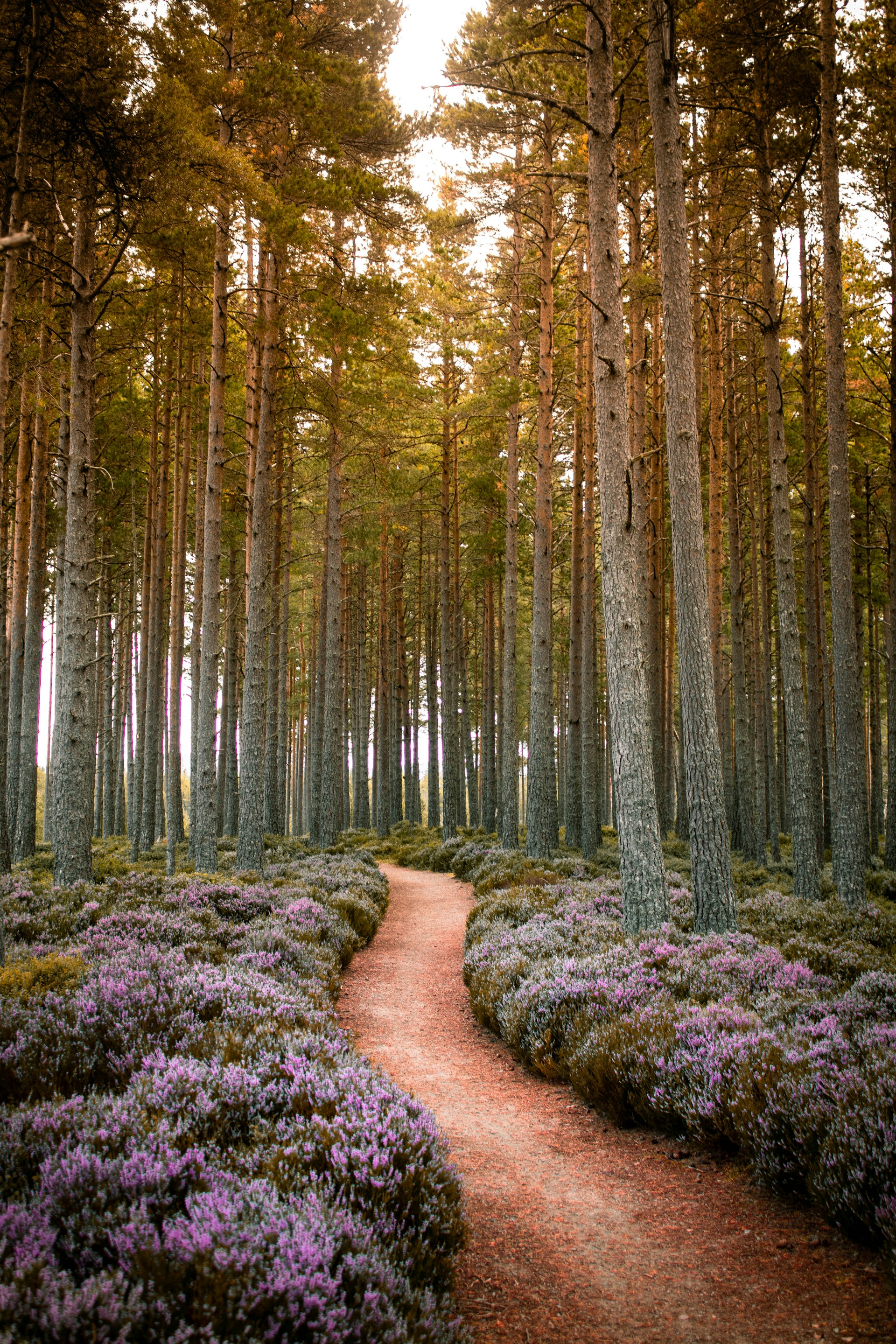
Photo by Mikk Tõnissoo on Unsplash