
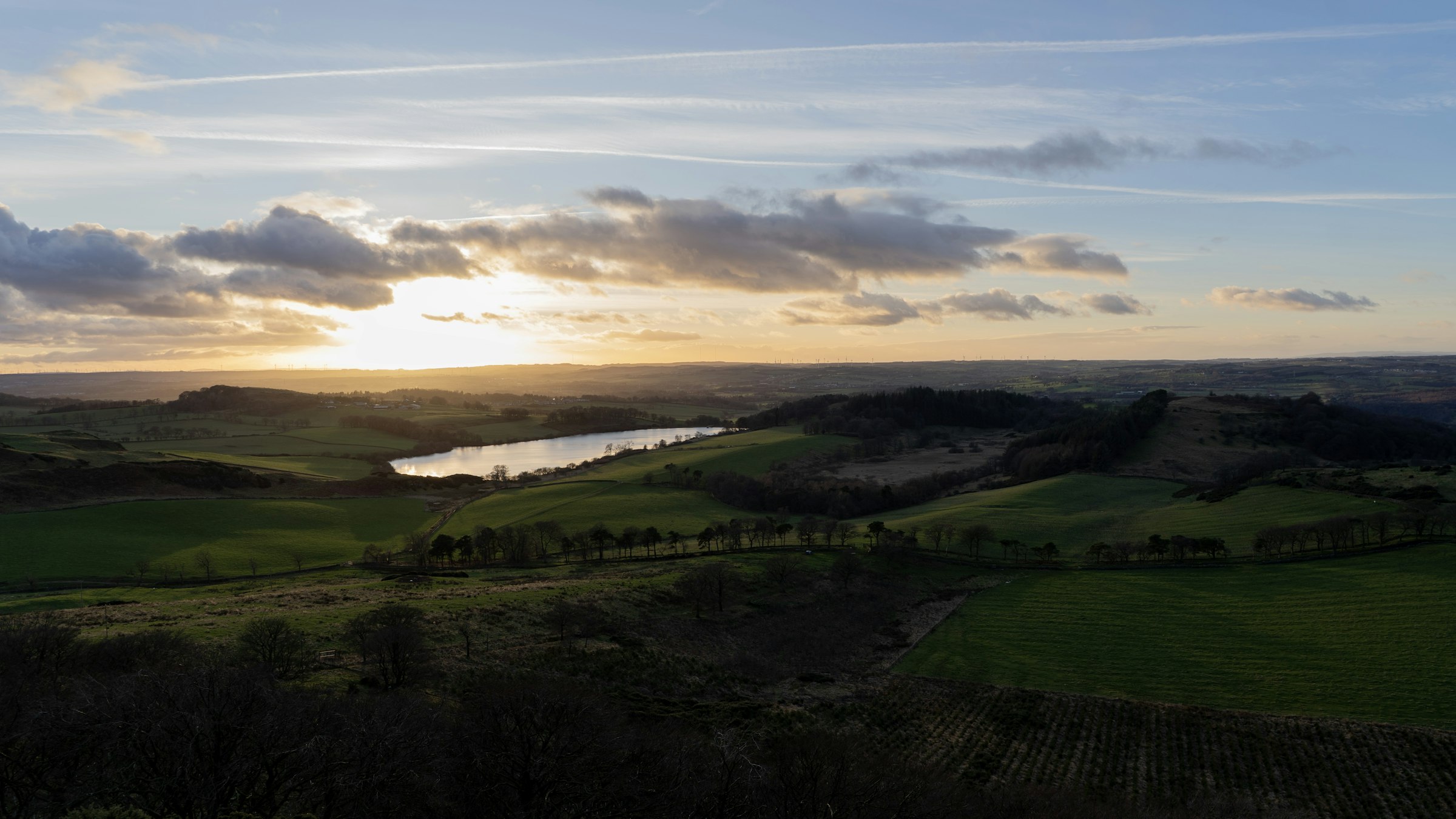
Sunset walks sound peaceful until you remember the sun going down is also nature’s way of turning the lights off.
Still, there are few better ways to end a day than watching the last light hit a Scottish mountain.
The ridges turn gold. Lochs start reflecting the sky. Shadows stretch across glens. The crowds begin to thin. Everything feels a little quieter, a little softer and a lot more dramatic than it did at midday.
Scotland is full of brilliant sunset mountains.
Some are short evening climbs that work well after work, on a weekend trip or when you want a big view without a huge day. Others are serious mountain routes where sunset should only be part of a careful plan, not a last-minute idea fuelled by optimism and a half-charged phone.
The best sunset mountain is not always the biggest one.
Sometimes it is a short hill with a perfect loch view. Sometimes it is a famous mountain photographed from below. Sometimes it is a west coast summit where the sea, islands and sky all decide to show off at once.
The key is choosing a route that fits the conditions, your experience and the fact you still need to get back down afterwards.
Because sunset is lovely.
But darkness is very committed.
Sunset changes the feel of a hill.
A walk that feels familiar in the middle of the day can feel completely different in evening light. The colours soften, the shadows grow longer and ridges that looked flat at lunchtime suddenly have shape, texture and drama.
For photographers, sunset can be brilliant. Warm light can bring out rock, heather, water and mountain silhouettes. Lochs and sea views often look especially good, particularly when the wind drops and the surface catches the sky.
For walkers, sunset routes offer something different too.
Paths are often quieter. The air may be cooler. The summit can feel calmer once the daytime rush has gone. A short hill can feel like a small adventure. A familiar local summit can suddenly feel like a proper occasion.
Sunset mountain walks are great because they offer:
But sunset walks also come with a catch.
The good bit happens near the end of the daylight.
Which means the walk is not over when the sky looks pretty.
That is when the mountain quietly reminds you there is still a descent to do.
The sunset may be doing something beautiful, but the path still expects you to find your way down afterwards.
That is the main difference between a sunset walk and a normal daytime route. You may be descending in darkness, or at least in fading light. Familiar paths can feel less obvious. Rough ground becomes harder to read. Bog becomes sneakier. Rocks become more personal.
For your first sunset mountain walk, choose a simple route.
Ideally, choose one you already know or one with a clear path and a manageable descent. Avoid exposed ridges, scrambling routes, rough pathless hills or unfamiliar terrain until you are more confident walking in low light.
Before heading out, check:
Take a head torch and a backup light. Carry warm layers, waterproofs, food, water, a map and compass, plus a downloaded route.
Tell someone your plan.
And do not let the photo make decisions for you.
The mountain does not care that the sky has gone orange.
Best for: short sunset views over Loch Katrine
Location: Trossachs
Hill type: small hill / viewpoint
Difficulty: Easy to moderate
Ben A’an is one of Scotland’s best short sunset walks.
It gives a huge view for a relatively short climb, with Loch Katrine, Loch Achray and the surrounding Trossachs hills spread out below the summit. In golden-hour light, the scene can look properly ridiculous for the amount of time it takes to get there.
The route is short enough to work well as an evening walk, but it is steep enough to feel like a proper climb.
That makes it a brilliant first sunset summit for confident beginners, provided you take a head torch, warm layer and give yourself enough time.
It can be busy during the day, but evening often feels calmer.
The descent in darkness is manageable with care, but you still need proper footwear and lighting.
Ben A’an gives big loch-and-mountain views from a short climb, making it ideal for golden-hour walks.
Arrive early enough to enjoy the light before sunset. The best colours often start before the sun actually drops.
Best for: sunset over Loch Lomond
Location: Loch Lomond
Hill type: small hill / viewpoint
Difficulty: Easy to moderate
Conic Hill is one of the best sunset viewpoints near the Central Belt.
The view over Loch Lomond and its islands is the main event. In evening light, the loch can glow, the islands stand out beautifully and the surrounding hills create a classic Scottish scene.
The route is relatively short and clear in good conditions, which makes it a strong choice for a first sunset summit.
It is also much more manageable than Ben Lomond if you want Loch Lomond views without committing to a long descent in the dark.
The path can be muddy, and the summit area can be windy, so do not treat it as a casual stroll just because it is popular.
The western view over Loch Lomond and its islands works brilliantly in evening light.
Bring a warm layer for the summit. Even short hills can get chilly when you stop moving.
Best for: city sunset views
Location: Edinburgh
Hill type: urban hill / extinct volcano
Difficulty: Easy to moderate
Arthur’s Seat proves you do not need to leave the city for a brilliant sunset hill.
From the summit, you get views over Edinburgh, the Firth of Forth, the Pentlands and the surrounding landscape. At sunset, the mix of city lights, sea, skyline and hill makes it feel much bigger than its height suggests.
It is accessible, popular and a great beginner-friendly option.
That said, it is still a hill. Paths can be slippery, especially after rain, and the top can be windy. In winter, darkness arrives early, so a head torch is still sensible.
Arthur’s Seat is especially good when you want a sunset walk without turning it into a full Highland mission.
You get city, coast and hill views in one compact evening walk.
Choose a clear evening and take a simple descent route. Urban hills still become darker than expected.
Best for: coastal sunset views
Location: East Lothian
Hill type: small hill / volcanic plug
Difficulty: Easy to moderate
North Berwick Law is a short climb with huge coastal reward.
From the top, you get views over North Berwick, the Firth of Forth, Bass Rock, East Lothian and beyond. In sunset light, the coast can look superb, especially when the sea catches the colour of the sky.
It is a great option for beginners, families or anyone wanting a quick evening summit.
The route is short, but the hill can be windy and the path can be slippery in places, so good footwear still matters.
This is one of those small hills that proves you do not need a giant mountain for a memorable sunset.
The coastal setting, sea views and Bass Rock backdrop make it a brilliant golden-hour hill.
Watch the wind at the top. Small coastal hills can still be impressively breezy.
Best for: Central Scotland sunset views
Location: Ochil Hills / near Stirling
Hill type: small hill
Difficulty: Easy to moderate
Dumyat is a brilliant Central Scotland sunset summit.
It gives wide views over Stirling, the Forth Valley, the Ochils and surrounding hills, making it a useful choice for walkers who want a strong view without a huge journey.
The route is manageable for many walkers in good conditions, and the summit feels properly rewarding for the effort.
It can be windy, boggy or muddy, depending on weather and route choice, so it still needs sensible footwear and a head torch for the descent.
Dumyat is especially useful in winter or shoulder seasons when sunset is early enough for a simple evening plan.
The wide views over Stirling and the Forth Valley catch evening light beautifully.
Good for building confidence with sunset walks before trying bigger or more remote hills.
Best for: classic Loch Lomond sunset Munro
Location: Loch Lomond
Hill type: Munro
Difficulty: Hard
Ben Lomond is a big step up from Conic Hill.
As a sunset mountain, it can be superb. The views over Loch Lomond, the islands and the southern Highlands are excellent, and the evening light can make the whole landscape feel much more dramatic.
But this is a full Munro day.
If you stay for sunset on the summit, you are likely to descend in darkness. That means you need confidence, a good head torch, spare light, proper kit and a route you are comfortable following after dark.
The standard route from Rowardennan is clear in good conditions, but the descent is still long after sunset.
This is better for experienced walkers than first-timers.
Ben Lomond gives classic Munro views over Loch Lomond and the southern Highlands in warm evening light.
Do Conic Hill first if you want Loch Lomond sunset views without committing to a long dark Munro descent.
Best for: Trossachs sunset without Ben A’an crowds
Location: Trossachs
Hill type: Graham
Difficulty: Moderate to hard
Ben Venue is a bigger and often quieter alternative to Ben A’an.
It gives superb views over Loch Katrine, Loch Achray and the surrounding Trossachs, with a more substantial hill day feel. In sunset light, the lochs and wooded hills can look excellent.
This is a good choice if you want more than a short viewpoint walk but do not want a full Munro.
The route can be muddy and rough, and if you stay late for sunset the descent needs careful planning. It is not as quick or simple as Ben A’an.
For confident walkers, though, Ben Venue is a very rewarding sunset hill.
It offers bigger Trossachs views than Ben A’an, with excellent loch and hill scenery in evening light.
Allow plenty of descent time. This is a proper hill, not a quick viewpoint.
Best for: sunset over Loch Leven and Glencoe
Location: Glencoe
Hill type: Graham
Difficulty: Moderate to hard
The Pap of Glencoe is one of the best sunset hills in the west Highlands.
It is much shorter than the surrounding Munros, but it is steep, dramatic and perfectly placed for views over Loch Leven, Glencoe, Lochaber and the nearby mountains.
At sunset, the mix of water, ridges and west coast light can be outstanding.
This is a brilliant choice for confident walkers who want Glencoe drama without taking on a major Munro route late in the day.
The descent can be steep and rough, so darkness adds seriousness. A head torch, good footwear and route confidence are essential.
The summit gives huge west-facing views over Loch Leven and the Glencoe mountains.
Start earlier than you think. The climb is short compared with Munros, but it is not gentle.
Best for: iconic Glencoe sunset subject
Location: Glencoe / Glen Etive
Hill type: Munro massif
Difficulty: Hard
Buachaille Etive Mòr is one of Scotland’s classic sunset subjects.
Its iconic shape at the entrance to Glencoe looks superb in evening light, especially from Rannoch Moor, Glen Etive and nearby viewpoints. The mountain catches light beautifully, with its ridges and slopes changing colour as the sun drops.
For many people, Buachaille Etive Mòr is best enjoyed at sunset from below.
The summit routes are serious, steep and rocky, and they are not ideal for casual sunset attempts. If you stay high until sunset, the descent becomes a much bigger consideration.
Photographing the mountain from a lower viewpoint can give you a safer and often better sunset experience.
Its iconic profile and Glencoe setting make it one of Scotland’s best golden-hour mountain subjects.
Start by photographing it from below. You do not need to be on the summit to enjoy the best light.
Best for: Assynt sunset drama from a shorter hill
Location: Assynt / Inverpolly
Hill type: Graham
Difficulty: Moderate to hard
Stac Pollaidh is a near-perfect sunset hill for confident walkers.
It has huge drama for a relatively short climb, with views over lochs, sea, Suilven, Cul Beag, Cul Mòr and the surrounding Assynt landscape. The jagged ridge looks superb in evening light.
The main walking route is a realistic sunset option if you are prepared, have a head torch and are confident descending in low light.
The true summit is different. It involves scrambling and should not be attempted casually, especially late in the day or in poor conditions.
You do not need the true summit to enjoy one of Scotland’s best sunset views.
Stac Pollaidh gives fast access to dramatic Assynt views, with ridges, lochs and sea all catching evening light.
Stick to the main route for sunset unless you have the scrambling skills and perfect conditions.
Best for: wild Assynt sunset adventure
Location: Assynt
Hill type: Graham
Difficulty: Hard
Suilven at sunset is the kind of idea that sounds magical because it is.
The isolated ridge, scattered lochs, open moorland and wild coastline make it one of Scotland’s most atmospheric mountain landscapes. In evening light, the whole scene can feel unforgettable.
But Suilven is not a casual sunset walk.
The approach is long, the return is long, and timing matters. If you stay for sunset, you need to be fully prepared for a lengthy descent and walk out in darkness.
For many walkers, Suilven may be better as a sunset subject from nearby viewpoints or as part of a very carefully planned trip.
This is one for experienced walkers, not a spontaneous evening dash.
Suilven’s isolated shape and wild Assynt setting are incredible in evening light.
Be realistic. The sunset is only the middle of the experience, not the end of the walk.
Best for: classic Assynt sunset views
Location: Assynt / near Elphin
Hill type: Corbett
Difficulty: Hard
Cul Mòr offers superb sunset views across Assynt.
From the hill, you can look towards Stac Pollaidh, Suilven, Cul Beag and the surrounding lochs. The landscape is open, dramatic and perfectly suited to evening light.
It is less crowded than Stac Pollaidh, but it is also a bigger and more committing route.
This is a proper mountain day with rough ground and serious planning if you intend to stay high for sunset.
For experienced walkers and photographers, Cul Mòr can be excellent.
Just do not underestimate the descent.
Assynt ground has a habit of being slower than expected even in daylight.
Cul Mòr gives wide views over some of Assynt’s most iconic peaks and lochs in golden light.
Plan the descent carefully and leave plenty of buffer time. Rough ground feels rougher in the dark.
Best for: Torridon sunset ridge drama
Location: Torridon
Hill type: Munro ridge
Difficulty: Very hard
Liathach is one of Scotland’s most dramatic mountains, and sunset light on Torridon sandstone can be spectacular.
The ridge, terraces and pinnacles can glow in evening light, making the mountain an incredible subject for photographers. Some of the best sunset views of Liathach come from Glen Torridon, Beinn Alligin or nearby viewpoints.
As a sunset summit or traverse, though, Liathach is very serious.
The ridge is exposed, the terrain is demanding and descending after sunset would require strong experience, planning and confidence. This is not a casual golden-hour objective.
For most people, Liathach is better photographed at sunset than climbed at sunset.
And that is no bad thing.
Some mountains look best when they are doing the dramatic work from a safe distance.
The sandstone ridge catches warm light beautifully and creates one of Scotland’s most dramatic mountain scenes.
Photograph it from Glen Torridon first. Save the traverse for a full daylight plan unless highly experienced.
Best for: sunset over Loch Torridon
Location: Torridon
Hill type: Munro pair
Difficulty: Hard / very hard
Beinn Alligin gives superb west coast and Loch Torridon views.
From the summit and ridge, sunset can be beautiful, with the sea, lochs and surrounding Torridon mountains catching the last light. The mountain is slightly less extreme than Liathach but still a serious route.
If you plan to stay high for sunset, the descent needs careful thought. Darkness, exposure and tired legs are not a great combination.
For experienced walkers in settled weather, Beinn Alligin can be a brilliant sunset objective.
For others, it also works beautifully as a sunset subject from lower viewpoints around Torridon.
The views over Loch Torridon and the west coast make Beinn Alligin a superb evening mountain.
Do not underestimate the descent. The day is not finished when the sky looks good.
Best for: Loch Maree sunset views
Location: Kinlochewe / Torridon area
Hill type: Corbett
Difficulty: Moderate to hard
Meall a’ Ghiubhais is a strong sunset option near Loch Maree.
It is more manageable than Torridon’s major ridge routes but still offers excellent views over Loch Maree, Beinn Eighe and the surrounding mountains. That makes it a useful choice for confident walkers who want big scenery without committing to something like Liathach at sunset.
The route still needs planning if you are descending in fading light or darkness.
But as a sunset hill, it offers a good balance of reward and realism.
It is also a brilliant photography option when the bigger ridges are clouded in or too windy.
The views over Loch Maree and Beinn Eighe work beautifully in evening light.
Use it as a smarter sunset alternative when the serious Torridon ridges are not suitable.
Best for: Skye sunset atmosphere
Location: Isle of Skye / Trotternish
Hill type: hill / viewpoint area
Difficulty: Moderate
The Storr is famous for sunrise, but it can also be excellent at sunset.
The Old Man of Storr, the cliffs, sea views and Trotternish landscape can feel atmospheric in evening light, especially when cloud and colour work together.
The lower viewpoint route is more realistic than bigger Skye mountain objectives, though the path can be muddy and the descent still needs care after dark.
Evening may be quieter than the busiest daytime periods, though this is still one of Skye’s most popular locations.
For photographers, The Storr is worth considering at both ends of the day.
Because apparently one dramatic light show was not enough.
The rock formations, sea views and Trotternish landscape can look superb in evening light.
Take care descending muddy sections in the dark. A head torch is not optional.
Best for: surreal evening light
Location: Isle of Skye / Trotternish
Hill type: landslip / hill route
Difficulty: Moderate
The Quiraing is one of Skye’s most unusual landscapes, and evening light can bring out its texture beautifully.
Cliffs, pinnacles, slopes and sea views all shift as the sun drops, creating a landscape that feels almost unreal. For photographers, this is one of Scotland’s strongest sunset locations.
The route can be muddy, slippery and exposed, so it is not a place to wander casually as light fades.
Avoid strong wind, low cloud or poor visibility if you are unfamiliar with the route.
In settled conditions, though, the Quiraing at sunset can be unforgettable.
The unusual landforms and sea views become even more atmospheric in low evening light.
Give yourself enough time to get back before the path becomes awkward in the dark.
Best for: island sunset summit
Location: Isle of Arran
Hill type: Corbett
Difficulty: Hard
Goatfell is one of Scotland’s great island mountains.
From the summit or higher slopes, sunset views can stretch across Arran, the Firth of Clyde, surrounding islands and the mainland. The mix of sea and mountain light makes it a brilliant evening objective.
But Goatfell is a proper hill day.
If you stay for sunset, you need to be ready for a long descent in fading light or darkness. It works best if you are staying locally on Arran and can plan the route without worrying about ferry logistics.
Lower viewpoints can also offer excellent evening light if the full summit is too much.
The island setting gives wide sea views and beautiful evening light across Arran and the Firth of Clyde.
Stay locally if possible. Sunset summits are much easier when you are not also negotiating ferry times.
Best for: island Munro sunset views
Location: Isle of Mull
Hill type: Munro
Difficulty: Hard
Ben More is Mull’s only Munro and a brilliant west coast sunset mountain in the right conditions.
The summit gives huge views over sea, islands and the wider west coast. In evening light, that island setting can be spectacular.
This is a serious mountain day, and sunset adds extra complexity. Logistics, navigation, weather and descent timing all matter.
It is best for experienced walkers staying nearby, with a clear plan and a settled forecast.
For those who get it right, the reward can be one of the best sunset summit views in Scotland.
The summit gives sweeping island and sea views that can look outstanding in evening light.
Do not underestimate the descent. Island Munro does not mean gentle Munro.
Best for: far north sunset skyline
Location: Sutherland
Hill type: Corbett
Difficulty: Hard
Ben Loyal is one of Scotland’s most distinctive northern mountains.
Its skyline of multiple tops looks superb from surrounding roads, lochs and moorland, especially at sunset when the open northern skies come into play.
For many walkers and photographers, Ben Loyal may be best enjoyed as a sunset subject rather than a summit objective.
A summit sunset would be serious because of the hill’s location, route length and remoteness. If you do plan it, you need experience, good conditions and a clear descent plan.
But from below, Ben Loyal can be a wonderful far north sunset mountain.
Its distinctive skyline and open Sutherland setting make it a brilliant evening photography subject.
Photograph it from nearby viewpoints first. The mountain’s shape is often best appreciated from a distance.
Scotland has sunset options for almost every level of walker, from short local hills to serious west coast summits.
Good shorter options include:
These are ideal for first sunset walks or evenings when you want a big view without a huge route.
For Munro sunset objectives, consider:
These need proper planning, especially if you will be descending after dark.
Good beginner-friendly options include:
Start with routes where the descent is simple, short and manageable.
For photography, strong choices include:
Some of Scotland’s best sunset mountain photos are taken from lower viewpoints rather than summits.
For west coast drama, look at:
Sea, lochs and islands make the west coast especially good for evening light.
For bigger or more committing sunset routes, consider:
These are best saved until you are confident descending in darkness and managing route timing properly.
A sunset view is only half the route.
You still need to get back down afterwards.
Save these until your skills, confidence and conditions are right:
There is no shame in choosing a lower viewpoint.
In fact, for many sunset routes, it is the smarter option.
The mountain still looks dramatic from below.
You simply get to enjoy that drama without turning the walk down into a head torch-based negotiation.
If you want a short first sunset walk, choose Ben A’an.
If you want Loch Lomond views, try Conic Hill.
If you want a city option, choose Arthur’s Seat.
If you want a quick coastal sunset, try North Berwick Law.
If you want Central Scotland views, choose Dumyat.
If you want a west Highland viewpoint, try the Pap of Glencoe.
If you want Assynt drama, choose Stac Pollaidh’s main route.
If you want a sunset Munro, consider Ben Lomond, but only if you are experienced and properly prepared.
If you want a photography-focused sunset, look at Buachaille Etive Mòr or Suilven from below.
The best first sunset mountain is not the most dramatic one.
It is the one where you can enjoy the light and still descend safely afterwards.
That is the whole game.
The climb may feel easier in cooler evening air.
Paths may be quieter.
The summit may feel peaceful.
You may also spend too long taking photos because the light keeps changing and every two minutes you convince yourself it has peaked.
It has not peaked.
Then it peaks again.
Then you realise you still need to descend.
The summit wait can be cold, especially if you arrive early or the wind picks up. The best light may come just after the sun dips, which is annoying because that is also when the sensible part of your brain starts mentioning the descent.
Coming down in darkness feels different.
Familiar paths can feel less obvious. Rocks and roots are harder to spot. Mud becomes more mysterious. Sheep may appear suddenly and judge your life choices.
Wildlife and midges may be more active at dusk.
Car parks may be quieter when you return.
Post-walk food may be limited if you finish late, so keep something in the car unless you enjoy the specific sadness of arriving back hungry with no plan.
For sunset walks, take normal hillwalking kit plus extra attention to light and warmth.
Pack:
Pack before you leave.
Not at the car park while trying to work out whether the thing in your hand is a glove, a sock or an old cereal bar wrapper.
Check sunset time and last light, not just sunset.
Work backwards from when you need to descend.
Add buffer time for photos, snacks and slower walking.
Choose a route you know for your first sunset walk.
Avoid exposed or technical terrain in darkness.
Check wind, cloud, rain and temperature.
Pack before you leave, not at the car park.
Keep warm while waiting.
Start descending before it gets fully dark if you are unsure.
Have a lower viewpoint backup.
Do not let the photo make decisions for you.
Be considerate with parking and noise if finishing late.
And remember that sometimes the best sunset walk is not a summit at all.
It might be a lower viewpoint, a lochside path or a short hill that gives you the same golden light with far less dark descent drama.
If you are building confidence with sunset walks, start with short, simple routes where the descent is manageable. Then build towards longer hills, rougher terrain and more remote routes once you are comfortable walking down in darkness.
A sensible progression might look like this:
This is not a strict order.
Weather, route choice, fitness, navigation and confidence all matter. Some walkers may be comfortable on a longer route but less happy descending rough ground in darkness. Others may prefer short local hills for several sunset walks before trying anything bigger.
The aim is to build steadily.
Learn how long you take.
Learn what darkness does to the route.
Learn how cold you get while waiting for the light.
And learn that a sunset walk planned by your organised afternoon self is much better than one improvised by your overexcited golden-hour self.
Scotland’s best sunset mountains are not just about dramatic summits.
They are about light, timing, safe route choice and knowing when a lower viewpoint is the smarter option.
A short hill like Ben A’an, Conic Hill or Arthur’s Seat can give you a brilliant sunset memory without turning the descent into a major operation. Bigger mountains like Suilven, Beinn Alligin, Goatfell or Ben More on Mull can be unforgettable, but only when your experience, weather and planning all line up.
Start simple.
Pack a head torch.
Leave yourself enough time.
And remember that the sunset is only the middle of the walk, not the end.
The mountain still expects you to get back down.
Preferably before your post-walk snack becomes a full emotional support item.
Bagged a sunset summit in Scotland?
Use Peaky Baggers to log your walks, track your summits and keep building your Scottish summit list one golden-hour hill at a time.
Photo by Jonathan Greenaway on Unsplash


