Explore the essential peaks of the North Pennines including Cross Fell, Great Dun Fell and other remote upland summits across England’s wildest moorland landscape.
The North Pennines is one of England’s most expansive and least crowded upland landscapes. Stretching across Cumbria, County Durham and Northumberland, this Area of Outstanding Natural Beauty is defined by high moorland, long ridges and wide open skies.
Unlike the Lake District or Snowdonia, the North Pennines rarely offers sharp peaks or dramatic rocky summits. Instead the landscape unfolds gradually through broad plateaus, peat moorland and escarpments overlooking deep valleys. The result is a walking experience built around space, weather and distance rather than spectacle.
Peak bagging in the North Pennines is therefore about embracing subtlety. Many of the summits appear modest on the map but reward walkers with a strong sense of isolation and scale.
This guide introduces the essential peaks of the North Pennines and provides a starting point for exploring one of England’s most distinctive upland regions.
The North Pennines stands apart from other hill regions in several ways.
The terrain is dominated by large upland plateaus rather than narrow ridges. Many summits are broad and gently rounded, rising quietly above wide moorland landscapes. Walking here often means covering longer distances across open ground rather than climbing steep slopes.
Weather also plays a significant role. The Pennines are known for strong winds, sudden cloud and rapidly changing conditions. Even relatively modest summits can feel remote and exposed.
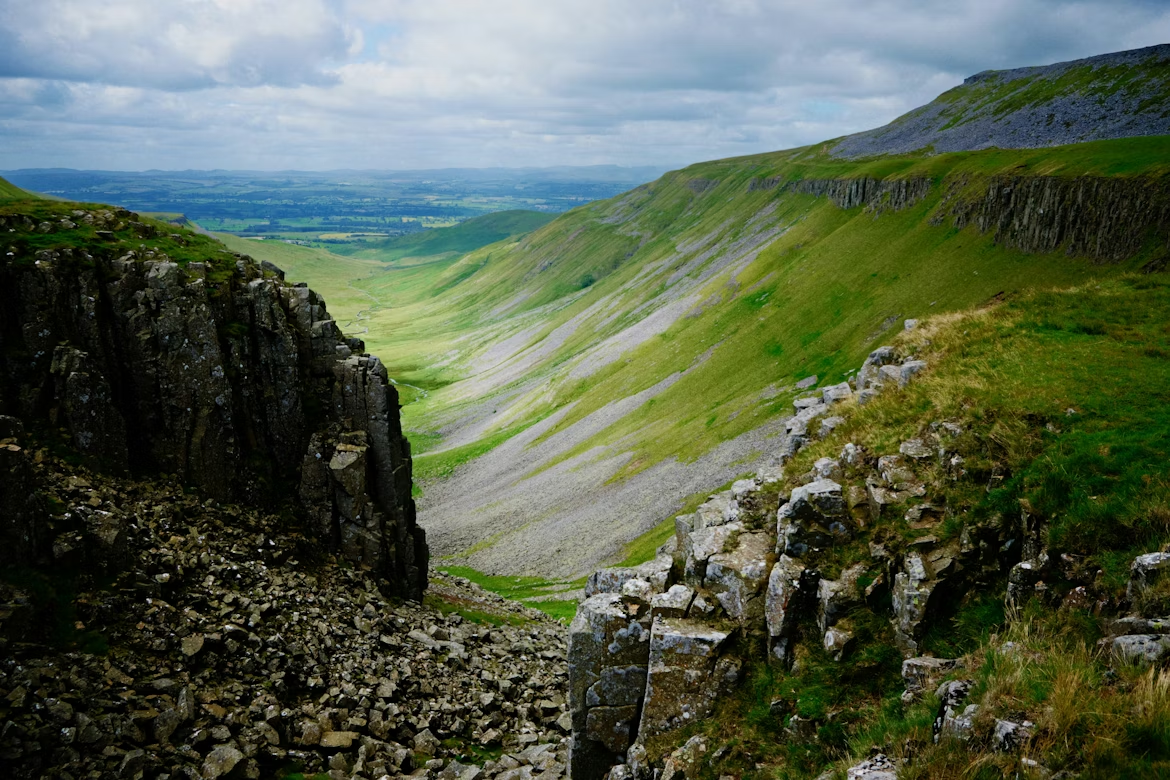
At the same time, the region offers remarkable geological features. Limestone escarpments, glacial valleys and dramatic formations such as High Cup Nick give the landscape a powerful character that unfolds slowly as you move through it.
This guide presents a selection of essential North Pennines peaks that represent the geography and walking character of the region.
Some summits can be reached in straightforward day walks, while others require longer routes across open moorland. Many of these hills are best combined into larger circuits or weekend trips.
Walkers should be comfortable with navigation and prepared for rapidly changing weather conditions. The reward is a quieter and more atmospheric hill experience than many of England’s more famous mountain areas.
Height: 893 metres
Area: Cumbria
Why it is essential: The highest mountain in the Pennines and the defining summit of the North Pennines
Typical walking time: 6 to 7 hours
Difficulty: Moderate
Route style: Circular or out and back
Cross Fell is the highest point in the Pennine range and one of England’s most remote feeling mountains. Its broad summit plateau and sweeping views across the Eden Valley and the Lake District make it a cornerstone of North Pennines peak bagging.
Height: 848 metres
Area: Cumbria
Why it is essential: One of the highest Pennine summits with a distinctive radar station near the summit
Typical walking time: 5 to 6 hours
Difficulty: Moderate
Route style: Circular or out and back
Great Dun Fell forms part of the high ridge south of Cross Fell and offers expansive views across the surrounding uplands.
Height: 842 metres
Area: Cumbria
Why it is essential: A key summit on the high Pennine ridge
Typical walking time: 5 to 6 hours
Difficulty: Moderate
Route style: Circular
Often climbed alongside Cross Fell and Great Dun Fell, Little Dun Fell completes the trio of major summits in this part of the Pennines.
These summits represent the broad moorland terrain that defines the North Pennines.
Height: 788 metres
Area: County Durham
Why it is essential: One of the highest peaks in the North Pennines and a remote upland summit
Typical walking time: 6 to 7 hours
Difficulty: Moderate
Route style: Out and back
Mickle Fell lies within a remote part of the North Pennines and offers one of the most isolated walking experiences in England.
Height: 747 metres
Area: Durham Cumbria border
Why it is essential: The highest point in County Durham
Typical walking time: 4 to 5 hours
Difficulty: Moderate
Route style: Circular
Burnhope Seat sits on a broad upland plateau and offers sweeping views across the Pennines.
Height: 621 metres
Area: Western North Pennines
Why it is essential: A prominent summit overlooking the western Pennines
Typical walking time: 4 to 5 hours
Difficulty: Moderate
Route style: Circular
Cold Fell provides a quieter alternative to the highest Pennine summits while still offering expansive views.
Some peaks stand out because of the dramatic scenery that surrounds them.
Height: 481 metres
Area: Eden Valley
Why it is essential: A striking pyramid-shaped hill rising above the village of Dufton
Typical walking time: 2 to 3 hours
Difficulty: Easy to moderate
Route style: Circular
Dufton Pike is one of the most distinctive hills in the region and offers excellent views across the Eden Valley.
Height: 794 metres
Area: Cumbria
Why it is essential: A summit overlooking the dramatic High Cup Nick valley
Typical walking time: 4 to 5 hours
Difficulty: Moderate
Route style: Circular
Knock Pike is best known for its views into High Cup Nick, one of the most dramatic geological features in the Pennines.
Height: 674 metres
Area: Cumbria
Why it is essential: A quiet summit overlooking the High Cup Nick landscape
Typical walking time: 4 to 5 hours
Difficulty: Moderate
Route style: Circular
Murton Fell offers a quieter alternative viewpoint over the surrounding hills and valleys.
These peaks capture the solitude that defines the North Pennines.
Height: 716 metres
Area: Border of Yorkshire Dales and Pennines
Why it is essential: A broad summit with wide views across northern England
Typical walking time: 5 to 6 hours
Difficulty: Moderate
Route style: Circular
Although technically close to the Yorkshire Dales, Great Shunner Fell connects the two landscapes and offers expansive views across the Pennines.
Height: 662 metres
Area: Northern Pennines
Why it is essential: Known for its mysterious stone cairns on the summit plateau
Typical walking time: 4 to 5 hours
Difficulty: Moderate
Route style: Circular
Nine Standards Rigg is one of the most intriguing summits in the Pennines and forms part of the Coast to Coast walking route.
Height: 672 metres
Area: Northern Pennines
Why it is essential: A quiet and expansive summit overlooking Arkengarthdale
Typical walking time: 4 to 5 hours
Difficulty: Moderate
Route style: Circular
Rogan’s Seat provides a calm and expansive hill experience far from the busiest walking areas.
Many of these summits can be linked into larger routes. The Cross Fell ridge offers the most obvious example, where several high Pennine peaks can be climbed in a single day.
Other areas lend themselves well to multi-peak routes across moorland plateaus. Weekend trips also work well in the North Pennines, allowing walkers to explore different valleys and uplands without rushing.
Because distances between access points can be large, careful planning is important.
The open moorland terrain of the North Pennines makes navigation important. In poor visibility it is easy to lose orientation across broad plateaus.
Weather can also change quickly. Strong winds and cloud are common, particularly on the highest ridges. Walkers should carry suitable equipment and be comfortable using maps and navigation tools.
These conditions are part of what gives the North Pennines its wild character.
Spring and autumn often provide the best balance of visibility and quiet paths. Summer offers long daylight hours but can bring heat and haze across the moorlands.
Winter conditions can be severe on the highest summits and should be approached with care. Wind exposure is a constant factor throughout the year.
This guide is ideal for walkers seeking quieter upland landscapes away from the busiest national parks. It suits peak baggers exploring new regions, experienced walkers comfortable on moorland terrain, and anyone interested in England’s more remote hills.
The North Pennines rewards patience, curiosity and careful planning.
Track your North Pennines peaks, build your personal summit list and log your progress with Peaky Baggers.
The North Pennines may lack the dramatic peaks of other mountain regions, but its uplands offer something equally powerful. Wide horizons, quiet hills and a deep sense of space make this one of England’s most rewarding landscapes for patient and thoughtful peak bagging.
Photo by Ian Cylkowski on Unsplash

.png)