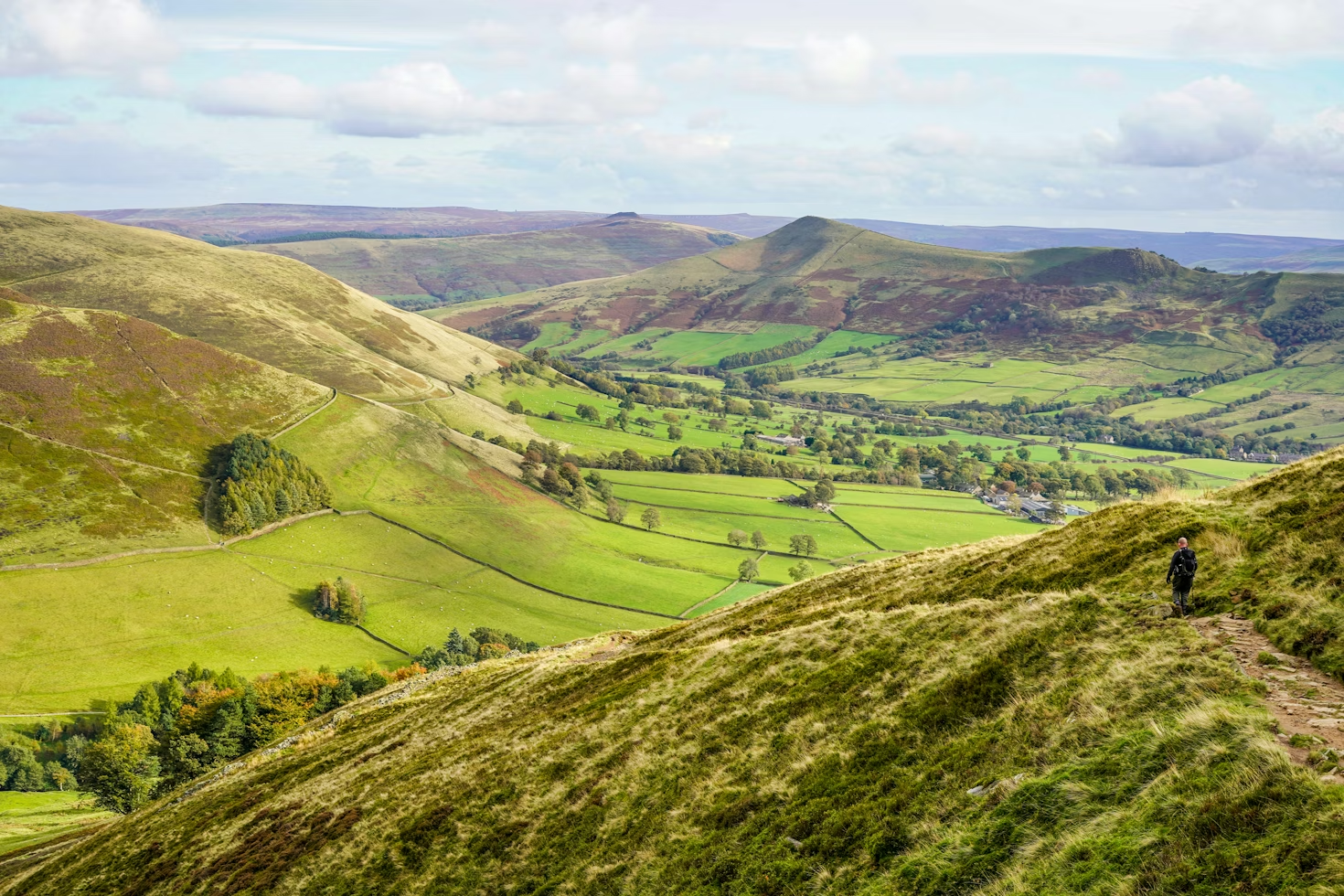
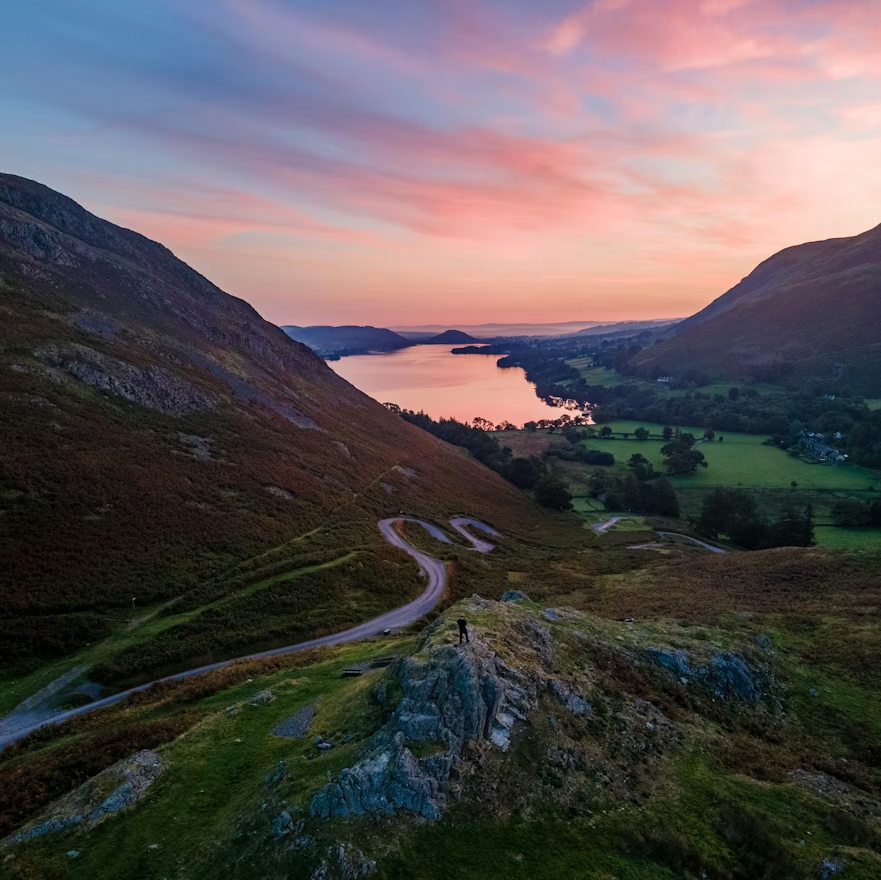
Discover some of the most photogenic peaks in the Lake District, from classic lake-view summits to dramatic ridges, sunrise viewpoints and picture-perfect Wainwrights.

Some peaks are worth climbing for the view.
Others are worth climbing because every five minutes you find yourself stopping to take another photo.
The Lake District is packed with photogenic walks, from gentle viewpoints over Windermere to dramatic ridges, rocky summits and classic Wainwrights that seem to look good in almost any weather.
You do not need to be a professional photographer to enjoy them either. A phone, a decent forecast and a bit of patience are usually enough.
The best photo walks are not always the highest or hardest. Sometimes it is the lower peaks, the lake views, the distinctive summit shapes or the golden-hour light that make a walk really memorable.
So, if you want a peak that looks as good as it feels to climb, here are some of the most photogenic peaks in the Lake District.
A photogenic peak is not just about summit height.
Some fells look amazing because of their shape. Others are brilliant because of the views they give you over lakes, valleys, ridges or surrounding mountains. Some are best at sunrise, others come alive at sunset, and a few look dramatic even when the weather is being moody.
A photogenic peak might have:
And the good news is that a photogenic peak does not need to be difficult.
Some of the best photo spots in the Lake District are short, beginner-friendly walks with huge visual reward.
Best for: classic Derwentwater views
Start point: Hawes End / Derwentwater
Difficulty: Easy to moderate
Catbells is one of the most photogenic peaks in the Lake District.
It has the lake, the ridge, the views and the classic Keswick-area setting. From the climb, you get brilliant views over Derwentwater, Borrowdale and the Newlands Valley, with plenty of natural photo stops along the way.
Catbells also photographs well from a distance. Its shape above Derwentwater is instantly recognisable, and from the summit you get one of the most classic Lake District views around.
It is popular, so do not expect to have it to yourself on a sunny weekend. But if you start early, or go later in the day, you can catch softer light and quieter paths.
Looking back over Derwentwater as you climb, especially in morning or evening light.
Do not wait until the summit to take photos. Some of the best shots are on the way up.
Best for: distinctive summit rocks
Start point: Grasmere
Difficulty: Moderate
Helm Crag has personality.
Its famous summit rocks give it one of the most recognisable profiles in the Lake District, and the whole walk feels full of character. It is not the highest fell, but it looks and feels dramatic.
The views back over Grasmere and across the surrounding fells are excellent, especially when the light catches the valley below.
Helm Crag works well in golden-hour light, but it can also look brilliant in moodier conditions. A bit of cloud and atmosphere can make the summit rocks feel even more dramatic.
The summit rocks, with Grasmere and the surrounding fells in the background.
Look for angles that show the shape of the summit. Helm Crag is at its best when you capture its character, not just the view.
Best for: tarns, rock and classic Buttermere scenery
Start point: Buttermere / Gatesgarth
Difficulty: Moderate
Haystacks is one of the most atmospheric fells in the Lake District.
It has rocky paths, tarns, views over Buttermere and a real sense of mountain character. It is also strongly associated with Alfred Wainwright, which adds to its appeal for many walkers.
Innominate Tarn is one of the most photogenic spots on the route, but Haystacks offers photo opportunities throughout the walk. Rock, water, skyline and valley views all combine to make it feel varied and memorable.
This is more demanding than the easiest viewpoints, so it is better for walkers with some confidence. But if you want texture, mood and classic Buttermere scenery, Haystacks is a brilliant choice.
Innominate Tarn, especially when the water is still or the light is soft.
Haystacks is not just about big views. Look for smaller details too: tarn reflections, rocks, paths and changing light.
Best for: varied lake views
Start point: Ambleside / Rydal / Grasmere
Difficulty: Easy to moderate
Loughrigg Fell is one of the best Lake District peaks for varied photo opportunities.
Depending on your route, you can get views over Rydal Water, Grasmere and Windermere. There are also paths, rocky outcrops, woodland edges and lakeside sections that make the whole walk feel very photogenic.
It is a great option for beginners who want big views without taking on a huge mountain route.
Loughrigg is especially good in autumn, when the colours around Rydal and Grasmere can be beautiful. It also works well at sunrise or sunset if you choose your route carefully.
Looking across Rydal Water or Grasmere from the fell, especially when the light is soft.
Use the route options to your advantage. Loughrigg gives you loads of angles, so plan a walk that includes both summit views and lakeside scenery.
Best for: Derwentwater from above
Start point: Keswick / Great Wood / Ashness Bridge
Difficulty: Easy to moderate
Walla Crag gives you one of the best views over Derwentwater.
It is close to Keswick, easy to fit into a shorter walk, and full of classic Lake District photo opportunities. From the viewpoint, you can capture Derwentwater, Catbells, Borrowdale and the surrounding fells all in one scene.
It is also a good alternative to Catbells if you want big lake views without choosing the most obvious route.
Walla Crag works well in sunrise light, sunset light and misty conditions. If you combine it with Ashness Bridge, you can add another classic Lake District photo stop to the day.
The view over Derwentwater from the crag, with Catbells across the lake.
If you are starting near Ashness Bridge, leave time to stop there too. It is one of those classic Lake District scenes for a reason.
Best for: dramatic Buttermere views
Start point: Honister / Gatesgarth / Buttermere depending on route
Difficulty: Moderate to hard
Fleetwith Pike is one of the most dramatic peaks above Buttermere.
Its shape is striking, and the views from the summit down towards Buttermere are excellent. It has a much more serious feel than many of the shorter photo-friendly walks, so route choice matters.
Some routes are steep and exposed, while others are more manageable but still require proper planning. This is not one to treat as a casual viewpoint walk.
For experienced walkers, though, Fleetwith Pike can be incredibly rewarding. It gives you mountain drama, strong ridgelines and one of the best lake views in the western Lakes.
Looking down towards Buttermere from the summit area.
Choose your route based on experience, not just the photo you want. The views are not worth forcing a route that feels beyond you.
Best for: dramatic mountain profile
Start point: Threlkeld / Scales / Mungrisdale depending on route
Difficulty: Moderate to hard
Blencathra is one of the most distinctive mountains in the Lake District.
It looks dramatic from the surrounding valleys, with a strong shape that makes it instantly recognisable. It is one of those peaks that photographs well before you even start climbing.
From the summit and surrounding routes, the views are big and open. Sharp Edge is especially photogenic, but it is also serious and only suitable for experienced walkers in the right conditions.
The good news is that you do not need to climb Sharp Edge to get brilliant photos of Blencathra. Easier routes still give you strong views and plenty of mountain atmosphere.
Blencathra’s profile from the valley, or the open summit views on a clear day.
Do not confuse photogenic with suitable. Sharp Edge may look amazing, but only choose it if you have the experience and conditions for it.
Best for: iconic ridges and high mountain views
Start point: Glenridding / Patterdale / Thirlmere depending on route
Difficulty: Hard
Helvellyn is one of the Lake District’s most famous and photogenic mountains.
Striding Edge and Swirral Edge are among the most photographed ridges in the Lakes, and Red Tarn gives the whole area a dramatic mountain setting.
In clear conditions, the summit views are huge. In the right light, the ridges, tarn and surrounding fells can look incredible.
But Helvellyn is a serious mountain, especially if you choose the ridge routes. Striding Edge and Swirral Edge need proper experience, confidence and good conditions. There are other ways up, so choose the route that matches your ability.
Red Tarn with the ridges rising around it, or the approach along Striding Edge for experienced walkers.
The best photo is never worth taking a risk for. Stay well away from edges if you are stopping for shots.
Best for: Buttermere and Crummock Water drama
Start point: Buttermere / Rannerdale
Difficulty: Easy to moderate
Rannerdale Knotts is short, steep in places and very photogenic.
It gives brilliant views over Buttermere, Crummock Water and the surrounding fells, making it a fantastic choice if you want big scenery without a long mountain day.
The walk feels dramatic for its size. It is especially photogenic in bluebell season, but the views are strong all year round in good conditions.
Rannerdale Knotts is a good option for confident beginners or walkers with a little experience. It is short, but it still needs care on steeper sections.
The view over Crummock Water and Buttermere from the ridge.
Morning or evening light can make this area look especially dramatic. Just make sure you leave enough time for the descent.
Best for: classic mountain drama
Start point: Wasdale / Seathwaite / Honister depending on route
Difficulty: Hard
Great Gable is one of the most iconic mountain shapes in the Lake District.
It looks dramatic from Wasdale, from neighbouring fells and from several classic viewpoints. Its profile is powerful, and the surrounding scenery gives a strong sense of scale.
From the summit, the views are excellent in clear weather, especially towards the Scafells, Wasdale and the surrounding high fells.
This is a proper mountain walk, better suited to experienced walkers. The weather, route choice and navigation all matter.
Great Gable’s profile from Wasdale, or summit views across the western fells.
Great Gable is often as photogenic from a distance as it is from the top. Leave time to appreciate the approach views too.
Best for: rugged Langdale scenery
Start point: Great Langdale / Three Shires Stone
Difficulty: Hard
Bowfell is a superb peak for rugged mountain photography.
It sits above Langdale and has a proper high-mountain feel, with rocky ground, strong lines and views towards the Scafells. The approach from Great Langdale is especially photogenic, with classic valley scenery and a sense of scale that builds as you climb.
The summit area is rocky and atmospheric, making it a strong choice for walkers who want more than a gentle viewpoint.
Bowfell is a serious fell, so good weather and visibility make a big difference. In poor conditions, the route can feel much more demanding.
The rugged summit area and views towards the Scafells.
Use rocks and paths as foreground to show the scale of the surrounding mountains.
Best for: small summit, big Borrowdale character
Start point: Rosthwaite / Grange / Borrowdale
Difficulty: Easy to moderate
Castle Crag is small, but it is packed with character.
It is one of the lower Wainwrights, but its slate, woodland, Borrowdale setting and distinctive summit make it very photogenic. It feels different from many of the bigger fells, and that is part of the appeal.
Castle Crag is a great option if you want a shorter walk with strong atmosphere rather than a huge mountain day.
It is especially good in autumn, when the colours in Borrowdale can be beautiful.
The slate-covered summit area with Borrowdale views beyond.
Do not dismiss smaller peaks. Castle Crag proves that character can be just as photogenic as height.
Best for: easy Windermere views
Start point: Windermere
Difficulty: Easy
Orrest Head is one of the easiest photogenic viewpoints in the Lake District.
The walk from Windermere is short and accessible, but the view from the top is excellent. You can look across Windermere towards the surrounding fells, giving you a classic Lake District scene without needing a big walk.
It is also strongly connected to Alfred Wainwright, as it was his first Lake District viewpoint.
For first-time visitors, families or anyone wanting an easy photo walk, Orrest Head is hard to beat.
The view over Windermere from the top, especially in soft morning or evening light.
Orrest Head is a great arrival-day walk. It gives you a big view quickly, without needing to plan a full route.
Best for: simple Ullswater views
Start point: Martindale / St Peter’s Church
Difficulty: Easy
Hallin Fell is short, simple and incredibly rewarding.
It sits above Ullswater and gives you a brilliant view for a relatively quick climb. The summit has a proper viewpoint feel, and the lake below adds scale and drama to the scene.
This is a great beginner-friendly photo walk, especially if you want something quieter than the most famous viewpoints.
Hallin Fell is also excellent for sunrise or sunset in settled weather, because the walk is short enough to make timing easier.
The view along Ullswater from the summit.
Take a moment to move around the summit area and find the best angle. Small changes in position can make a big difference to the lake view.
Best for: rugged ridge photography
Start point: Great Langdale / Oxendale / Three Shires Stone
Difficulty: Hard
Crinkle Crags is rugged, dramatic and full of texture.
The ridge has multiple tops, rocky sections and a wild feel that makes it very photogenic. It is a brilliant route for experienced walkers who want dramatic mountain scenery and plenty of variety.
The route can be linked with Bowfell for a much bigger day, but even on its own, Crinkle Crags is a serious outing. Navigation, weather and route choice all matter.
This is not a beginner photo walk, but for confident walkers, it offers some of the most dramatic ridge scenery in the Lake District.
The rocky ridge line and views across the western fells.
Give yourself plenty of time. Rugged terrain is slower, and you will probably want to stop for photos more than once.
Different peaks are photogenic for different reasons, so here is a simple way to choose.
If you want classic lake shots, try:
These are some of the best options if you want water in the view.
If you want ridges and mountain drama, look at:
Some of these are serious routes, so choose based on your experience.
If you want peaks with character, try:
These walks have strong shapes, rocks, texture or atmosphere.
Good sunrise options include:
Shorter routes often work especially well for sunrise because you are less likely to be rushing in the dark.
Good sunset options include:
Always plan the descent and take a head torch if there is any chance you will be out after dark.
If you are new to both walking and photography, start with:
These give you strong photo rewards without needing a huge mountain day.
Some of the most photogenic peaks in the Lake District are also more serious.
It is worth saving these until you have the right experience, conditions and confidence:
These can be incredible, but they are not worth forcing for a photo.
Exposure, weather, navigation and tiredness all matter more than getting the shot. If conditions are wrong, choose a lower or simpler viewpoint instead.
There will always be another good light day.
If you want classic lake views, choose Catbells or Walla Crag.
If you want an easy photo walk, go for Orrest Head, Latrigg or Hallin Fell.
If you want dramatic summit character, try Helm Crag or Castle Crag.
If you want moody mountain atmosphere, look at Haystacks or Bowfell.
If you want ridges, choose Catbells for a more approachable option, or Helvellyn and Blencathra only if you have the right experience and conditions.
If you want Buttermere drama, look at Rannerdale Knotts, Haystacks or Fleetwith Pike.
The most photogenic peak is not always the most famous one. It is the one that matches the light, the weather and your confidence.
Good light can turn a nice walk into a brilliant one.
Sunrise is great for softer light, quieter paths and calmer conditions. It works especially well on shorter routes where you can reach the viewpoint without a long dark ascent.
Sunset brings golden-hour light and warm colours, but you need to think carefully about the descent.
Autumn can be fantastic in the Lake District, especially around woodland, lakes and lower fells.
Winter can bring frost, snow and sharp light, but the walking is more serious and the days are shorter.
Misty mornings can create beautiful atmosphere, but do not push into poor visibility if you are not confident with navigation.
Clear days are best for big summit views, while cloudy days can still work well for texture, mood and drama.
The best conditions are not always perfect blue skies. Sometimes a bit of cloud makes the photo much better.
You do not need fancy kit to take good photos in the Lakes.
Arrive earlier than the light you want. If you want sunrise, be there before sunrise. If you want sunset, arrive before golden hour.
Look behind you as well as ahead. Some of the best light may be landing on the fells behind you.
Use lakes, paths, walls, rocks or tarns as foreground. They can help give your photos depth and make the view feel bigger.
Take photos during the approach, not just at the summit. On many walks, the best views appear before the top.
Keep your phone or camera dry, especially in changeable weather.
Carry a power bank if you are relying on your phone for both photos and navigation.
Do not stand too close to edges for a photo. No shot is worth a slip.
And once you have taken a few photos, put the camera away for a minute and actually enjoy the view.
That bit matters too.
For a photogenic Lake District walk, you want the usual hill basics plus a couple of photo-friendly extras.
Pack:
For bigger routes like Helvellyn, Bowfell, Great Gable or Crinkle Crags, take the planning and kit much more seriously. These are proper mountain days, not just photo outings.
If you want to build confidence while finding great photo spots, start with the easier options and work up gradually.
A sensible progression might look like this:
This is not a strict order. Choose based on where you are staying, the weather, your experience and the light you want.
The idea is to start with easy lake-view viewpoints, then build towards more dramatic, rugged and serious photo routes.
One good view at a time is a pretty nice way to explore the Lakes.
The most photogenic Lake District peak is not always the biggest one.
Sometimes it is the one with the best light, the best lake view, the most interesting summit shape or the path that makes you stop every few minutes and say, “Just one more photo.”
Orrest Head, Latrigg and Hallin Fell prove that easy walks can still deliver brilliant views.
Catbells, Walla Crag and Loughrigg show how much drama you can get from classic lake-view routes.
And peaks like Haystacks, Helm Crag, Bowfell and Crinkle Crags add texture, atmosphere and a bigger sense of adventure.
Pick a peak that suits your ability, choose the right conditions, and remember to enjoy the view as well as capture it.
The photo is nice.
Being there is better.
Bagged a photogenic Lake District peak?
Use Peaky Baggers to log your walks, track your summits and keep building your peak list one picture-perfect walk at a time.
Photo by Abide Studios on Unsplash