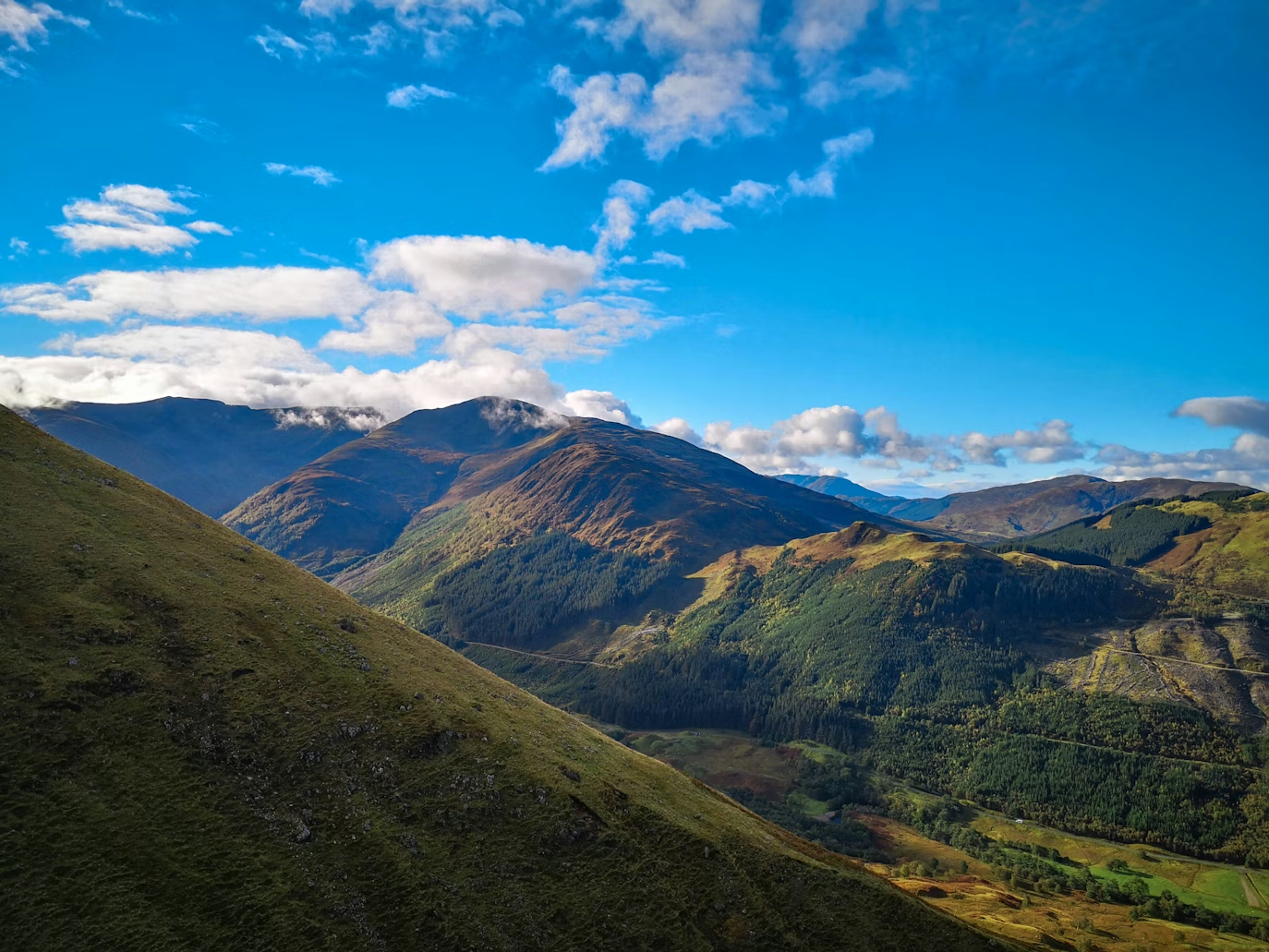
Discover lesser-known Peak District peaks that offer space, character and rewarding walks away from the busiest routes.

A small number of Peak District hills attract a disproportionate amount of attention. They appear in guidebooks, social media feeds and weekend itineraries, drawing most walkers along the same paths. This concentration of footfall can make the National Park feel busier than it really is.
Beyond these headline hills lies a quieter Peak District. Many peaks remain overlooked not because they lack quality, but because they sit slightly off the obvious routes, have subtler profiles, or are overshadowed by famous neighbours. For walkers willing to look beyond the usual names, these peaks offer space, calm and a more personal experience of the landscape.
This guide focuses on lesser-known Peak District peaks that reward curiosity rather than crowd-following.
A lesser-known peak is not defined by height or difficulty. It is usually overlooked for simpler reasons.
It may sit close to a much more famous hill that absorbs attention. Its shape may be gentle rather than dramatic. It may lack a recognisable photo angle or viewpoint. Sometimes it is simply missing from popular lists.
These peaks are often just as accessible and just as rewarding as their better-known counterparts. They are quieter by circumstance, not by design.
The peaks below are grouped by landscape type rather than ranked by height or difficulty. Walking times are indicative and depend on route choice, conditions and pace.
These peaks work particularly well for repeat visits to the Peak District, midweek walks, or days when the busiest areas are best avoided.
The Dark Peak is often associated with famous edges and plateaus. Move away from these and the landscape quickly becomes quieter.
Outlying Dark Peak hills
Approximate height: 450 to 550 metres
Area: Dark Peak
Why they are overlooked: Attention is drawn to nearby gritstone edges and named plateaus.
What makes them worthwhile: Big skies, strong atmosphere and a sense of space.
Typical time required: 4 to 6 hours
Difficulty: Moderate
Route style: Circular or traverse
These hills rarely offer a single dramatic summit moment. Instead, they deliver a gradual immersion into moorland landscapes that feel expansive and calm.
Secondary plateau tops
Approximate height: 500 to 600 metres
Area: Central and Northern Dark Peak
Why they are overlooked: Broad, flat ground lacks obvious focal points.
What makes them worthwhile: Scale, quiet and subtle changes in terrain.
Typical time required: 5 to 7 hours
Difficulty: Moderate
Route style: Circular
These peaks reward patience and awareness rather than spectacle. They suit walkers comfortable with steady pacing and navigation.
Away from the famous dales, the White Peak holds many hills that are rarely walked deliberately.
Limestone hills beyond major valleys
Approximate height: 350 to 450 metres
Area: White Peak
Why they are overlooked: Most visitors remain within popular dales and riverside routes.
What makes them worthwhile: Clear summits, wide views and gentle terrain.
Typical time required: 2.5 to 4 hours
Difficulty: Easy to moderate
Route style: Circular
These hills often rise quietly above farmland and villages, offering peaceful walking and unexpected viewpoints.
Short limestone ridges without headline status
Approximate height: 300 to 400 metres
Area: White Peak
Why they are overlooked: Overshadowed by nearby classic ridges.
What makes them worthwhile: Compact routes with strong character.
Typical time required: 2 to 3 hours
Difficulty: Moderate
Route style: Out and back
They may lack fame, but they deliver a satisfying sense of movement and elevation in a short time.
Not all gritstone edges attract crowds.
Secondary gritstone edges
Approximate height: 350 to 450 metres
Area: Eastern and Central Peak District
Why they are overlooked: Close proximity to well-known edges draws attention away.
What makes them worthwhile: Similar views with far fewer people.
Typical time required: 2 to 4 hours
Difficulty: Easy
Route style: Linear or circular
These edges provide the same dramatic drop and wide horizons without the constant flow of walkers.
Fragmented or shorter edges
Approximate height: 300 to 400 metres
Area: Dark Peak margins
Why they are overlooked: Lack of continuity and fewer obvious viewpoints.
What makes them worthwhile: Quiet walking and a more reflective experience.
Typical time required: 1.5 to 3 hours
Difficulty: Easy
Route style: Out and back
Short edges are often passed through rather than explored, making them ideal for quieter days.
Timing enhances solitude. Midweek walks are consistently quieter. Early mornings and late afternoons reduce footfall even near popular areas. Winter and shoulder seasons transform overlooked peaks into calm, open landscapes.
Weather that discourages casual visitors can also create opportunities for space, provided conditions remain safe.
Lesser-known peaks often have fewer signs, lighter path wear and less defined viewpoints. Navigation and judgement play a slightly larger role. In return, walkers gain a stronger sense of discovery and ownership of the experience.
Where popular peaks feel shared, lesser-known peaks feel personal.
They are not dull.
They are not only for experienced walkers.
They often have excellent views.
They are usually easy to access with a little planning.
Most simply lack publicity, not quality.
These peaks work well together. Linking two or three lesser-known hills can create a satisfying full day without passing through busy areas. Pairing one quieter peak with a classic, approached from an unusual direction, can balance solitude with familiar scenery.
Valleys, farmland paths and moorland tracks often provide quiet connections between them.
This style of peak bagging suits walkers who value space and reflection, repeat visitors looking for something different, confident beginners avoiding crowds, and experienced walkers seeking calmer days.
It is about curiosity rather than completion.
Track lesser-known Peak District peaks, note quieter routes and conditions, and build a more personal peak bagging record with Peaky Baggers.
The Peak District’s lesser-known peaks remind us that popularity is not a measure of value. Step away from the familiar names and the landscape slows down, opens up, and begins to feel genuinely your own.
Photo by Jamie Street on Unsplash
.avif)