Discover some of the best Lake District peaks for winter walking, from beginner-friendly low fells to bigger routes for experienced walkers in good conditions.
Winter walking in the Lake District can be brilliant.
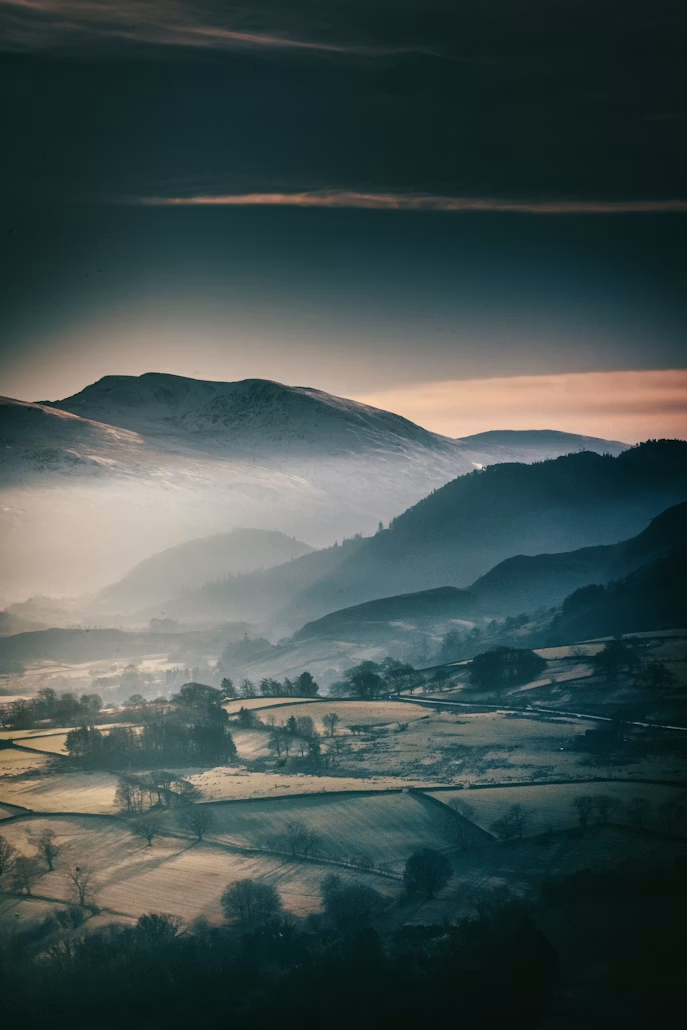
The fells feel quieter, the air feels sharper, and familiar views can look completely different with frost, snow or low winter light. A simple summit can suddenly feel much more dramatic when the valleys are cold, the paths are quiet and the tops are dusted white.
But winter walking is also a time to be honest.
Shorter days, cold temperatures, ice, wind and poor visibility can make the hills feel much more serious than they do in summer. A route that feels easy in July can feel very different in January.
The good news is that you do not need to climb the highest fells to enjoy a proper winter walk. Some of the best winter peak bagging days come from shorter, lower and more manageable routes where you still get big views without taking on too much.
Here are some of the best Lake District peaks for winter walking, from gentle first summits to bigger challenges for experienced walkers.
A good winter walking peak is not always the biggest or most dramatic one.
In winter, the best choice is often the route that matches the weather, daylight and your confidence. A shorter walk with clear paths and good views can be much more enjoyable than a big mountain day that becomes stressful halfway round.
A good winter peak usually has:
The descent matters just as much as the climb. Ice, mud and fading light can all make getting back down slower than expected.
Winter walking can be magical, but it rewards sensible choices.
Best for: an easy first winter summit
Start point: Keswick / Gale Road car park
Difficulty: Easy
Latrigg is one of the best first winter peaks in the Lake District.
It sits just above Keswick and gives you excellent views over the town, Derwentwater and the surrounding fells. If you start from Gale Road car park, the route is short and manageable, which makes it a good choice when daylight is limited.
Latrigg is ideal if you want a winter summit without committing to a long or exposed route. It still gives you that satisfying feeling of reaching a top, but the overall walk is much lower pressure than the bigger fells nearby.
On a crisp, clear winter day, the view from Latrigg can be fantastic.
Latrigg is a good first winter Wainwright, but still check the conditions. Paths can be muddy, icy or slippery after frost and rain.
Best for: a gentle winter viewpoint
Start point: Windermere
Difficulty: Easy
Orrest Head is a brilliant option when you want a winter walk that feels achievable and rewarding.
Starting from Windermere, the route is short, accessible and ideal for beginners, families or anyone who wants a gentler day. The view over Windermere and the surrounding fells is excellent for the effort involved.
This is a great walk when the higher fells do not feel sensible. You still get a proper Lake District viewpoint, but without committing to a long or exposed route.
Orrest Head is also easy to fit around travel, lunch or a short weather window, which is very useful in winter.
This is a strong choice when conditions are mixed. Keep it simple, wear sensible footwear and enjoy the view without forcing a bigger walk.
Best for: short winter views over Ullswater
Start point: Martindale / St Peter’s Church
Difficulty: Easy
Hallin Fell is short, peaceful and very rewarding.
It sits above Ullswater and gives you excellent views for a relatively quick climb. In winter, the area can feel especially calm, with the lake below and the surrounding fells looking sharper in the colder light.
The walk is not long, but it still involves a climb, so take it steadily. Hallin Fell is a good lower-level option when you want a proper summit without taking on a long day.
It works well as part of a relaxed winter day around Ullswater.
Check access and road conditions if the weather has been icy. Rural roads around smaller start points can be more awkward in winter than the walk itself.
Best for: winter Derwentwater views
Start point: Keswick / Great Wood / Ashness Bridge
Difficulty: Easy to moderate
Walla Crag is a brilliant winter viewpoint above Derwentwater.
It is more of a proper walk than Latrigg, but still manageable for many walkers in good conditions. The route can include woodland, open fellside and excellent views across the lake towards Catbells and Borrowdale.
In winter, Walla Crag can feel atmospheric without being too big. It is a good half-day option if you want something close to Keswick with strong views and a little more variety.
The paths can be muddy, wet or slippery, especially through woodland sections, so good footwear is important.
Give yourself plenty of time for the descent if the paths are muddy or icy. Short winter walks can still be slower than expected.
Best for: flexible winter routes near Ambleside
Start point: Ambleside / Rydal / Grasmere
Difficulty: Easy to moderate
Loughrigg Fell is one of the best winter peaks near Ambleside because it gives you options.
You can start from Ambleside, Rydal or Grasmere, and shape the walk around the weather, daylight and how much energy you have. That flexibility is very useful in winter.
The views over Rydal Water, Grasmere and Windermere are excellent, especially on clear, cold days. Loughrigg is lower than many of the bigger fells, but it still feels like a proper Lake District walk.
Because there are lots of paths, it is worth planning your route before setting off. In poor visibility or fading light, the path network can feel more confusing than expected.
Choose a simple route and stick to it. Loughrigg is flexible, but winter is not always the best time to improvise.
Best for: a short winter climb from Ambleside
Start point: Ambleside / Stockghyll Force
Difficulty: Easy to moderate
Wansfell Pike is a classic walk from Ambleside and a good winter choice in settled conditions.
The route climbs steadily from town and gives strong views over Windermere. It feels like a proper fell walk without being a huge mountain day, which makes it a useful step up from very easy viewpoints.
In winter, Wansfell can feel colder and more exposed near the top, especially if the wind is up. The paths can also be icy or slippery, so it is worth taking your time.
This is a good route when you want a satisfying climb but do not want to head onto higher, more serious ground.
Check wind as well as rain. Wansfell can feel much less friendly near the top if gusts are strong.
Best for: winter Ullswater views and a half-day walk
Start point: Aira Force / Dockray
Difficulty: Easy to moderate
Gowbarrow Fell is a lovely winter walk near Ullswater.
It offers excellent views over the lake and can be combined with Aira Force for a varied outing. You get woodland, waterfalls, open fell and lake views, which makes it feel like a proper half-day walk without heading into very high terrain.
In clear winter weather, the views over Ullswater are brilliant. In wet conditions, the paths can be muddy or slippery, so it is better saved for a day when the forecast is decent.
Gowbarrow is a good choice if you have already done some easier winter walks and want something with a bit more variety.
Aira Force can be busy even in winter, but the fell usually feels quieter once you move away from the main visitor areas.
Best for: winter views above Grasmere
Start point: Grasmere
Difficulty: Easy to moderate
Silver How is a good manageable Wainwright from Grasmere.
It gives lovely views over the village, the lake and the surrounding fells. In winter, those views can feel especially sharp, with the lower sun adding a bit of drama to the landscape.
Silver How is more involved than Orrest Head or Latrigg, but still approachable for many walkers in good conditions. The paths can be wet, muddy or less obvious in places, so it is worth planning the route carefully.
This is a good choice when you want a winter walk that feels satisfying without taking on a major mountain day.
Silver How is best in clear conditions. The views are a big part of the reward, and good visibility makes the route easier to enjoy.
Best for: woodland shelter and Bassenthwaite views
Start point: Dodd Wood / Mirehouse
Difficulty: Easy to moderate
Dodd is a useful winter option near Bassenthwaite.
The route climbs through woodland before opening out towards the summit, giving a bit of shelter lower down and good views from the top. On a clear day, you can look across Bassenthwaite and towards Skiddaw.
It is a steady climb rather than a technical route, which makes it a good choice if you want something manageable but still satisfying.
In winter, woodland paths can be slippery with mud, leaves, frost or ice, so do not treat it too casually.
Dodd can be a good choice in mixed weather, but the summit is still exposed. Take layers and keep an eye on conditions as you climb.
Best for: a quieter winter Wainwright
Start point: Wythop / near Bassenthwaite
Difficulty: Easy
Sale Fell is a gentle, quieter Wainwright that works well in settled winter conditions.
It is short, grassy and approachable, with views towards Bassenthwaite and the north-western fells. It is much less busy than many of the classic central Lake District routes, which can make it feel peaceful in winter.
The open ground can still feel cold and exposed, even though the walk is not especially high or long. But on a calm, clear day, Sale Fell is a lovely low-pressure winter summit.
Do not let the gentle profile fool you. Open fells can feel very cold in winter wind, so take an extra layer.
Best for: a classic winter walk in good conditions
Start point: Hawes End / Derwentwater
Difficulty: Easy to moderate
Catbells is a classic Lake District peak, and it can be beautiful in winter.
The views over Derwentwater, Borrowdale and the surrounding fells are excellent, and the route has enough shape and interest to feel like a proper adventure. In crisp winter light, Catbells can be especially rewarding.
But it needs more care in winter than it does on a dry summer day.
There are steeper and rockier sections that can become slippery or icy. If conditions are poor, windy or frozen, Catbells may not be the best choice for a beginner.
In clear, calm conditions, though, it is a brilliant winter walk for confident walkers.
If the rock looks icy or the wind feels strong, choose a lower or simpler route instead. Catbells will still be there another day.
Best for: a dramatic winter half-day walk
Start point: Grasmere
Difficulty: Moderate
Helm Crag is a dramatic and characterful winter walk from Grasmere.
Its distinctive summit rocks, steeper climb and views over the surrounding fells make it feel like a proper half-day adventure. In winter, the whole route can feel even more atmospheric.
This is more demanding than the easier low-level options, so it is better for walkers who already have some confidence. The steeper sections can be slippery, especially after rain, frost or snow.
Helm Crag is best tackled in clear, settled conditions unless you are experienced and properly equipped.
Walk it in daylight first if you are unsure. Winter is not the best time to be guessing the route on steep or slippery ground.
Best for: a bigger winter climb from Kirkstone Pass
Start point: Kirkstone Pass
Difficulty: Moderate to hard
Red Screes can be a fantastic winter walk in the right conditions, but it is much more serious than the lower peaks on this list.
The route from Kirkstone Pass is relatively short, but it is steep and exposed. In winter, that means conditions matter a lot. Wind, ice, snow or poor visibility can turn it into a much more challenging route.
On a clear winter day, the views from the summit can be brilliant. You get a proper high-fell feeling without the same distance as some bigger mountain days.
But Red Screes is not a casual winter stroll. It is best for walkers with experience, appropriate kit and a good forecast.
Do not choose Red Screes just because the route looks short. In winter, steep and exposed can matter more than distance.
Best for: experienced winter walkers wanting a bigger day
Start point: Gale Road / Latrigg car park
Difficulty: Hard
Skiddaw is one of the major mountains near Keswick and a big winter objective.
The usual route from Gale Road is broad and relatively straightforward compared with many high mountain routes, but Skiddaw is still a serious walk in winter. It is high, exposed and can be very cold and windy on the summit.
Snow, ice, low cloud and strong gusts can all make the route much more demanding. This is not a beginner winter walk, even though the path may look simple on a map.
For experienced walkers in good conditions, Skiddaw can be a brilliant winter day with huge views.
Check summit conditions, not just the valley forecast. Skiddaw can feel like a completely different world at the top.
Best for: experienced walkers in clear winter conditions
Start point: Ambleside / Rydal
Difficulty: Hard
Fairfield is a classic high-level winter challenge, often climbed as part of the Fairfield Horseshoe.
This is a full mountain day with distance, ascent, exposure and navigation to think about. In winter, all of that becomes more serious.
The summit area of Fairfield can be confusing in poor visibility, and winter conditions can make route-finding much harder. Ice, snow, strong wind and short daylight hours all need to be taken seriously.
In clear, calm winter conditions, Fairfield can be superb. But it is best saved for experienced walkers with the right kit and enough daylight.
Do not make Fairfield your first winter mountain day. Build up with shorter and lower winter routes first.
The best winter peak depends on your experience, the weather and how much daylight you have.
If you are new to winter walking, start with shorter, lower and simpler routes:
These still give you proper views without the commitment of higher ground.
If you have done a few walks and want something a little more involved, try:
These routes feel more like proper fell walks but are still manageable in good winter conditions.
For strong winter scenery without heading straight to the biggest mountains, look at:
These can be beautiful on clear, calm days.
For experienced walkers only, bigger options include:
These need proper planning, suitable kit and good judgement.
If the forecast makes the higher routes look too serious, choose something lower:
A lower winter walk is often the best decision.
Some Lake District routes can be brilliant in winter, but they are not suitable first winter walks.
It is worth avoiding these until you have more experience, the right conditions and the right kit:
These walks can become serious very quickly.
There is no need to rush into them. Build confidence first on lower and simpler winter routes.
Choosing the right winter route is all about being realistic.
Check the weather, but look beyond whether it is raining. Wind speed, visibility, temperature, ice and snow are just as important.
Check daylight too. Winter days are short, and routes take longer when paths are muddy, icy or snowy.
A good winter route choice usually means:
Turning back is not a failed walk. It is part of winter walking.
The hill is not going anywhere.
Winter walking needs a bit more thought than a summer stroll.
For a winter Lake District peak walk, pack:
Microspikes, crampons and an ice axe may be needed on some routes in some conditions, but only if you know how and when to use them. Carrying winter kit is not a substitute for winter skills.
For lower routes in mild winter conditions, you may not need technical equipment. For higher routes in snow or ice, you need the right kit, experience and judgement.
Start small and build up.
Your first winter walk does not need to be a big mountain route. In fact, it probably should not be. Choose something short, lower and easier to retreat from.
Set off early. Daylight is short, and winter walks often take longer than expected.
Bring more layers than you think you will need. You might get warm while climbing, but you can cool down quickly when you stop.
Watch for ice on shaded paths, especially in the morning. A path can look fine until you step onto a frozen patch.
Turn back earlier than you would in summer. If the weather changes, visibility drops or the path feels unsafe, change the plan.
Tell someone where you are going, especially if you are walking alone.
Do not rely only on phone signal. Download your route and have backup navigation.
And avoid walking into low cloud if you are not confident with navigation. Losing the view in winter can make even familiar terrain feel very different.
The best winter walking days are usually clear, calm and cold.
A crisp blue-sky day with light frost can be absolutely brilliant. The views are sharp, the fells look dramatic and the walking can feel very special.
Fresh snow can look beautiful, but it also makes walking harder. Paths may disappear, progress can be slower, and higher routes may need proper winter skills.
Ice can make simple paths dangerous. Even a short walk can become tricky if the ground is frozen and slippery.
Low cloud can remove the views and make navigation much harder.
Wind chill can make the summit feel much colder than the valley, especially on open fells like Skiddaw, Red Screes or Fairfield.
After heavy rain, lower paths can be muddy, wet and slippery, so even easier routes may need care.
The simple version: clear, calm and cold is good. Windy, icy, claggy and rushed is not.
Sometimes the best winter decision is not to climb a peak at all.
If the tops are in cloud, the wind is too strong or the ground is icy, a lower-level walk can still give you a brilliant Lake District day.
Good alternatives include:
These walks can still be beautiful in winter, and they are often a much better choice when the fells look too serious.
Saving the summit for another day is not missing out.
It is just giving yourself a better day.
If you are new to winter walking, build up gradually.
A sensible progression might look like this:
This is not a strict order. Choose based on the forecast, where you are staying and how confident you feel.
The idea is to start with shorter, lower walks, then build towards steeper, higher and more exposed winter routes.
There is no rush.
Winter confidence is best built one sensible summit at a time.
Winter walking in the Lake District can be magical.
Frosty paths, quiet summits, sharp views and that feeling of earning a warm drink afterwards all make winter peak bagging feel special.
But the best winter peak is not always the highest one.
It is the one that matches the conditions, your experience and the daylight you have.
Start with lower, simpler routes. Build confidence gradually. Respect the weather. And be ready to change the plan if the hills are telling you to.
The summit will still be there next time.
Bagged a Lake District peak in winter?
Use Peaky Baggers to log your walks, track your summits and keep building your list one frosty peak at a time.
Photo by Jonny Gios on Unsplash