What “Highest” Really Means in England
When people talk about the highest peaks in England, the conversation often sounds underwhelming — none break 1,000 metres, and there’s no single defining list like the Munros. But that misses the point entirely.
For peak baggers, England’s highest peaks are not about chasing altitude. They’re about learning how mountains behave: steep ascents straight from valley floors, exposed ridges, broad plateaus, and rapidly changing weather — all packed into relatively compact landscapes.
This guide isn’t just a ranked list. It explains which of England’s highest peaks actually matter for baggers, why some feel harder (or easier) than expected, and how to approach them as part of a longer peak-bagging journey.
How Height Works in England (Quick Context)
A few things help put England’s “highest peaks” into perspective:
- Almost all of England’s highest summits are in the Lake District
- Only one peak rises above 950 metres
- Height alone says very little about difficulty
- Steep valley sides often mean rapid height gain
- Exposure and weather can be just as serious as in higher ranges
In short: don’t underestimate English peaks just because the numbers look modest.
The Highest Peaks in England (With Context)
Rather than listing dozens of summits, this section focuses on the key high peaks that shape most baggers’ experience.
Scafell Pike
- Height: 978m
- Region: Lake District (Southern Fells)
- Why it matters: England’s highest peak and a natural reference point for all others.
- What surprises most baggers: How rough and confusing the summit area feels in poor visibility.
- Typical time to summit: 6–8 hours
- Difficulty: Moderate
- Good next step if this felt manageable: Helvellyn or Bowfell
Helvellyn
- Height: 950m
- Region: Lake District (Central Fells)
- Why it matters: A huge, serious mountain by English standards.
- What surprises most baggers: The scale of the summit plateau and exposure on the edges.
- Typical time to summit: 5–7 hours
- Difficulty: Moderate to Challenging
- Good next step if this felt manageable: Fairfield Horseshoe or Great Gable
Skiddaw
- Height: 931m
- Region: Lake District (Northern Fells)
- Why it matters: One of England’s biggest-feeling mountains.
- What surprises most baggers: How exposed and windy the upper slopes can be.
- Typical time to summit: 4–6 hours
- Difficulty: Moderate
- Good next step if this felt manageable: Blencathra or Great Calva
Great Gable
- Height: 899m
- Region: Lake District (Western Fells)
- Why it matters: A historic and symbolic Lakeland peak.
- What surprises most baggers: How steep and enclosed the approaches feel.
- Typical time to summit: 5–7 hours
- Difficulty: Moderate
- Good next step if this felt manageable: Pillar or High Stile
Bowfell
- Height: 902m
- Region: Lake District (Southern Fells)
- Why it matters: One of the best-positioned high peaks in England.
- What surprises most baggers: How central and connected it feels to surrounding fells.
- Typical time to summit: 6–8 hours
- Difficulty: Moderate
- Good next step if this felt manageable: Crinkle Crags or Esk Pike
Blencathra
- Height: 868m
- Region: Lake District (Northern Fells)
- Why it matters: A sharp contrast to broader high peaks.
- What surprises most baggers: The exposure on its ridges despite modest height.
- Typical time to summit: 4–6 hours
- Difficulty: Moderate to Challenging
- Good next step if this felt manageable: Helvellyn ridges
Cross Fell
- Height: 893m
- Region: North Pennines
- Why it matters: England’s highest peak outside the Lake District.
- What surprises most baggers: How remote and featureless it can feel.
- Typical time to summit: 5–7 hours
- Difficulty: Moderate
- Good next step if this felt manageable: Pennine or Cheviot peaks
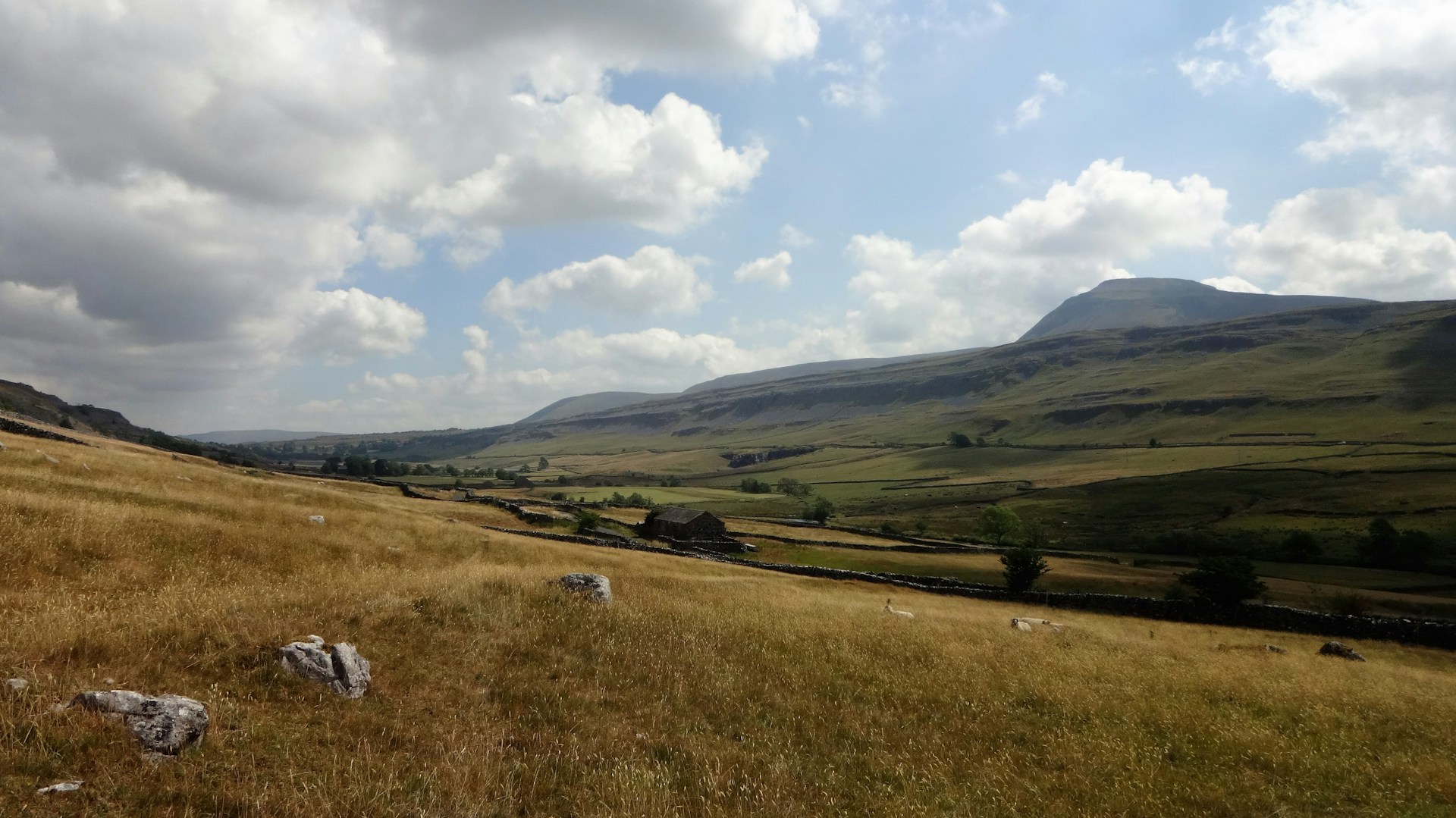
Ingleborough
- Height: 723m
- Region: Yorkshire Dales
- Why it matters: A classic comparison point for English height.
- What surprises most baggers: How dramatic the summit plateau feels relative to height.
- Typical time to summit: 4–5 hours
- Difficulty: Moderate
Why England’s Highest Peaks Feel Harder (or Easier) Than Expected
Several factors shape how these peaks feel on the ground:
- Steep valley ascents mean quick height gain
- Weather exposure is often underestimated
- Crowds can complicate navigation and pacing
- Broad summits can be disorientating in mist
- Psychology plays a role — expectations matter
Many baggers find England’s highest peaks harder than anticipated, particularly in winter or poor visibility.
Which Highest Peaks Suit Different Baggers?
- Best first “high” peak: Skiddaw
- Best for views: Bowfell
- Most physically demanding: Scafell Pike (long days)
- Most technically interesting: Blencathra
- Quietest high peak: Cross Fell
Common Misconceptions About England’s Highest Peaks
- “They’re easy because they’re not very high.”
- “Scafell Pike has to be your first.”
- “Height equals quality.”
- “Crowded peaks are safer.”
In reality, experience, conditions and planning matter far more than numbers.
How to Approach England’s Highest Peaks as a Bagger
- Build confidence with shorter peaks first
- Increase distance before chasing height
- Don’t rush the highest-first mentality
- Use England’s peaks to prepare for Wales or Scotland
England is an ideal training ground — compact, varied, and honest.
Track Your Progress with Peaky Baggers
Log England’s highest peaks, track your progress, and understand your journey — not just the numbers — with Peaky Baggers.
Final Thought
England’s highest peaks aren’t about altitude records. They’re about learning judgement, building confidence, and understanding how mountains feel under your boots.
For peak baggers, that knowledge is worth far more than a number on a map.
Photo by Drew Collins on Unsplash