
A clear comparison of Dark Peak and White Peak peak bagging, covering terrain, navigation, difficulty, views and what each landscape offers walkers.

The Peak District is often spoken about as a single place, but on the ground it feels like two very different landscapes. The Dark Peak and the White Peak sit side by side, yet they demand different skills, reward different mindsets and offer contrasting styles of peak bagging.
Neither area is better than the other. They simply ask different questions of the walker. Understanding the difference between them is key to getting the most out of peak bagging in the Peak District.
This guide compares Dark Peak and White Peak from a practical, on-the-hill perspective, helping you decide where to focus your time and how to approach each landscape.
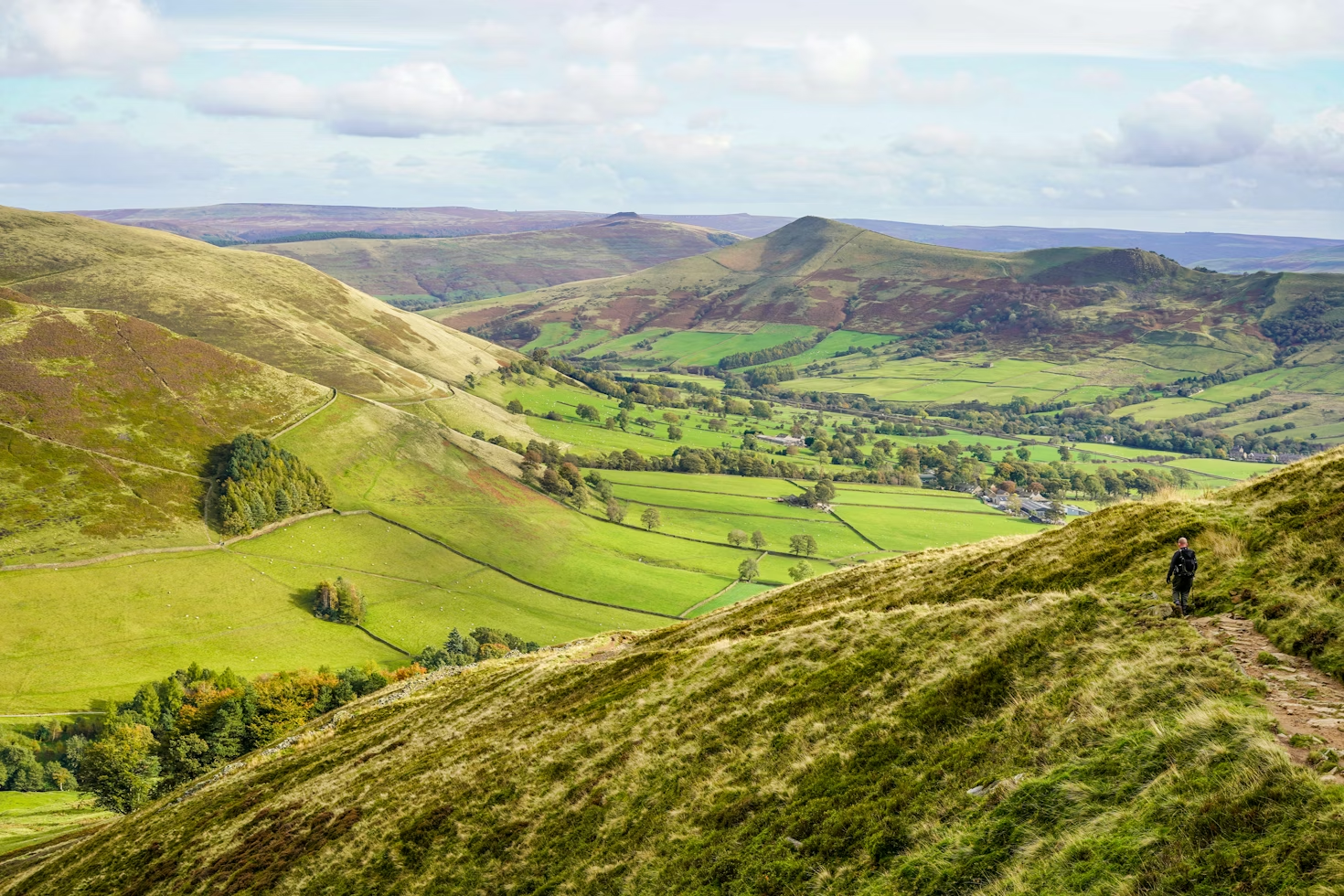
The Dark Peak occupies the higher, northern and eastern parts of the Peak District. It is dominated by gritstone edges, peat moorland and broad plateaus. Peaks here are subtle, often defined by elevation rather than shape.
The White Peak lies mostly to the south and west. It is a limestone landscape of rolling hills, steep-sided dales and sharply defined ridges. Peaks here are more obvious and often feel more traditional in form.
The distinction matters because it shapes how you walk, navigate and experience the hills.
Dark Peak terrain is expansive and understated. Expect high peat plateaus, deep cloughs, eroded groughs and long, gently rising ground. The edges provide occasional definition, but much of the landscape feels open and exposed rather than dramatic.
White Peak terrain is more compact and sculpted. Limestone hills rise sharply from valleys, ridges narrow quickly, and ascents are often short but steep. The landscape changes frequently, offering constant visual interest.
In simple terms, Dark Peak is about space and scale, while White Peak is about shape and contrast.
In the Dark Peak, a peak is often a high point on a plateau or a prominent section of edge. Summits may be marked by cairns or trig points, but they rarely dominate the skyline. Peaks are defined more by location and elevation than by appearance.
In the White Peak, peaks are easier to recognise. They tend to have clear summits, distinct ridgelines and obvious high points. Hills like Chrome Hill or Parkhouse Hill look and feel like classic peaks, even if they are not especially high.
This difference shapes how peak bagging feels in each area.
Dark Peak walking places a strong emphasis on navigation. Paths can be faint, misleading or absent altogether. In poor visibility, features blend together and progress can slow dramatically. Being comfortable with map and compass work is essential, even on familiar routes.
White Peak navigation is generally more straightforward. Paths are clearer, landmarks are easier to identify and valleys provide natural handrails. Navigation still matters, but it is less mentally demanding than on the open moors of the Dark Peak.
This makes the Dark Peak feel more committing, even on relatively short days.
Difficulty in the Dark Peak comes from distance, exposure and conditions rather than steepness. Long stretches of pathless ground, deep peat and strong winds can make days feel tiring and serious, even though gradients are gentle.
In the White Peak, difficulty is more physical and immediate. Steep climbs, narrow ridges and short, sharp ascents demand effort, but days are often shorter and more contained.
Height alone is a poor measure of challenge in both areas. How the terrain interacts with weather and fatigue matters far more.
Dark Peak views are about breadth. On clear days, horizons stretch for miles and the sense of space is immense. The drama is subtle, relying on atmosphere, light and weather rather than obvious landmarks.
White Peak views are more immediate and varied. Valleys drop away sharply, ridges frame the landscape and viewpoints appear frequently. The scenery feels more dynamic, even on short walks.
Walkers who enjoy big skies and solitude often gravitate towards the Dark Peak. Those who enjoy visual contrast and frequent viewpoints often prefer the White Peak.
Despite its wild feel, the Dark Peak sits close to major towns and cities. Access points exist, but approaches are often longer and facilities sparse once you leave the edges. Once on the plateau, options are limited.
The White Peak is threaded with villages, footpaths and access points. Walks can start and finish near cafés, pubs and transport links, making logistics simpler and days easier to adapt.
This difference makes the White Peak more flexible for short trips or mixed-ability groups.
The Dark Peak tends to suit walkers who enjoy solitude, long days and navigation-focused walking. It rewards patience, awareness and comfort in exposed landscapes.
The White Peak suits walkers who enjoy defined summits, shorter outings and visually engaging terrain. It works well for building confidence, introducing peak bagging, or fitting walks into busy schedules.
Many walkers find their preferences change with experience and conditions.
The best way to experience the Peak District is not to choose one area over the other, but to combine them. A long, serious Dark Peak day pairs well with a shorter White Peak walk the following day. Mixing the two provides physical balance and keeps the experience fresh.
Using White Peak days as recovery or contrast can make longer Peak District trips more sustainable and enjoyable.
Dark Peak is often dismissed as flat or boring, when in reality it demands subtle skills and rewards close attention. White Peak is sometimes seen as easy, despite steep ground and exposed ridges that can feel committing in poor conditions.
Navigation matters in both areas, just in different ways. Neither landscape should be underestimated.
Track Dark Peak and White Peak summits separately, compare experiences, and build a complete Peak District peak bagging record with Peaky Baggers.
The Peak District does not offer a single type of peak bagging experience. It offers two distinct landscapes, each with its own rhythm and demands. Understanding the difference between Dark Peak and White Peak is the key to appreciating both on their own terms and enjoying everything the National Park has to offer.
Photo by Raphael Rychetsky on Unsplash

.avif)