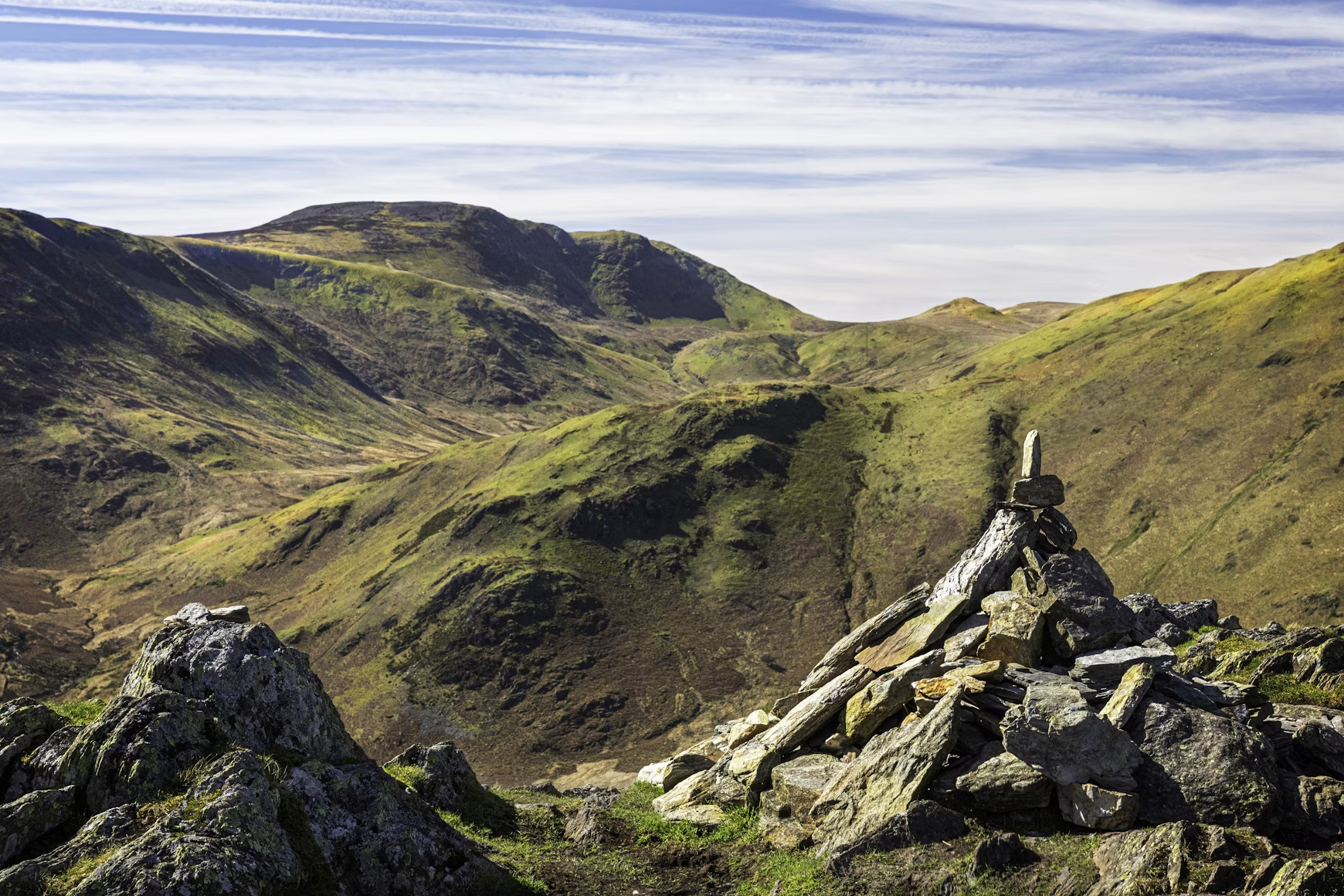
A complete guide to Bleaklow and the northern Peak District peaks — remote moorland, subtle summits and the wildest landscape in the Dark Peak.
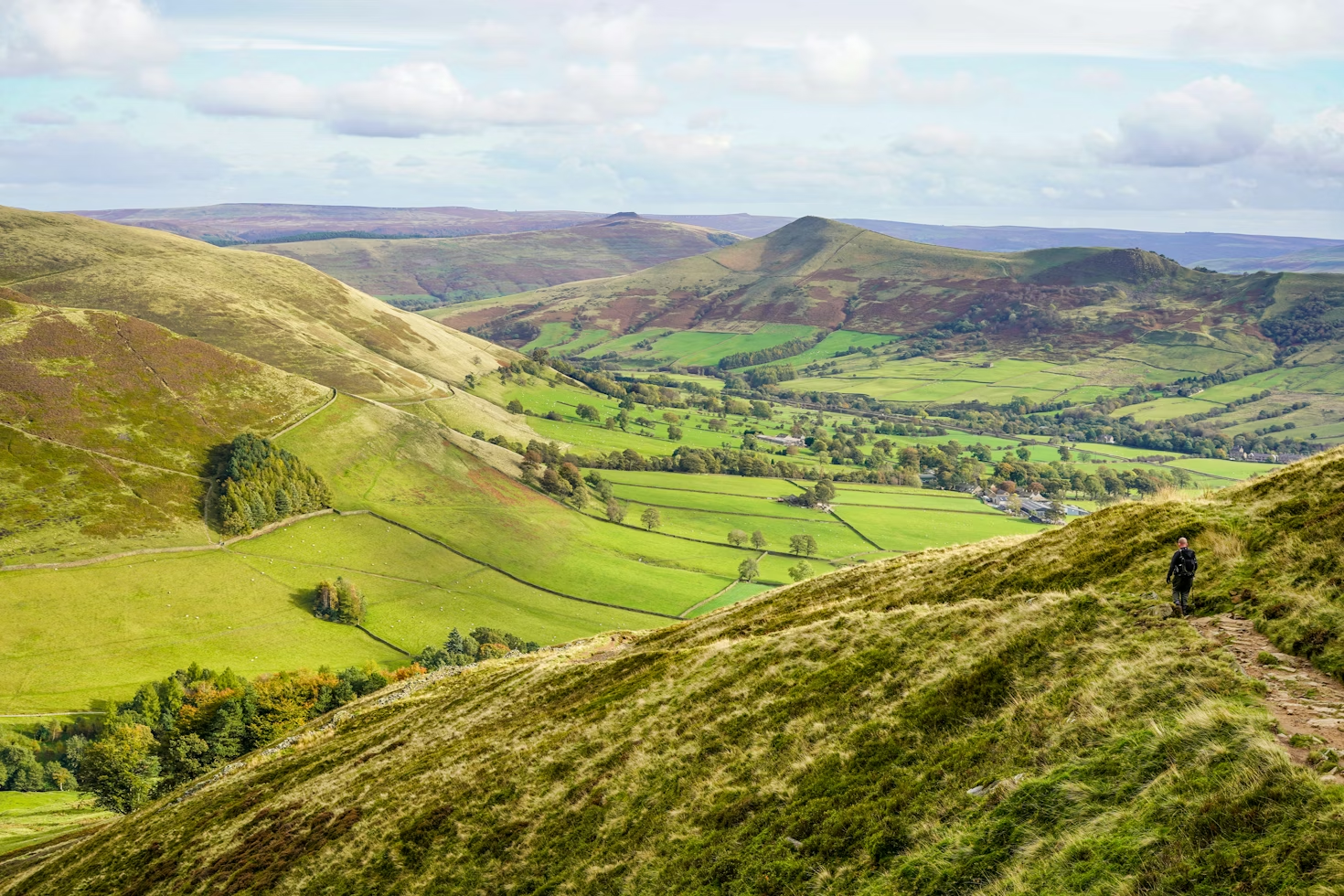
If Kinder Scout is the heart of the Dark Peak, Bleaklow is its raw edge. The northern Peak District feels bigger, quieter and more serious than much of the National Park, despite similar heights. Here, distance, exposure and navigation define the experience far more than steep ascents or dramatic ridges.
Bleaklow and its surrounding peaks form a broad, windswept upland where progress is slow, landmarks are subtle and the landscape demands patience. This is peak bagging stripped back to its essentials: judgement, awareness and an ability to read the ground.
This guide focuses on Bleaklow and the northern Peak District peaks that naturally belong with it, helping you understand the area as a connected upland rather than a single destination.
Bleaklow is a high peat plateau broken by erosion, gritstone outcrops and long, shallow cloughs. Unlike the edges of the eastern Peak District, the terrain here rarely announces itself.
Key characteristics include:
Walking here is as much about route choice and timing as physical effort.
In this context, northern Peak District peaks include:
Kinder Scout is excluded, as it forms a separate upland system with its own character.
The exposed, eroded heart of the northern Dark Peak.
Height: 633m
Type: Plateau summit
Why it matters: One of the highest points in the Peak District and the centre of the Bleaklow upland.
Typical time to include: 6 to 8 hours as part of a circuit
Difficulty: Moderate to challenging
Route style: Circular or traverse
Bleaklow Head is not dramatic to look at, but reaching it requires commitment. In poor visibility it can feel surprisingly elusive.
Height: 621m
Type: Plateau summit
Why it matters: A key high point on the eastern side of Bleaklow.
Typical time to include: Built into longer plateau routes
Difficulty: Moderate to challenging
Route style: Traverse
Higher Shelf Stones often feels more remote than Bleaklow Head, despite being closer to the Snake Pass road.
Height: Approximately 610m
Type: Gritstone outcrop
Why it matters: One of the few visually distinct features on the plateau.
Typical time to include: Plateau crossings
Difficulty: Moderate
Route style: Traverse
The Wain Stones provide a rare sense of place in an otherwise subtle landscape and are often used as a navigational reference.
Hard breaks in the landscape that frame the moorland.
Height: Approximately 480m
Type: Escarpment and landslip
Why it matters: The largest inland landslip in England.
Typical time to include: Edge-based circuits
Difficulty: Moderate
Route style: Circular
Alport Castles offers one of the most striking landscapes in the Peak District, contrasting sharply with the emptiness of the plateau above.
Height: 582m
Type: Moorland summit
Why it matters: A symbolic watershed and boundary point.
Typical time to include: Long northern circuits
Difficulty: Moderate
Route style: Linear or circular
Black Hill sits on the edge of the Peak District’s northern reaches and reinforces the scale of the surrounding moors.
Peaks and features that complete longer Bleaklow days.
Height: Approximately 610m
Type: Moorland high ground
Why it matters: Connects Bleaklow with the Derwent watershed.
Typical time to include: Full-day traverses
Difficulty: Moderate to challenging
Route style: Traverse
Derwent Head is rarely treated as a destination but plays a crucial role in longer upland routes.
Height: Varies along route
Type: High-level route
Why it matters: Historic crossing of the northern moors.
Typical time to include: Longer approaches or exits
Difficulty: Moderate
Route style: Linear
Doctor’s Gate is more route than peak, but it anchors several classic northern Peak District walks.
Bleaklow is best approached as a circuit or traverse rather than an out-and-back walk.
Common options include:
Each option involves sustained exposure and long sections without easy escape.
Bleaklow demands respect even in good weather.
Expect:
Navigation skills matter more here than pace or fitness.
Spring often offers the driest underfoot conditions. Summer brings long days and relative solitude compared to Kinder Scout. Autumn delivers atmosphere and colour, but shorter daylight. Winter can be serious, with ice, snow and severe wind chill despite modest heights.
Early starts are beneficial year-round.
Bleaklow feels broader and less defined than Kinder Scout. There are fewer edges, fewer walkers and fewer obvious routes. Distances between features are greater, and decision-making plays a larger role throughout the day.
Where Kinder tests navigation, Bleaklow tests endurance and patience.
Log Bleaklow and northern Peak District peaks, record long moorland days, and build a complete Dark Peak upland record with Peaky Baggers.
Bleaklow rarely impresses at first glance. Give it time, space and respect, and it reveals one of the Peak District’s most demanding and rewarding landscapes. This is peak bagging at its most honest, where success is measured by judgement as much as summits reached.
Photo by Tom Wheatley on Unsplash
.jpg)